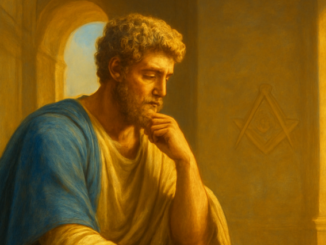
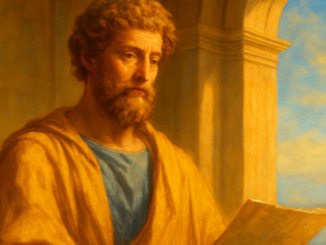
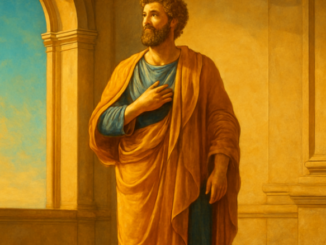
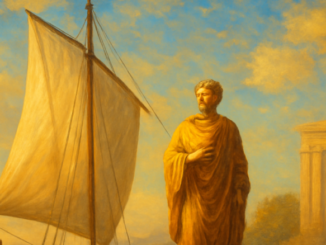
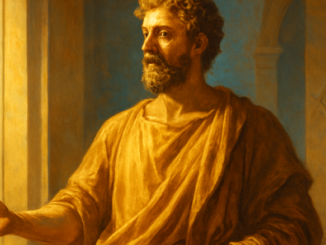
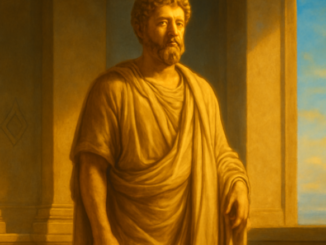
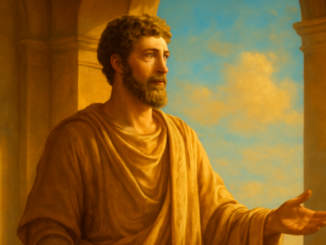
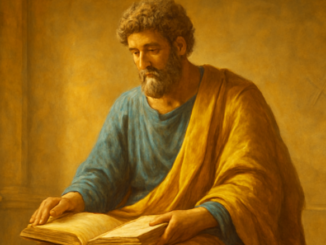
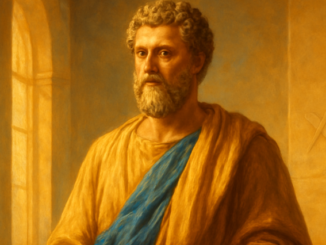
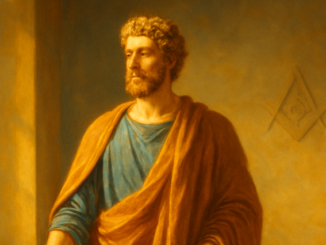
Ancient Roman bust symbolizing Marcus Aurelius and Masonic inner retreat
Marcus Aurelius – Freemasonry & Connection

Marcus Aurelius and Freemasonry: The Art of Inner Retreat

There is a remarkable kinship between the Stoic wisdom of a Roman emperor and the ritual practice of an ancient fraternity. When Marcus Aurelius writes about retreating into oneself in Book IV of his Meditations, he touches upon a theme that also runs deep within Freemasonry. How do these two traditions — separated by nearly two thousand years — relate to one another? And what can they still teach us today about the art of finding inner peace in a restless world? The Stoic Perspective: The Citadel of the Mind Marcus Aurelius never intended his Meditations for publication. They were personal notes, often written at the front lines during military campaigns. In Book IV, he unfolds a core idea that underpins his entire philosophy: a person can, at any moment and regardless of circumstances, retreat into their own inner world. He compares the mind to a citadel — an impregnable fortress that can only be surrendered from within. The outside world, with all its chaos and demands, has no real power over our inner state unless we voluntarily hand that power over. For the Roman emperor, this was no idle philosophical exercise. He ruled a vast empire and faced wars, […]
Ancient Roman bust of Marcus Aurelius symbolizing Stoic inner retreat
Marcus Aurelius – Meditations

Marcus Aurelius and the Inner Sanctuary: Philosophical Roots

When Marcus Aurelius writes about withdrawing into oneself in the fourth book of his Meditations, he draws on a rich philosophical heritage stretching back centuries before his time. This Roman emperor, who ruled amid wars and plague, found solace in ideas rooted in the early Stoa of Athens. But how do these ancient teachings relate to the Freemason’s quest for self-knowledge? The uninitiated may see nothing more than a historical curiosity; the initiated recognizes a timeless method for inner transformation. The Stoa: A School Born from Crisis Around 300 BCE, Zeno of Citium founded his philosophical school in the Stoa Poikile — the painted colonnade of Athens. Greece was in political turmoil following the death of Alexander the Great. The old certainties of the city-state were crumbling. In this climate of uncertainty, Zeno developed a philosophy that placed individual resilience at its center, independent of external circumstances. The Stoics taught that virtue is the only true good, and that while fate lies beyond our control, our response to it does not. Marcus Aurelius did not inherit this tradition directly from Zeno, but through a chain of thinkers who refined and expanded Stoic doctrine over the centuries. Chrysippus systematized the school’s […]

Ancient Roman bust of Marcus Aurelius symbolizing Stoic inner retreat
Marcus Aurelius – Content & Summary

Marcus Aurelius Book IV: The Art of Retreating Into Yourself

Picture a Roman emperor — surrounded by court intrigues, military campaigns, and the endless demands of governing an empire — writing by candlelight about the art of inner stillness. Marcus Aurelius never sought refuge in mountain cabins or coastal villas. Instead, he discovered a sanctuary that no one could ever take from him: the retreat into his own mind. In the fourth book of his Meditations, he unfolds this insight with a clarity that still resonates nearly two thousand years later. The Inner Chamber as Sanctuary Marcus Aurelius opens Book IV with an observation that strikes at the heart of his philosophy: people seek retreats in the countryside, at the seashore, or in the mountains, yet the truest sanctuary is always within reach. The human mind, when properly trained, offers a space where external chaos cannot enter. This is not escapism — it is a deliberate choice to locate the source of peace within rather than without. The emperor compares this inner space to a citadel that stands firm regardless of what unfolds beyond its walls. The image of the citadel serves as a powerful symbol: not a fortress against the world, but a place of order and reflection. Those […]

Marcus Aurelius bust symbolizing Stoic philosophy and Masonic virtue
Marcus Aurelius – Freemasonry & Connection

Marcus Aurelius on the Good: Living According to Nature

What did Marcus Aurelius actually mean when he wrote about living in accordance with nature? And why does this ancient idea resonate so deeply with what Freemasons strive for? In the third book of his Meditations, the Roman emperor unfolds a vision of the good that remains strikingly relevant today. These are thoughts worth exploring together — as seekers of truth have always done. What Did Marcus Aurelius Mean by ‘Nature’? This is perhaps the first question that arises when reading Book III. Marcus Aurelius speaks constantly about living according to nature, but he does not mean the romantic ideal of untouched forests and flowing rivers. For the Stoics, nature carried a far deeper meaning: the rational order that permeates the universe, the logos that connects all things. The emperor saw each person as part of a greater whole. When we act in harmony with our rational nature, we act rightly — almost by definition. This may sound abstract, but its practical implication is remarkably clear: to live virtuously means to recognize and fulfill your role in the larger fabric of existence. Is this not precisely what a Freemason pursues when working on his rough ashlar? The Connection Between Stoic […]

Ancient Roman bust of Marcus Aurelius with Stoic philosophical texts
Marcus Aurelius – Meditations

Marcus Aurelius Book III: Philosophical Roots of the Good

When a Roman emperor sits in the silence of his military tent and writes about the nature of the good, he does not speak in a vacuum. Marcus Aurelius composed his Meditations as the heir to a rich intellectual tradition stretching back centuries before his birth. Book III reveals that inheritance in a remarkable way: here, Greek philosophy and Roman practicality converge in reflections that still resonate today. But whose voices whisper alongside the emperor’s as he commits his thoughts on goodness and nature to the page? The Paradox of a Meditating Ruler There is a fascinating tension at the heart of the Meditations: the most powerful man in the world reminding himself of his own insignificance. Marcus Aurelius did not ascend the throne as a philosopher — he inherited an empire. Yet the pages of Book III radiate a philosophical maturity that speaks to decades of study and contemplation. This tension is not a contradiction; it is the very core of his thinking. The Stoicism he embodied draws a sharp distinction between what lies within our power and what lies beyond it. The throne belonged to the latter category; the quality of his thought belonged to the first. Zeno […]

Ancient Roman bust of Marcus Aurelius representing Stoic philosophy and wisdom
Marcus Aurelius – Content & Summary

Marcus Aurelius Book III: The Good and Nature Summarized

In the year 170 AD, somewhere along the northern frontier of the Roman Empire, an emperor wrote words that still resonate almost two millennia later. Marcus Aurelius — the philosopher on the throne — was not keeping a diary for posterity. He was writing for himself, as an exercise in self-discipline and wisdom. Book III of his Meditations offers a profound exploration of what it means to live well according to the laws of nature. This text provides not only a window into the mind of a Stoic emperor, but also a mirror for anyone searching for meaning and inner peace. The Historical Context of Book III Marcus Aurelius composed his Meditations during one of the most turbulent periods of his reign. The Marcomannic Wars raged along the empire’s borders, plague devastated the population, and the emperor found himself far from Rome, stationed at the Danube frontier. It was precisely amid this chaos and uncertainty that Book III came into being — a collection of reflections on the transience of life and the urgency of living each moment with full awareness. The Meditations were originally titled Ta eis heauton, which translates literally as “to himself.” This deeply personal character is […]

Ancient Roman bust of Marcus Aurelius with Masonic square and compass symbolism
Marcus Aurelius – Freemasonry & Connection

Marcus Aurelius on Reason: A Stoic Mirror for Freemasonry

Picture a Roman emperor sitting alone by candlelight after a grueling day of affairs of state and military decisions. He reaches not for a sword, but for a stylus. In the stillness of the night, he writes words meant for no one else — only for himself. Words about reason, about the inner life, about what it truly means to be human. Nearly two thousand years later, Freemasons gather in their lodges to wrestle with the very same questions, searching for the same light that Marcus Aurelius sought in the quiet hours before dawn. Reason as an Inner Compass In the third book of his Meditations, Marcus Aurelius turns his attention to the essence of human existence: the ruling faculty, or hegemonikon. This inner capacity is what sets human beings apart from all other creatures. It enables us to distinguish truth from illusion, substance from noise. The emperor writes not to impress or instruct others, but to remind himself of what genuinely matters. That personal quest for inner truth runs remarkably parallel to the Masonic journey. For the Freemason, every journey begins in darkness. The candidate is symbolically blindfolded before receiving the light — a light that is not physical, […]

Ancient stone bust of Marcus Aurelius symbolizing Stoic philosophy and inner peace
Marcus Aurelius – Meditations

Marcus Aurelius Book III: Philosophical Roots of Inner Peace

You wake up in the morning and the day is already overflowing with obligations, expectations, and unexpected twists. How do you maintain your inner calm amid all that chaos? This was the very question that occupied Marcus Aurelius when, as Roman Emperor, he wrote the personal notes we now know as the Meditations. In his third book, he turns his focus specifically to reason and the inner life. But where did these ideas come from? Which thinkers and philosophical traditions shaped his mind? By understanding the philosophical background, we can apply his insights more concretely in our own lives. The Stoic Tradition as Foundation Marcus Aurelius did not write in a vacuum. He stood on the shoulders of centuries of Stoic wisdom. This philosophical school, founded by Zeno of Citium around 300 BCE, had built a rich tradition by the second century. The core of Stoicism revolves around one supremely practical insight: we have no control over external events, but we do have control over our response to them. This is not an abstract philosophical principle — it is a daily exercise. In Book III, Marcus Aurelius applies this by continually pointing to the importance of reason as an inner […]

Ancient Roman statue of Marcus Aurelius symbolizing Stoic wisdom and inner life
Marcus Aurelius – Content & Summary

Marcus Aurelius Book III: On Reason and the Inner Life

In the year 167 AD, somewhere along the northern frontier of the Roman Empire, Emperor Marcus Aurelius sat down to write his most private reflections. Book III of his Meditations opens with a confronting truth: our bodies decay, but our minds can remain sharp until the very last moment. These thoughts, penned amid the chaos of military campaigns, still offer a compass for anyone seeking inner peace and wisdom — including those of us who walk the path of Freemasonry. The Historical Context of Book III Marcus Aurelius never intended his Meditations to be published as a philosophical treatise. They were personal exercises in the art of living — spiritual journal entries written for an audience of one. Book III was most likely composed during his stay at Carnuntum, a Roman legionary fortress on the Danube, where he directed the Marcomannic Wars. Surrounded by disease, death, and the crushing weight of empire, he turned to the Stoic philosophy he had learned as a young man from his teacher Junius Rusticus. The Stoics, whose intellectual lineage stretches back to Zeno of Citium and was later refined by Epictetus and Seneca, taught that the only thing we truly possess is our own […]

Marcus Aurelius statue symbolizing Masonic presence and self-reflection
Marcus Aurelius – Freemasonry & Connection

Marcus Aurelius on the Here and Now: Freemasonry & Connection

You probably know the feeling: you’re sitting in a conversation, but your mind has already drifted to tomorrow. You’re walking through the city, but you’re mentally somewhere else entirely. The present moment sometimes feels like the hardest place to truly inhabit. Marcus Aurelius, the Roman emperor-philosopher, wrestled with exactly the same challenge more than eighteen centuries ago. In the second book of his Meditations, he wrote some of his most penetrating thoughts on presence and connection. For Freemasons, his words touch on something essential — the question of how to be truly present, both for yourself and for your Brothers. The Burden of Past and Future Marcus Aurelius never wrote his Meditations for publication. They were private notes — a conversation with himself. That’s precisely why they feel so raw and honest. In Book II, he confronts himself with the waste that occurs when the mind constantly slips away to what has been or what is yet to come. He reminds himself that the present is the only thing anyone truly possesses. The past is gone, the future uncertain. Only this moment offers space for action, for growth, for genuine connection. This wasn’t idle philosophizing. For Marcus Aurelius, it was […]

Ancient Roman oil lamp illuminating a writing tablet with Masonic symbols
Marcus Aurelius – Meditations

Marcus Aurelius and the Present Moment: Philosophical Roots

An oil lamp flickers softly as a Roman emperor, weary after a day of warfare on the northern frontiers, reaches for his writing tablet. It is deep into the night, somewhere around 170 AD. Marcus Aurelius begins to write — not for publication, but for himself. Sentences about impermanence, the present moment, the urgent need to live now. Where did these thoughts originate? What philosophical currents shaped this imperial mind that continues to inspire millions to this day? The Stoic Roots of the Present Moment In Book II of his Meditations, Marcus Aurelius turns with remarkable intensity to the theme of living in the here and now. This focus was no casual whim but the product of centuries of Stoic philosophical tradition. The Stoic school, founded by Zeno of Citium around 300 BC, developed a philosophy centered on mastering one’s own thinking. Marcus Aurelius inherited this tradition through a chain of teachers and writings stretching back to Greek antiquity. At the heart of Stoic thinking about time lies a fundamental insight: only the present moment is truly ours. The past is gone and unchangeable; the future is uncertain and beyond our control. Epictetus, the former slave whose teachings Marcus Aurelius […]

Hourglass and rough ashlar symbolizing Stoic philosophy and Freemasonry
Marcus Aurelius – Content & Summary

Marcus Aurelius Book II: The Art of Living in the Present

When you turn an hourglass, every grain of sand falls irreversibly downward. No single grain returns, no moment ever repeats itself. In the second book of his Meditations, Roman Emperor Marcus Aurelius confronts himself with this unforgiving truth. He wrote these reflections during a military campaign along the Danube, far from the comforts of Rome, surrounded by death and impermanence. It was precisely there, in those raw and unrelenting circumstances, that a philosophy crystallized — one that still resonates powerfully today: the art of being truly present in the only moment we ever possess. The Morning as a Mirror of Life Book II opens with a remarkable passage in which Marcus Aurelius mentally prepares himself for the day ahead. He warns himself that he will encounter difficult people — the meddlesome, the ungrateful, the jealous. But rather than arming himself with resentment, he chooses understanding. These people act the way they do out of ignorance about what is truly good and evil. With this morning reflection, Marcus sets the tone for the entire book: each new day is an exercise in conscious living. This morning ritual takes on a symbolic dimension. Just as the sun appears on the horizon each […]

Ancient Roman bust of Marcus Aurelius symbolizing Stoic wisdom and Freemasonry
Marcus Aurelius – Freemasonry & Connection

Marcus Aurelius and Impermanence: What Truly Connects Us?

Why would a Roman emperor from the second century still have something meaningful to say about human connection? And what does his reflection on the brevity of life have to do with the brotherhood that Freemasons strive for? In the second book of his Meditations, Marcus Aurelius confronts himself with an uncomfortable truth: everything passes, including ourselves. Yet within that very acknowledgment lies a surprising lesson about what truly binds us together as human beings. What Does Marcus Aurelius Actually Mean by Impermanence? Let us first consider what the emperor actually writes. In Book II of the Meditations, Marcus Aurelius describes how everything we know passes like waves on a river. Our bodies decay, our names are forgotten, and even the memory of our deeds eventually fades. This may sound bleak, but for the Stoic, it is no cause for despair. It is an invitation to clarity. The impermanence Marcus Aurelius describes is not nihilism. It is a call to distinguish between what is truly valuable and what is merely appearance. Fame, possessions, power — these are fleeting things. But virtue, character, and the way we treat others carry a different quality. Not because they last forever, but because they […]

Bust of Marcus Aurelius with Stoic philosophical symbols and Masonic imagery
Marcus Aurelius – Meditations

Marcus Aurelius on Impermanence: Philosophical Roots

Imagine waking up in the morning and wondering why you should bother getting out of bed at all. The day stretches ahead — full of obligations, encounters, and perhaps worries. This is precisely the question Marcus Aurelius poses at the opening of Book II of his Meditations. But behind this seemingly simple opening lies a rich philosophical tradition reaching back to the early Stoa, one that found its way through thinkers like Epictetus and Seneca into the imperial chambers of Rome — and whose echoes can still be heard in Masonic lodges today. The Stoic Heritage Book II of the Meditations is steeped in Stoic wisdom. This philosophical school, founded around 300 BCE by Zeno of Citium in Athens, held that nature follows a rational order and that human happiness lies in living in accordance with that order. Marcus Aurelius never wrote for publication — his Meditations were a kind of philosophical diary, a private conversation with himself. Yet in every sentence you can hear the echo of centuries of philosophical contemplation. The early Stoics distinguished three disciplines: the discipline of desire, the discipline of action, and the discipline of judgment. In Book II, Marcus Aurelius focuses primarily on the […]

Ancient Roman bust of Marcus Aurelius symbolizing Stoic philosophy and reflection
Marcus Aurelius – Content & Summary

Marcus Aurelius Book II: The Impermanence of Life

It is early morning on the northern frontier of the Roman Empire. The emperor sits alone in his tent, the fire nearly extinguished, while outside the legions prepare for another day of battle. Marcus Aurelius reaches for his writing tablet and begins to record the thoughts that keep him awake: reflections on the brevity of life, on what truly matters when everything passes away. These personal meditations, written amid war and immense responsibility, form the second book of his Meditations — a text that has confronted readers for nearly two thousand years with an uncomfortable yet liberating truth: everything is impermanent, and precisely for that reason, every moment counts. The Heart of Book II: Waking Up to Reality Book II of the Meditations opens with one of the most strikingly direct passages Marcus Aurelius ever wrote. He warns himself that during the day ahead, he will encounter people who are meddlesome, ungrateful, arrogant, and dishonest. But rather than treating this as grounds for resentment or contempt, he reminds himself that these people act out of ignorance about what is truly good and what is truly harmful. They are, just like him, part of the same human community. This opening sets […]

Marcus Aurelius bust symbolizing Stoic gratitude and Masonic wisdom
Marcus Aurelius – Freemasonry & Connection

Marcus Aurelius on Gratitude: Lessons for Freemasons

Picture a Roman emperor who, in the midst of wars and the weight of governing an empire, sits down to write about what he learned from his grandfather, his mother, his teachers — even people he only met in passing. Marcus Aurelius does not open his Meditations with pride in his own accomplishments. He opens with gratitude. That first book is a practical lesson that remains strikingly relevant today, especially for anyone seeking connection and personal growth. For Freemasons, it offers a familiar mirror: who have your teachers been, and how do you carry their wisdom forward? The Power of Recognition In Book I of his Meditations, Marcus Aurelius names a series of people individually. His great-grandfather taught him the value of a good education. From his mother, he received simplicity and a distaste for extravagance. His philosophy tutor Rusticus introduced him to Stoicism. Each person transmitted a specific virtue. This is not vague sentimentality — it is a concrete inventory of what he received from others. This practice of deliberate recognition is something anyone can apply immediately. Take a moment and ask yourself: who shaped you? Perhaps a grandfather who modeled patience, a colleague who lived with integrity, or […]

Ancient Stoic philosophy scroll beside Masonic square and compasses symbols
Marcus Aurelius – Meditations

Marcus Aurelius and His Teachers: Philosophical Roots

In the first book of his Meditations, Marcus Aurelius compiles a remarkable list of people to whom he owes a debt of gratitude. Far from being a mere personal tribute, this catalogue reveals the foundations of a philosophical tradition that elevates learning from others to the status of a core virtue. For the Freemason, this resonates deeply: the relationship between master and apprentice lies at the very heart of the lodge, embodied in rituals and symbols that transcend generations. How do these two worlds relate to each other, and what can we learn from their shared emphasis on intellectual and moral formation? The Stoic Tradition of Grateful Reflection Marcus Aurelius never wrote his Meditations for publication. They were personal exercises in self-reflection. Yet the first book is strikingly public in nature: it reads as a catalogue of virtues he learned from specific people in his life. This practice is rooted in Stoic philosophy, particularly in the teachings of Epictetus, whose Discourses Marcus studied as a young man. Epictetus taught that wisdom does not come from books alone but from the living examples around us. A philosopher who forgets his teachers forgets himself. The Stoics distinguished themselves from other Greek schools […]

Ancient Roman bust of Marcus Aurelius symbolizing Stoic wisdom and gratitude
Marcus Aurelius – Content & Summary

Marcus Aurelius Book I: Gratitude to Teachers and Mentors

Why would a Roman emperor — the most powerful man in the known world — begin his private journal with a long list of everything he owes to other people? Book I of the Meditations of Marcus Aurelius reads as an extended letter of gratitude to family, teachers, and friends. This is not false modesty or diplomatic courtesy. It is a deliberate philosophical choice. And in that choice, an ancient vision of personal growth unfolds that remains remarkably relevant today: we are shaped by those who came before us. What Makes Book I So Remarkable? Unlike the remaining eleven books of the Meditations, which are filled with self-reflection and philosophical reasoning, Book I consists almost entirely of acknowledgments. Marcus Aurelius names seventeen individuals — from his grandfather to his philosophy tutors — and describes precisely which virtue or life lesson he learned from each one. This is no superficial politeness. It is a systematic accounting of moral debts. Why would a powerful ruler do this? The answer lies in the Stoic philosophy Marcus practiced. For the Stoics, wisdom is never a solo achievement. It is the result of a chain of transmission. Every master stands on the shoulders of those […]