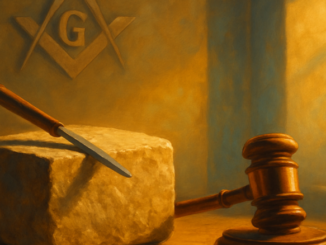
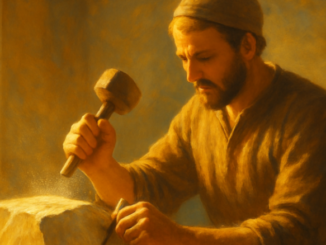
Rough ashlar stone being shaped into a perfect cube symbolizing Masonic ethics
Philosophy & Ethics

Chaos and Order: What a Police Chase Teaches About Ethics

July 2026: a high-speed chase through the streets of Amsterdam ends in a crash, and a suspect carrying explosives is arrested. The news spread like wildfire. Most people scrolled past it within seconds, moving on to the next headline. But for others, an event like this raises deeper questions. What drives someone to make such destructive choices? And perhaps more importantly — how do we make our own moral decisions when the pressure mounts? This article explores how Freemasonry offers practical tools for developing a strong ethical compass, especially in times of chaos. Moral Choices Under Pressure Imagine standing before a decision that could change your life. The clock is ticking, the tension is rising, and you know that every option carries consequences. This is not some abstract philosophical thought experiment — it is the reality people face every single day. Sometimes the stakes are small. Sometimes the choices we make protect or harm others in ways we cannot take back. The recent events in Amsterdam illustrate how destructive choices can become when someone takes a path that endangers others. But they also point to something more universal: without an inner compass, anyone can lose their way. The real question […]

A compass resting on rough stone symbolizing ethical leadership in Freemasonry
Philosophy & Ethics

World Cup Shares Controversy: What Ethics Demands of Leaders

You may have caught the headlines: the FIFA president defending the sale of World Cup shares to investors, insisting there was ‘no obligation’ to disclose or refrain. On the surface, it sounds like a reasonable legal defense. But something about it doesn’t sit right. When someone in a position of immense power says something ‘wasn’t required,’ an immediate question arises — but was it the right thing to do? That tension between what is permitted and what is proper touches something fundamental, something Freemasons have been reflecting on for centuries. The Difference Between What You May Do and What You Should Do Every day, we navigate the gap between what is legally allowed and what is genuinely good. You can ignore a colleague who needs help. You can stay silent when injustice unfolds before your eyes. No one will take you to court for it. But deep down, you know there is a different standard — one that isn’t written in any law book but ought to be engraved in your character. The recent controversy surrounding the sale of shares in the FIFA World Cup perfectly illustrates this tension. When a leader hides behind the phrase ‘no obligation,’ it sounds […]

A symbolic path leading back to familiar ground representing Masonic loyalty
Philosophy & Ethics

Return and Loyalty: What a Football Transfer Teaches About Ethics

A seasoned 37-year-old footballer returns to the country where his career began. Some call it sentiment; others see a calculated move. But behind every homecoming lies a deeper question: what does it mean to return to your origins? And what does that choice reveal about someone’s character? When Dutch club NEC announced the return of a Serbian midfielder to Nijmegen, it offered a surprising mirror for an age-old ethical question — one that stands at the very heart of Freemasonry. The Outside View: Romance or Calculation? For the average football fan, a transfer like this stirs mixed feelings. Is this a veteran looking to perform one last trick on familiar turf? Or a seasoned professional eager to prove his worth in a league he knows inside out? The cynic sees a marriage of convenience: the club gains name recognition; the player gets game time. The romantic sees a man returning to his roots — to the place where it all started. These two readings coexist without either being entirely right or wrong. The outside world tends to judge quickly. We search for motives, hidden agendas, the self-interest lurking behind every decision. That impulse is profoundly human, but it often says […]

Rough ashlar and perfect cube symbolizing Masonic moral transformation
Philosophy & Ethics

Responsibility and Punishment: Ancient Lessons on Human Failing

In July 2026, news broke of a tragic traffic accident in Suriname in which five people lost their lives at the hands of a driver who had no license. The court sentenced him to prison. But behind the headlines lies a deeper story — one about human responsibility, guilt, and the possibility of moral reconstruction. These are questions that have occupied humanity for centuries, and they hold a central place in the teachings of Freemasonry. The Roman Foundation of Personal Accountability In ancient Rome, legal scholars developed a concept that continues to shape our justice systems to this day: culpa — guilt through negligence. Roman jurists distinguished between different degrees of fault. A person who knowingly took a risk beyond their control bore a heavier responsibility than someone who caused harm by pure accident. A driver who knows he is not authorized to operate a vehicle, yet gets behind the wheel anyway, falls squarely into the first category. The Lex Aquilia, dating from 286 BC, established that anyone who causes damage to another through their own actions must compensate for that damage. But the Romans also understood that money alone cannot suffice when human lives are lost. That is why […]

Masonic lodge in solemn remembrance during a ceremony honoring a departed Brother
Philosophy & Ethics

Grieving a Colleague: What Loss Teaches Us About Ethics

The phone goes silent after the message. A referee stares at an empty field where yesterday a familiar face still stood. The news of a valued colleague’s sudden death hits like a hammer blow. In that moment of loss, a question emerges that reaches far beyond personal grief: what does our mourning reveal about who we truly are — and how we treat one another? The Silence After Loss When a colleague dies unexpectedly, a hole opens up in the world. Not just in the workplace, but in the fabric of everyday connections. The world of refereeing, like any tight-knit community, knows this feeling of collective grief. These are moments when achievements and results suddenly seem meaningless. What remains is the memory of a person — shared experiences, the way someone carried themselves through life. In Freemasonry, we know these moments of stillness as well. When a Brother enters the Eternal East, as passing is described in Masonic terms, the lodge gathers in reflection. Not to judge what someone accomplished, but to remember who someone was. This tradition reminds us that ethics is not only about action — it is also about remembrance and honor. Ethics in the Face of […]

Masonic rough ashlar and tools symbolizing self-knowledge and ethical choice
Philosophy & Ethics

When Saying No Is Right: The Masonic Ethics of Refusal

There is a curious paradox woven into the fabric of modern life: we celebrate those who say yes to challenges, yet we rarely acknowledge the courage it takes to say no. When a prominent football manager recently declined to take charge of a national team — a role most would consider a tremendous honor — it raised a question that reaches far beyond the back pages. What does it truly mean to turn down something the world expects you to accept? And what can Freemasonry teach us about the ethics of refusal? Refusal as an Act of Integrity Here is a thought worth sitting with: sometimes, declining an offer is ethically purer than accepting it. We live in a culture that glorifies ambition and distrusts modesty. Anyone who turns down a prestigious position is quickly suspected of harboring hidden motives or lacking drive. But what if the opposite is true? What if refusing a role that doesn’t fit you reveals deeper self-knowledge than eagerly seizing it ever could? In Freemasonry, we work with the metaphor of the rough ashlar — the unfinished stone that must be shaped into a perfect cube. This image does not suggest we should become everything […]

Gavel and chisel on a rough ashlar stone symbolizing Masonic self-work
Freemasonry & Society

Intent and Responsibility: Lessons From the Law for Freemasons

A new law is making headlines: it criminalizes the glorification of terrorism, but only when there is proof of intent. That single word — intent — touches on something profound. What does it truly mean to act consciously? And why does the distinction between deliberate choice and careless behavior matter so deeply, both in a courtroom and in the quiet reckonings of your own conscience? The Weight of a Single Word In legal language, intent sounds dry and technical. But behind that term lies an entire view of what it means to be human. The law assumes you are only truly responsible for something when you did it consciously — when you knew what you were doing and chose to continue anyway. That is no minor principle. It says we should not condemn people for unintended consequences. It demands that we distinguish between a misstep and a deliberate choice. This nuance is not only relevant in courtrooms. It touches on how you see yourself when you look in the mirror. How much of what you do is truly conscious? And how much simply happens — out of habit, conformity, or inattention? Consciousness as the Art of Living Within Freemasonry, this […]

Vrijmetselarij - Freemasonry and Ethics – Building Your Best Self
Philosophy & Ethics

Freemasonry and Ethics – Building Your Best Self

In a world increasingly driven by superficiality and snap judgments, many of us long for something deeper. For integrity. For authenticity. For a way to grow — not just in knowledge, but in character. This is where Freemasonry enters the picture: an ancient system that doesn’t just offer philosophical insights, but actively invites you to put them into practice. And nowhere is that invitation more powerful than in the realm of ethics. What Does Ethics Mean in Freemasonry? Ethics in Freemasonry is not a rigid set of rules or dogmas. It functions as a living compass — an inner guide that is continually sharpened through self-reflection, ritual, and fraternal interaction. You don’t learn a standard answer to what is “good.” Instead, you learn to ask yourself the right questions: What are my true intentions? What is my responsibility? How can I contribute to the greater good — in my community, my work, my relationships? Freemasonry invites you to see ethics not as abstract theory, but as something you experience, apply, and develop in your daily life. Ethics Begins with Yourself Freemasons work with a powerful symbol: the rough ashlar. This unworked stone represents your unrefined self — full of potential, […]