Explore Symbolism & Rituals in Freemasonry. Discover the spiritual meanings, sacred texts, and philosophical foundations that shape Masonic traditions and initiatory practices.
Symbolism & Rituals
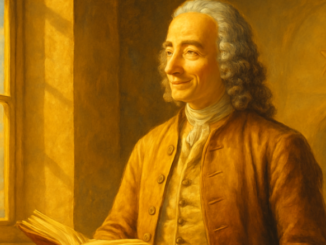
Voltaire’s Candide: Philosophical Roots of Suffering and Hope
When Voltaire published his satirical masterpiece Candide in 1759, he set off a philosophical earthquake. The work confronts the reader relentlessly with human suffering, yet refuses to abandon hope entirely. How can a thinker who depicts misery with such razor-sharp clarity still leave a path open toward meaning? The answers lie in a rich intellectual heritage stretching from the Stoic philosophers to the Enlightenment salons of Paris — and they connect in surprising ways to the ideals cherished by Freemasonry. Two Perspectives on Evil To understand Voltaire’s treatment of suffering, we need to set two fundamentally different worldviews side by side. On one hand stands the optimism of Gottfried Wilhelm Leibniz, the German philosopher who claimed that we live in the best of all possible worlds. According to Leibniz, God — as a perfect being — necessarily created the most harmonious universe. Every evil serves a higher purpose; every instance of suffering fits neatly into a grand cosmic plan. On the other hand stands Voltaire himself, who dissected this optimism with biting irony. After the devastating Lisbon earthquake of 1755, which killed tens of thousands of people, he could no longer accept the notion that all suffering has divine justification. […]