Stuntman leaping from a platform symbolizing trust and Masonic brotherhood
Freemasonry & Society

The Human Catapult: On Daredevils, Trust, and Brotherhood

Picture this: you’re standing on a platform, about to be launched through the air by a human catapult. Below you lies a landing zone. Around you stands a team that has gone over every detail. And yet, things go wrong. A stuntman recently broke his ankle after a jump with a human catapult at a major festival. The news struck me — not just because of the pain involved, but because of the deeper question it raises: what does it truly mean to surrender yourself to a system, to other people, to the unknown? The Leap and the System A stuntman who allows himself to be launched into the air does something most of us would never dare. It’s not just about the physical courage required — it’s about the trust that precedes the leap. A structure has been built. Calculations have been made. People stand ready to catch you. You surrender yourself to a system that is larger than you are. And sometimes, despite every preparation, things go wrong. This isn’t some abstract philosophical puzzle. It’s the reality of everyday life for each one of us. Perhaps not as spectacular as a human catapult, but equally real. Every time […]

Racing car speeding through a curve symbolizing Masonic character under pressure
Personal Development & Leadership

Speed and Character: Masonic Lessons from the Racetrack

There is something deeply paradoxical about speed. A driver tearing through the corners of Spa-Francorchamps at blistering pace seems to have no room for reflection. And yet, in that fraction of a second — the split-second decision to brake or commit — the entire personality of the driver is laid bare. A top result in free practice is a sporting achievement, certainly. But what does speed actually reveal about character? And what might a Freemason learn from someone who repeatedly puts himself to the ultimate test? Personality Reveals Itself Under Pressure Let us begin with a provocative thought: perhaps personality is not what someone claims to be, but what someone does when the pressure is at its peak. A racing car cutting through the Ardennes forest at three hundred kilometers per hour offers no time for masks. There is no room for façade. The driver, in that moment, is entirely himself — fear, courage, calculation, instinct. Everything that makes a person who they are concentrates itself into an action lasting mere seconds. This raises a compelling question: is personality a verb rather than a noun? Not a fixed quality, but something that continuously reshapes itself in confrontation with the world? […]

Cyclist making a split-second decision symbolizing inner knowing and Freemasonry
Spiritual Traditions

The Wrong Bet: What Cycling Teaches Us About Inner Knowing

In a fraction of a second, a cyclist makes a decision. He follows his rival, convinced that rider is about to win. But reality unfolds differently. The gamble turns out to be wrong. This moment of human fallibility at the highest level of sport raises a deeper question: how do our snap judgments relate to genuine inner knowing? And what can two very different perspectives on intuition and spirituality teach us about the difference? The Outsider’s Perspective: Intuition as Tactics For most spectators watching a cycling sprint, the final dash to the finish line is a matter of raw physical power and clever tactics. The rider sitting in second position reads his opponents’ movements — shoulder shifts, breathing patterns, the subtle redistribution of weight. From this vantage point, intuition is nothing more than lightning-fast pattern recognition, honed by years of experience and training. When a rider later admits he thought someone else was going to win and made his move accordingly, we interpret it as a miscalculation. A tactical error in a high-speed chess game. The outside world judges: he should have paid closer attention, picked up on different signals. The conversation revolves around technique — what went wrong in […]

Candlelit Masonic lodge with open Bible showing the Book of Zephaniah
Christianity

Zephaniah and the Day of Purification: A Prophetic Mirror

Candles flicker softly in the dim light of the lodge as a brother reads aloud from an ancient text — a prophet warning of a day of reckoning, yet promising that from the ashes something new will rise. The brethren listen in silence, recognizing in these age-old words something strikingly contemporary: the necessity of inner purification before any true building can begin. The Book of Zephaniah, written in the kingdom of Judah during the seventh century BCE, speaks with an urgency that still resonates today. The Prophet and His Time Zephaniah was active during the reign of King Josiah, a period when Judah was struggling with religious decay and societal corruption. The prophet spoke to a people who had neglected their foundations — a nation that maintained the outer temple walls while allowing the inner temple to crumble. His message was twofold: first, a confrontation with what had become rotten; then, a promise of restoration for those willing to be reshaped. This small book, only three chapters long, opens with a gripping description of what Zephaniah calls the “Day of the Lord.” This is no simplistic fire-and-brimstone sermon but a call to fundamental reflection. The prophet does not only address […]

Masonic lodge interior symbolizing tension and brotherhood among brothers
Personal Development & Leadership

Division in the Lodge: A Philosophy of Brotherhood

What if brotherhood is not a state of harmony but a state of sustained discomfort? What if the true test of connection lies not in the moments when everything runs smoothly, but precisely in the moments when tension becomes so palpable that walking away seems more attractive than staying? If that is the case, then everything we think we know about standing together in a lodge changes. The lodge is no longer a sanctuary — it becomes a crucible. And the division a brother feels with his lodge is not proof of failure, but perhaps the very beginning of genuine insight. The Paradox of Commitment There is a peculiar law that governs human communities: the more someone cares about a group, the more keenly they experience its shortcomings. Indifference, after all, knows no disappointment. Those who expect nothing are never hurt. But those who make themselves vulnerable, who invest time and energy in a collective ideal — they feel it when that ideal crumbles under the weight of habit, complacency, or misunderstanding. This is not weakness. It is the inevitable byproduct of sincere commitment. In Freemasonry, this paradox takes on a distinctive form. The lodge presents itself as a workshop […]

Open book with Masonic symbols representing Montaigne's philosophy and Freemasonry
Freemasonry & Connection

Montaigne on Idleness: The Restless Mind and the Search for Light

When the mind has no direction, Michel de Montaigne wrote in the sixteenth century, it thrashes about like a horse without a rider. This brief but powerful essay from his famous collection touches on a paradox that both the philosopher and the Freemason will recognize: rest without purpose brings not peace, but turmoil. What can two traditions — separated by centuries and vastly different in form — teach each other about the value of directed silence? The Philosopher Speaks: A Mind Without Reins In his essay “Of Idleness,” Montaigne describes how he withdrew to his country estate after a busy life, fully expecting his mind to settle into peaceful contemplation. The opposite happened. Without the discipline of daily occupation, his thoughts began to race like a runaway horse. Strange images, half-formed ideas, and unfinished reflections piled up like weeds in an untended garden. The philosopher concluded that the mind, much like the body, requires exercise to remain healthy. Crucially, this was not an indictment of rest itself, but of aimless idleness. Montaigne drew a sharp distinction between doing nothing and being without purpose. The former can be restorative; the latter undermines the clarity of the soul. To tame his wild […]

Starry night sky with an artificial light source symbolizing ethical boundaries
Philosophy & Ethics

Artificial Nightlight from Space: An Ethical Exploration

Imagine stepping outside on a clear evening and looking up. The stars shine as they have for millions of years. But somewhere among those pinpricks of light, there now floats an artificial sun — crafted by human hands, designed to banish the night. Does that sound like progress, or like hubris? This week, a controversial project aimed at doing exactly that received final approval. It raises a question older than any technology: just because we can do something, does that mean we should? The Promise of Permanent Daylight The concept behind the new satellite is as simple as it is radical: a reflective surface in orbit that bounces sunlight back to specific regions of the Earth — even when those regions should be cloaked in darkness. Proponents point to the practical benefits: savings on street lighting, safer cities, and assistance during nighttime rescue operations. The technology exists, the funding is secured, and now the final approval has been granted. But it is precisely in this moment of triumph that a deeper question emerges. What does it truly mean to abolish the night? What about ecosystems that depend on darkness? Migratory birds that navigate by the stars? People who need the […]

Tennis players shaking hands at the net symbolising Masonic brotherhood
Personal Development & Leadership

Winning and Losing at Wimbledon: Lessons in Brotherhood

Picture the scene: two men stand facing each other on the sacred grass of one of the world’s most famous tennis tournaments. One celebrates; the other bows his head. But what happens in that quiet moment at the net, when they shake hands? Is it mere formality, or does something deeper reside in that gesture? It’s worth asking what these sporting moments can teach us about a concept Freemasons have cherished for centuries: brotherhood. Why Does That Moment at the Net Move Us So Deeply? There is something extraordinary about the instant two opponents look each other in the eye after everything has been said and done. One has won. The other has lost. And yet they reach out and shake hands. Why does this touch so many viewers? Perhaps because we recognise something in it that goes beyond competition. We see two people who, despite their battle, acknowledge each other as equals. That is precisely what brotherhood means: the recognition that you stand before a fellow human being, not merely a rival. In Freemasonry, we often speak of meeting our Brethren “on the level.” Regardless of rank, background, or achievement, we stand as equals before one another. The tennis […]

A rough ashlar stone beside Masonic square and compasses symbolizing humility
Personal Development & Leadership

Humility as Strength: What Freemasons Know About Success

In the eighteenth century, when the first Grand Lodges in Europe opened their doors, an unwritten rule applied that remains relevant to this day: whoever enters leaves their social rank at the door. Whether you were a baker or a banker, your standing in the lodge was determined by your inner growth — not by your external achievements. This principle sheds a surprising light on a notion that still circulates in our culture: the belief that everything one touches turns to gold. The Alchemical Myth Debunked The expression “everything I touch turns to gold” traces back to King Midas from Greek mythology. His story ends tragically: he nearly starves to death because even his food transforms into gold. From the earliest philosophical traditions, thinkers understood the Midas myth as a warning against hubris — the dangerous overconfidence that arises when success goes to one’s head. Freemasonry, with its roots in the medieval stonemason guilds, understood this lesson centuries ago. The craftsmen who built the great cathedrals of Europe knew that every masterpiece was the result of countless failed attempts, broken stones, and endless patience. Their wisdom: true craftsmanship reveals itself not in perfection, but in the ability to learn from […]

Misty mountain landscape symbolizing reflection and character building
Personal Development & Leadership

Cool Holiday Destinations and the Shaping of Your Character

It’s July, and temperatures across many popular holiday destinations are climbing toward unbearable levels. While millions instinctively head for the Mediterranean sun, a growing number of travelers are deliberately choosing cooler destinations. What seems like a purely practical decision actually touches on something much deeper: the choices you make reveal who you are. In Freemasonry, the development of character stands at the very heart of the Craft. So how can something as simple as picking a holiday destination contribute to genuine self-knowledge? The Deliberate Choice as a Character Exercise When you opt for Scotland, Norway, or the Baltic coast instead of the usual sun-drenched beaches, you’re making a statement. You’re showing that you don’t automatically follow the crowd. In Freemasonry, we call this working on the ‘rough ashlar’ — shaping your character through conscious decisions. Every choice you make, no matter how small, contributes to the person you’re becoming. This doesn’t mean cooler destinations are inherently superior. What matters is the awareness behind your choice. Ask yourself: am I choosing this because everyone else does, or because it genuinely suits me? This kind of reflection is a practice you can apply year-round — not just when you’re booking a trip. […]

Referee whistle symbolizing judgment and Masonic self-reflection
Freemasonry & Society

The Referee’s Whistle: When the Crowd Becomes the Judge

A match ends. The ball rolls to a stop. And then something erupts that has nothing to do with sport. The recent decision by a national football association to file complaints against hateful messages directed at players after a World Cup elimination reveals a deeper societal issue. How is it that people who were cheering moments ago can transform, in the blink of an eye, into judges who strip fellow human beings of their dignity? Behind this phenomenon lies a symbolic truth that Freemasons have explored for centuries: the struggle between the lower and higher self, and the choice that every moment demands of us. The Whistle as a Symbol of Final Judgment A referee’s whistle is a small object. Metal, simple, functional. Yet it carries an enormous symbolic weight. The moment it sounds, a match is frozen into a result. Win or lose. Hero or scapegoat. The complexity of ninety minutes of effort, dozens of decisions, and countless variables is reduced to a single number. This is the paradox of every judgment: it brings clarity, but it sacrifices nuance. In Freemasonry, we know a comparable symbol: the gavel. The Worshipful Master strikes it at decisive moments — not to […]

Rough ashlar stone symbolizing Montaigne's philosophy of the inconsistent self
Michel de Montaigne – The Essays

Montaigne and the Philosophy of the Inconsistent Self

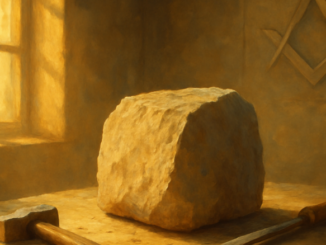
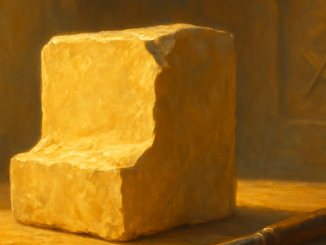
A stone being worked bears the marks of many hammer blows. Some make it smoother; others leave cracks behind. This is precisely how the sixteenth-century thinker Michel de Montaigne viewed the human soul — as a piece of work that never quite reaches completion, continually shaped by contradictory forces. His essay on the inconsistency of our actions drew from a rich philosophical tradition reaching back to antiquity. Which thinkers whispered to him what it truly means to be human in all our inconsequence? The Rough Ashlar as Starting Point In Freemasonry, the rough ashlar is a well-known symbol: the unworked stone representing the apprentice at the beginning of his path. This stone is not flawed — it is simply unfinished. It awaits the work of reflection and experience. Montaigne would have recognized this image immediately. His essay on inconsistency opens with the observation that we human beings possess no fixed core, but instead consist of layers, fractures, and surprising turns. The philosopher treated himself as his own subject of study and discovered within a fundamental mutability that did not trouble him, but fascinated him. This view of the human being as a work in progress had deep roots in Renaissance […]

Masonic rough ashlar stone symbolizing the search for understanding and peace
Freemasonry & Society

The Message as Weapon: Conflict and the Search for Understanding

A plane crashes in the jungle. A life ends far from home. A message echoes across borders — designed to shock, to warn, to force the world to listen. When violence becomes a means of communication, society faces a fundamental question: how do we respond to messages written in blood? This is not a question reserved for diplomats and strategists. It strikes at the very heart of what it means to be human in a world of broken connections. The Airplane as a Symbol of Connection An airplane is more than a mode of transport. Symbolically, it represents the deeply human urge to bridge distances, to connect what has been separated. The pilot at the controls embodies the role of a connector between worlds that might otherwise never touch. When such a plane is brought down, it is not merely a machine that is destroyed — a symbol is struck. In Freemasonry, connection plays a central role. The lodge is, by its very nature, a place where people of different backgrounds, professions, and convictions come together. Not despite their differences, but precisely because those differences offer valuable perspectives. The Mason builds bridges, not walls. He seeks what unites people, not […]

Rough ashlar stone symbolising human inconstancy and Masonic self-knowledge
Content & Summary

Montaigne on Inconstancy: Man as an Unfinished Symbol

There is an ancient symbol familiar to most Freemasons: the rough ashlar. It represents the human being in an unworked state — raw, unpolished, and full of contradictions. When we turn to the very first essay in Michel de Montaigne‘s celebrated Essais, that image becomes almost tangible. In his reflections on the inconstancy of our actions, the sixteenth-century philosopher holds up a mirror in which we recognise ourselves as beings who constantly shift, act in contradiction with themselves, and in doing so reveal something profoundly human. The Core Idea: Man as a Riddle to Himself Montaigne opens his essay with a sharp observation. Anyone who tries to judge another person by their actions runs into a fundamental problem: our deeds constantly contradict one another. The same individual who acts with courage today may prove a coward tomorrow. The person who gives generously now may cling to possessions later. For Montaigne, this is not a moral failing — it is simply the human condition laid bare. He resists the temptation to sort people into fixed categories. Labels like “brave” or “greedy” do not do justice to reality. We are not statues of virtue or vice, but living beings who move, stumble, […]

Rough ashlar stone being shaped symbolizing Masonic character building
Personal Development & Leadership

Personality and Choices: What a Verdict Teaches About Character

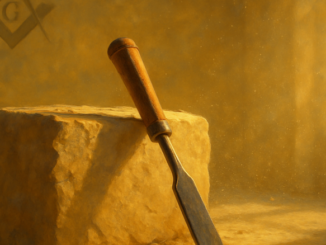
Sometimes you come across a news story that stays with you all day — not because of the shocking details, but because of the questions it raises. A court hands down a nine-year prison sentence, and you find yourself wondering: how does a person end up there? What happens within someone’s personality that leads them down a path ending in a courtroom? These questions go far beyond the legal realm. They touch on something fundamental about who we are and who we have the potential to become. The Rough Stone Within Each of Us In Freemasonry, we work with the symbol of the rough ashlar — the unfinished stone. This is no arbitrary metaphor. The rough stone represents the human being as they enter the world: full of potential, but also full of imperfections, sharp edges, and hidden cracks. The Freemason’s task is to work that stone — to chisel, smooth, and polish it. Not to achieve perfection, because that is an illusion, but to become more conscious of your own shape and the choices you make. When you read about a tragic event where lives have been permanently altered by violence, an uncomfortable question surfaces: what happened to the […]

Masonic level and plumb line symbolizing balance and self-reflection
Symbolism & Rituals

When Conviction Capsizes: The Hidden Risk of Certainty

Here is a paradox worth contemplating: the more firmly convinced you are of something, the greater the danger of capsizing. Not figuratively — literally. The word “convinced” traces back to nautical language, where it described a ship carrying so much weight on one side that it listed dangerously, no longer responded to the helm, and risked rolling over at the first strong gust of wind. Certainty as a risk factor. Firmness as a source of instability. Isn’t that one of the most uncomfortable truths language has been quietly trying to tell us all along? Certainty Makes You Lose the Helm Let’s take that paradox seriously. In everyday speech, we say “I’m convinced” as though it’s a virtue — a sign of resolve and strength. We admire people who stand firm, who don’t budge an inch. But an old-time sailor would have raised an eyebrow at such admiration for imbalance. To him, being “over-convinced” wasn’t a badge of honor — it was a diagnosis. A ship that had shifted all its weight to one side was a ship in distress. The rudder rendered useless, the crew at the mercy of forces they could no longer steer against. The shift in meaning […]

A single candle flame symbolizing brief life, loss, and Masonic light
History

Prenatal Loss: How Grief Has Taken Shape Through the Ages

There is a kind of loss that has no grave, no farewell ceremony, and yet leaves a lifelong scar. When a child dies before it is born, it touches the deepest layers of human existence. History teaches us that every culture and every era has grappled with this particular grief — often in silence, sometimes through rituals that seem foreign to us today. Freemasonry, with its long tradition of engaging symbolically with life, death, and rebirth, offers a surprisingly meaningful perspective on this unspoken sorrow. The Paradox of Grief Without Memory How do you mourn someone you never knew, yet loved completely? This is the paradox that parents face after prenatal loss. In our contemporary culture, we are gradually becoming more open about this subject — but that was not always the case. For centuries, this kind of loss was dismissed, denied, or simply not recognized as legitimate grief. Yet history shows that people have always sought ways to give shape to this sorrow. In medieval monastic archives, we find references to special prayers for unbaptized children. Midwives had their own rituals, handed down from generation to generation, to help mothers cope with their grief. The need to mark loss […]

A rough ashlar stone symbolizing personal growth through crisis in Freemasonry
Personal Development & Leadership

What Our Crises Reveal About Who We Truly Are

Sometimes a person disappears — not just physically, but inwardly. A young athlete withdraws from the world, overwhelmed by pressure and expectations. When he returns, he speaks openly about regret and self-awareness. This kind of story raises questions that reach far deeper than the headline itself. What does a moment of crisis actually reveal about who we truly are? And how does a Freemason view such turning points in a human life? Why Do People Sometimes Vanish From the Stage? The outside world tends to see a disappearance as either a mystery or a scandal. A news article presents the facts, quotes bystanders, and searches for explanations. But anyone who looks at the story from the inside recognizes something different: a human being who could no longer function under the weight of the expectations placed upon him. Pressure, perfectionism, fear of failure — these are universal themes that can touch any one of us. For the outsider, such a disappearance is a news item. For the Freemason, it is a mirror. In the lodge, we learn that a person is never a finished work, and that every crisis contains the possibility of growth. Disappearing is not an ending — sometimes […]

Pen and rough stone symbolizing essay writing as Masonic inner work
Culture & Media

Essay Writing: The Art of Personal Argument in Freemasonry

You probably know the feeling. Something stirs within you — a thought that won’t let go, a subject that captivates your mind. You want to write about it, but where do you begin? An essay offers precisely that space: a form where your personal voice is not only welcome but essential, where you’re allowed to explore and doubt, and where you ultimately reveal something of yourself. In Freemasonry, we call this kind of work “building” for good reason. Let’s explore together how to shape such a written piece of work. What Exactly Is an Essay? The word “essay” comes from the French essayer, meaning “to try” or “to attempt.” And that says everything about what an essay truly is. It’s not a scientific proof, not a journalistic report, and not fiction. It’s an attempt to explore a thought, to weigh it, to get to the heart of it. You try to understand something by writing about it — not by pinning it down definitively. In the sixteenth century, the French philosopher Michel de Montaigne began writing short pieces in which he reflected on everyday subjects: friendship, education, death, habits. He called them essais — attempts, trials. Since then, the essay […]

Masonic gavel resting on a rough ashlar stone symbolizing justice and growth
Philosophy & Ethics

The Judge’s Gavel: Justice as an Inner Building Stone

A courtroom delivers its verdict. Twenty years in prison for an act of irreversible violence. The gavel strikes wood, and in that single blow, something resonates far beyond legal statutes and procedural formality. What does justice truly mean when we look beyond the courtroom walls? In Freemasonry, the gavel is one of the most powerful working tools — not wielded to condemn, but to shape. A recent high-profile sentencing invites us to reflect on the deeper layers of guilt, restoration, and the moral responsibility every human being carries within. The Gavel: An Instrument of Judgment and Formation In the courtroom, the judge wields a gavel to affirm a ruling. It marks a moment of finality — a decisive conclusion. But look a little longer at this gesture, and you’ll discover that the same instrument carries an entirely different meaning in other contexts. The stonemason uses his mallet to work rough stone, slowly and deliberately shaping something that is not yet finished. In the Masonic tradition, this gavel symbolizes the willpower with which we shape ourselves, chipping away at the imperfections of our character — not through force, but through patience and self-awareness. A twenty-year prison sentence for a violent crime […]