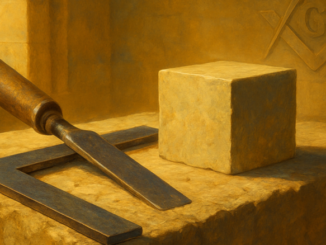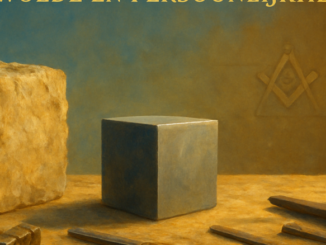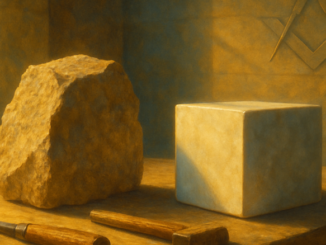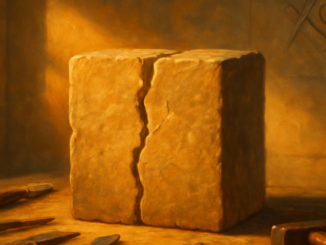
Rough ashlar being shaped into a perfect cube symbolising steadfastness
History

Twenty-Three Years of Criticism: Steadfastness as the Art of Living

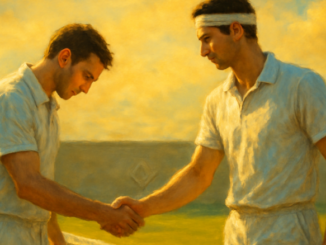
Twenty-three years. It is a number that carries tremendous weight when it refers to criticism — relentless judgment from millions. A veteran of the football pitch spoke these words after a historic match, not as a complaint, but as a simple statement of fact. Within that plain observation lies a profound truth that reaches far beyond the sporting arena and touches one of humanity’s oldest questions: how do we build our character when the world never stops measuring us? The Number as a Mirror of Time Twenty-three years span nearly a quarter of a century. In that time, children become adults, kingdoms rise and fall, and the tectonic plates of collective consciousness shift beneath our feet. When someone says that criticism has been his constant companion for twenty-three years, he is not merely describing opposition. He is describing a shadow as faithful as the light that drives him forward. In the building art of the inner life, we know the principle of the rough ashlar that must be hewn into a perfect cube. Every blow of the hammer, every critical touch, contributes to the refinement of the material. But what happens when those blows never cease? When the chisel keeps […]

Cracked mirror reflecting a rough ashlar stone symbolizing Masonic character work
Personal Development & Leadership

The Cracked Mirror: Character as Unfinished Architecture

A mirror that cracks no longer shows a true reflection. The glass is still there, the frame intact, but the image looking back at you is splintered, distorted, unreliable. This is how we might view those moments when someone’s actions stand in stark contradiction to the role they occupy. When the news confronts us with people who were given trust and then betrayed it, we are forced to sit with an uncomfortable question: what is personality, really? And can we ever fully know it — in others or in ourselves? The Mask and What Lies Behind It The word “personality” derives from the Latin persona, which originally referred to a theatrical mask. Actors in classical theater wore masks to define their roles. The mask was not meant to deceive — it was meant to clarify. It told the audience who this figure was and what to expect from him. And yet, buried in this etymology lies an unsettling truth: if personality is a mask, what lies behind it? In Freemasonry, this question occupies a central place, even if it is rarely stated so directly. The rough ashlar — the symbol of man at the beginning of his inner journey — […]

Cup of coffee on a quiet harbor dock at sunrise with sailboats in the background
Personal Development & Leadership

Morning Coffee in the Harbor: Stillness as a Mirror for the Soul

Steam curls upward from the cup cradled between my hands. In the harbor, the boats lie still — finally still. After days of relentless wind, the morning has turned so soft that you can hear the water lapping gently against the hulls. As I take my first sip, engines begin to rumble all around me. One by one, sailboats leave the shelter of the harbor, heading home. And I remain seated, watching the departure of others, wondering: what does this moment actually reveal about who I am? The Boat or the Man It is a question seafarers often ask when the weather turns: can the boat handle this? But anyone who is honest knows that the real question is a different one entirely. It is rarely about the strength of the vessel. It is about the person at the helm. Can you withstand the wind, the uncertainty, the unknown waiting beyond the horizon? For the past few days, everyone stayed in port because conditions were too fierce. Not for the boats — for the souls steering them. This distinction touches something essential. In Freemasonry, we speak of working the rough ashlar, of shaping character and personality through labor upon oneself. […]

Block of green soap symbolizing purification and inner work in Freemasonry
Symbolism & Rituals

Green Soap: Purification as a Symbol for Inner Work

Tucked away in the cupboard beneath the kitchen sink sits an unassuming block. Yellowish-green, greasy to the touch, carrying a scent that calls to mind washdays at your grandmother’s house. Green soap. A product so ordinary that we scarcely give it a second thought. And yet, hidden within this simple cleansing agent lies a wealth of symbolism that teaches us about purification, transformation, and the daily labor we must perform upon ourselves. An Ancient Craft Green soap has a history stretching back well before the Industrial Revolution. In the Low Countries, it was made from vegetable oils and ash — a process that demanded patience and craftsmanship. Soap makers formed their own guilds, with their own rules, their own trade secrets, and their own hierarchy from apprentice to master. They understood that purification is never accidental; it is the result of careful labor and deep knowledge of one’s materials. In this respect, the soap maker’s craft bears striking parallels with other building traditions. Just as the stonemason works the rough ashlar, the soap maker transformed raw ingredients into something that cleanses and restores. The process itself — the slow saponification in which oil and lye become something entirely new — […]

An open empty wallet reflecting light as a symbol of Masonic self-reflection
Personal Development & Leadership

The Empty Wallet as Mirror: Wealth Beyond Numbers

A wallet. Leather, stitching, a slot for coins. We open it dozens of times a week, check its contents, calculate what’s possible. Reports keep telling us that a growing number of people struggle to make ends meet — even as wages rise. The numbers don’t match the feeling. And perhaps that disconnect is precisely the invitation to look deeper, beyond the figures, toward what wealth truly means for who we are. The Mystery of the Growing Gap Imagine a bucket. You fill it with more water than last year. Yet the bottom stays dry. Somewhere there’s a hole that grows along with the filling. This is the paradox many households experience: wages go up, but the sense of abundance never arrives. Economists point to inflation, rising fixed costs, and shifting consumption patterns. These explanations make perfect sense on paper. But there’s something no spreadsheet can capture. The wallet is more than an object. It’s a mirror. What we put into it — and how quickly it disappears — reveals something about our relationship with needs, desires, and the question of who we want to be. Financial pressure doesn’t just affect the bank account. It touches our personality, the way we […]

Open Bible showing the Book of Obadiah with Masonic square and compasses
Christianity

Obadiah: The Shortest Book With the Greatest Lessons on Pride

At just twenty-one verses, Obadiah is the shortest book in the Old Testament. Yet within that brevity lies a powerful message that has resonated across centuries. Where the casual reader might see an ancient text about a forgotten conflict, the searching mind discovers timeless wisdom about pride, downfall, and the path toward inner improvement. In this article, we place two perspectives side by side: the historical context of Obadiah and the symbolic meaning that Freemasons can recognize within it. The Historical World of Obadiah Obadiah directed his prophecy against Edom, a brother nation of Israel descended from Esau, the twin brother of Jacob. The text condemns Edom for its arrogance and for standing idly by while Jerusalem was plundered. The Edomites dwelled in rocky heights and believed themselves untouchable because of their geographic position. Their arrogance sprang from a false sense of security. For its original audience, this was a text of comfort and justice. They saw a brother nation that had abandoned them when it mattered most. The prophecy promised that pride would ultimately lead to a fall — a theme that runs throughout all of biblical literature. The message was clear: whoever exalts himself above others will eventually […]

Rough ashlar stone symbolizing personal growth and resilience in Freemasonry
Personal Development & Leadership

Chance and Vulnerability: Two Perspectives on Fate

A man falls asleep in his tent on a beach in the Netherlands. Morning approaches, the sea murmurs, and life seems peaceful. Then the unthinkable happens: a maintenance tractor drives over his tent. The news is shocking — not just for its tragedy, but for what it reveals about the fragility of human existence. How do we process such random events? And does it matter whether we have spent time consciously examining our own character? Two worldviews, two perspectives on the same brutal reality. The Outsider: Chance as Chaos For many people, an accident like this simply confirms the randomness of life. The world is unpredictable, even dangerous, and we are at the mercy of forces beyond our control. This response is deeply human and entirely understandable. We look for someone to blame, for explanations, for ways to reassure ourselves that something like this could never happen to us. The outsider — here meaning someone unaccustomed to systematic self-reflection — tends to experience fate as something purely external. It is something that happens to you, something you react to, but over which you have little influence. Personality is seen as more or less fixed: you are who you are, and […]

Football captain wearing armband leading team symbolizing Masonic leadership
History

The Captain as Master Builder: Leadership on the Field

A green pitch, twenty-two players, and somewhere among them a figure who sets the direction. When a nation achieves a historic victory, all eyes turn to the captain — the armband, the gesture toward teammates, the calm gaze amid the chaos. In those moments, an ancient pattern unfolds, one that Freemasons recognize instinctively: the captain as Master Builder, someone who does not merely play but builds something far greater than any individual could alone. The Armband: A Symbol of Responsibility Anyone who has watched a football match knows the image of the captain’s armband. A simple strip of fabric, usually in the colors of the nation or the club, worn around the upper arm. At first glance, it seems unremarkable. But look deeper. That band distinguishes one player from the other ten. It is not a decoration — it is a commission. The one who wears it takes responsibility for the whole. In Freemasonry, we have comparable symbols of responsibility. The apron, worn by every Brother, serves as a reminder of labor and dedication. But the officers of a Lodge wear additional insignia: jewels, collars, specific regalia. These are not status symbols in the worldly sense. They are reminders of […]

Masonic mosaic pavement symbolizing unity of opposites and friendship
Symbolism & Rituals

Without Judgment: The Symbolism of the Extraordinary Friend

Imagine that the most valuable friendship in your life is one you never sought out — one that fits no category, defies every label, and forces you to reconsider all your definitions of human connection. Wouldn’t that be precisely the kind of bond that reveals the most about who you truly are? The Paradox of the Unnameable Some relationships resist classification. Not because they lack significance, but because they are so essential that every label falls short. Acquaintance? Too shallow. Friend? Too loaded with the expectations and conditions we unconsciously attach to the word. And yet, there is that person — someone with whom every conversation immediately plunges into depth, someone in whose presence the mask slips away and the real face emerges. Someone you met through chance, through loss, through a chain of circumstances no one could have planned. It is precisely this unplanned quality that makes the connection so pure. In Freemasonry, this experience finds expression in an ancient and powerful symbol: the rough ashlar that must be shaped. Not in isolation, but through interaction. The other person acts as chisel and mallet at once — not to wound, but to help us give form to who we […]

Ancient horn of anointing oil symbolizing inner calling and Masonic transformation
Christianity

First Samuel: Anointing Oil as a Symbol of Inner Calling

A small flask of oil. Ordinary, unremarkable. And yet, when the prophet Samuel pours that oil over the head of a simple shepherd, everything changes. The First Book of Samuel is far more than a chronicle of kings and battles. It reveals a deeper truth about calling, transformation, and the invisible forces that can reshape a person from within. For those who read with symbolic eyes, this ancient text opens a world that resonates profoundly within Freemasonry: the journey from darkness to light, from ignorance to insight. The Horn of Oil: More Than a Ritual Object Picture the horn — a tangible, physical vessel filled with oil pressed from olives. In the daily life of ancient Israel, oil was indispensable: fuel for lamps, nourishment for the body, a balm for healing. But when that same oil is poured over the head of a chosen one, it takes on an entirely different character. The anointing oil becomes a carrier of something that transcends the senses. It marks a transition, a transformation that cannot be seen but is deeply felt. In Freemasonry, we recognize similar moments. When a candidate is initiated, certain actions and objects may appear deceptively simple at first glance […]

Masonic gavel on a workbench symbolizing the cycle of growth and renewal
Christianity

Judges and the Cycle of Falling and Rising: Symbols of Growth

A hammer rests on the workbench. It is motionless, yet it carries within it the potential for both creation and destruction. In much the same way, the Book of Judges lies before us — a collection of stories about leaders who rise and vanish, about a people who fail and recover, fail and recover again. What does this ancient text tell us about the human soul? And how does the symbolism of this seventh book of the Old Testament mirror the path that every Freemason walks? The Cycle as an Archetypal Pattern The Book of Judges does not describe a linear history — it traces a spiral. The people turn away from their path, fall into oppression, cry out for help, and a leader emerges to deliver them. After a period of peace, the cycle begins anew. This pattern repeats itself twelve times, like a mantra carved into the very fabric of the text. For the Freemason, this cycle is deeply familiar. The rough ashlar is not shaped into a perfect cube in a single stroke. It is a process of failure and correction, of straying and returning to center. The cycle in Judges is not a sign of weakness […]

Masonic square and compasses symbolizing the balance of justice and wisdom
Freemasonry & Society

Justice and Retribution: Two Perspectives on Fairness

When news reaches us of a violent crime committed far from home, something ancient stirs within us. A life is taken, a suspect is arrested, and emotions ignite almost instantly. Calls for harsh punishment, outrage over injustice, a deep yearning for retribution. Yet alongside this visceral response, there exist traditions and communities that have looked at such moments differently for centuries — traditions that ask questions before passing judgment. This article explores two perspectives on justice: that of the outraged citizen and that of the searching Freemason. The Perspective of Outrage For most people, the first reaction to a violent crime is entirely understandable and deeply human: horror, anger, and an overwhelming desire for justice. When we hear that a fellow citizen has been killed in a distant land, we feel the pain as if the victim were someone we knew personally. The community closes ranks, the victim is given a face and a story, and the perpetrator becomes a symbol of the evil that must be fought. This perspective is rooted in a fundamental human need for order and safety. Society functions on the basis of shared agreements, and those who violate those agreements in the most horrific manner […]

Open Bible showing the Book of Hosea beside Masonic square and compasses
Christianity

Hosea and the Freemason: Two Perspectives on Faithfulness

The Book of Hosea occupies a remarkable place in the Hebrew Bible. Written by an eighth-century BCE prophet, it speaks of broken promises, unfaithfulness, and the possibility of restoration. But what happens when a biblical scholar and a Freemason each pick up the same text? Both approaches open windows onto deep symbolism — though from very different rooms. The Biblical Scholar Reads: A Covenant History For the biblical scholar, Hosea is first and foremost a historical document. The book emerged during a time of political instability, when the Northern Kingdom of Israel was caught between rival empires. The prophet received an extraordinary commission: he was to marry a woman who would be unfaithful to him. This marriage became a living metaphor for the relationship between the Divine and His people. The scholar analyzes linguistic structures, compares manuscripts, and situates the text within its original context. Unfaithfulness is understood here as idolatry — the straying toward foreign gods and political alliances. The academic approach seeks to uncover what the text meant for its original audience. Which cults were being criticized? Which historical events are reflected in the prophecy? The book closes with a promise of renewal, and the scholar examines how […]

Ancient Roman chariot race arena symbolizing Masonic lessons on status and equality
Freemasonry & Society

Chariot Races as a Mirror: What Circuses Teach About Status

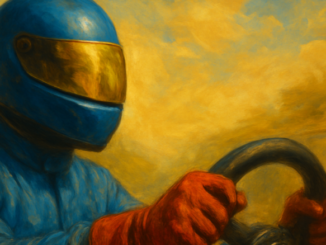
On a sweltering afternoon in Barcelona, drivers battled for the best starting position while thousands of spectators held their breath. The scene was strikingly reminiscent of one that played out two thousand years ago in Rome’s Circus Maximus: charioteers risking their lives under a blazing sun in pursuit of glory and honor. The parallels between ancient chariot racing and modern motorsport are remarkable — but what can these contests truly tell us about our views on status, community, and the society we live in? The Circus Maximus: Arena of Heroes and Symbols In ancient Rome, the Circus Maximus was the beating heart of public life. Up to 250,000 people would gather here to witness chariot races. The four racing stables, known as factiones, were identified by color: blue, green, red, and white. These colors represented far more than sporting rivalry — they symbolized the seasons, the elements, and the cosmic order. The race itself was a ritual, a symbolic battle between the forces of nature fought again and again in the dust of the arena. The charioteers, called aurigae, were often slaves or freedmen who could rise to the status of folk heroes through sheer courage and skill. Their position […]

Masonic level and gavel symbolizing patience and justice in Freemasonry
Freemasonry & Society

Patience as Foundation: What Slow Justice Teaches Freemasons

In an age where everything must happen faster, the slow grinding of the wheels of justice confronts us with an uncomfortable truth: some processes demand a kind of patience that runs directly counter to our expectations. As major court cases drag on for years, we are forced to ask what this means for our trust in societal institutions. Freemasonry, with its centuries-old emphasis on building slowly and deliberately, offers a surprisingly relevant perspective on this tension between haste and thoroughness. The Measure of Time When a court case is delayed for years, frustration is inevitable. Victims wait for acknowledgment, society demands a verdict, and our collective sense of justice feels eroded by endless postponement. Yet within this waiting lies something else entirely — the recognition that truth and justice cannot be forced by the clock. In Freemasonry, we speak of the rough ashlar that must be shaped into a perfect cube. This is not the work of days or weeks, but of years. The apprentice who chips away in haste destroys more than he creates. Seen through this lens, the slow pace of complex legal proceedings may not simply be a failure of efficiency — it may also reflect a […]

Masonic symbols including square and compasses in soft contemplative light
Symbolism & Rituals

Allusive Meaning: Symbols That Whisper in the Silence

The allusive meaning of a symbol does not unfold through explanation — it unfolds through experience. In a world that demands directness and clarity, the allusion offers a refined alternative: it invites reflection without imposing conclusions. For the Freemason, this is not a rhetorical device but a way of life. Today, we explore how the allusive dimension of symbolism bridges the visible and the hidden — the space between what can be spoken and what can only be felt. What Is the Allusive Meaning of a Symbol? When we speak of allusive meaning, we enter the realm of indirect reference. An allusion is never a straightforward statement. It is a nod, a wink toward something greater than the words or images being used. In literature, we recognize this as a reference to a well-known story or figure without naming it explicitly. In symbolism, the concept goes further: the entire medium of communication becomes a whisper. The square and compasses, the rough ashlar, the trowel, the plumb line — all of these objects from the stonemason’s craft carry meanings that extend far beyond their physical form. They point toward something else, something the initiated recognize without it ever needing to be […]

Masonic square and compasses symbolizing allusive meaning in Freemasonry
Symbolism & Rituals

Allusive Meaning: The Art of Veiled Speech in Freemasonry

When we speak of the allusive meaning of words and images, we enter a fascinating realm where nothing is said directly, yet everything is suggested. Allusion is the art of the hint — a reference to something greater without ever naming it outright. In Freemasonry, this way of communicating forms the beating heart of symbolic language. Where others seek direct answers, the Freemason embraces the power of what remains unspoken. What Does “Allusive” Actually Mean? The word “allusive” derives from the Latin alludere, which literally means to play toward something or to refer to it indirectly. An allusive expression never states its meaning outright — instead, it plays with references that the listener or reader must decipher. This demands active engagement, a willingness to look beneath the surface. In everyday language, we use allusions far more often than we realize. When someone speaks of an “Achilles’ heel” or a “stumbling block,” they are referencing stories that resonate far deeper than the words themselves. Allusive meaning distinguishes itself from literal meaning by drawing on shared knowledge, experience, or culture. It creates a bond between speaker and listener — an invisible thread of understanding that exists only for those who recognize the […]

Montaigne essay on misdirected emotions and Masonic self-knowledge
Content & Summary

Montaigne on False Objects: When Our Emotions Go Astray

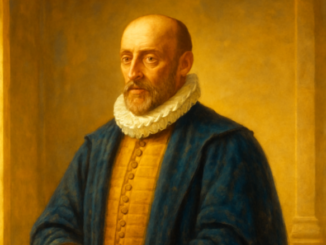
Why do we slam a door after stubbing our toe? Why do we shout at a frozen computer as though it were deliberately conspiring against us? In the fourth essay of the first book of his Essays, Michel de Montaigne explores this peculiar human behavior: our tendency to direct emotions at objects that have absolutely nothing to do with what actually troubles us. It is a short but penetrating piece that reveals something essential about the human psyche — and offers surprising insights for anyone committed to genuine self-knowledge. The Core Idea: Emotions Cannot Hang in a Void Montaigne opens with a paradox most of us will recognize immediately. The human soul, he argues, cannot let its passions dangle in empty space. Once an emotion has been aroused, it insists on finding an outlet — a target, a destination, an object. But what happens when the real object of our anger, grief, or frustration is out of reach? The soul invents a surrogate. It fabricates a false object onto which it can project its feelings. Crucially, Montaigne does not treat this as a sign of weakness or irrationality. He suggests it is simply how human emotions work. Our passions demand […]

A single tear drop symbolizing grief, vulnerability, and Masonic brotherhood
Freemasonry & Connection

The Tear as Symbol: Montaigne, Grief, and Brotherhood

A tear falls. A single droplet of moisture sliding down a cheek. In everyday life, we might look past it quickly, or avert our gaze out of respect for someone else’s sorrow. But what if we truly considered this tear? What if we paused, as sixteenth-century philosopher Michel de Montaigne did in his essay “Of Sadness,” to reflect on what this small gesture reveals about our humanity and our connection to others? The Tear as a Language Beyond Words In his essay, Montaigne describes how the most intense emotions are sometimes too vast for words. The deepest grief, he observes, exceeds our ability to express it. When sorrow overwhelms us, the body takes over: we weep, we fall silent, we tremble. The tear then becomes more than a physical reaction — it becomes a symbol of everything that language cannot contain. Freemasonry holds a deep understanding of this language beyond words. Rituals, symbols, and gestures carry meanings that the intellect alone cannot fully grasp. Just as the tear speaks where the voice fails, so too do the working tools of the Freemason speak of truths that resist neat definitions. The square does not merely measure angles; it also measures the […]

Ancient potter shaping clay symbolizing Jeremiah and Masonic transformation
Christianity

Jeremiah and Freemasonry: The Prophet as Inner Builder

In 586 BCE, an event unfolded that would shake the Jewish people to their very core: the destruction of the Temple in Jerusalem by the Babylonians. At the center of this historical catastrophe stood a figure who had been sounding warnings for decades. The prophet Jeremiah, whose name has become synonymous with lamentation and prophecy of doom, also carried within him a message of profound hope. For those willing to look beyond the rubble, his vision of rebuilding extended far beyond walls of stone — it reached into the very depths of the human heart. A Prophet in Times of Decline Jeremiah’s prophetic calling began around 627 BCE, during a period when the kingdom of Judah was slowly sliding toward political and moral collapse. What makes the Book of Jeremiah so remarkable is its deeply personal tone. Unlike many other prophetic writings, Jeremiah reveals a man who struggles with his mission, who doubts and suffers. He was called to uproot and tear down, but also to build and to plant. This dual commission forms the very heart of his message. Understanding the historical context is essential to grasping Jeremiah’s significance. The Assyrian Empire had collapsed, Egypt and Babylon were vying […]