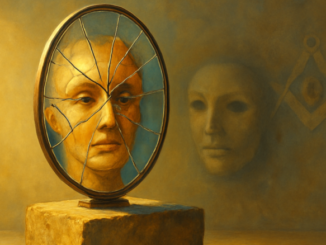
A symbolic mirror reflecting multiple faces representing Masonic self-knowledge
Freemasonry & Connection

The Mirror with Many Faces: Montaigne and Freemasonry

Imagine a mirror that doesn’t show one reflection, but a hundred. Every time you look, you see a different face — not because the mirror is broken, but because you yourself are constantly changing. This image captures the essence of what sixteenth-century philosopher Michel de Montaigne described in his reflections on the inconsistency of human action. And it is precisely this insight that reveals a striking kinship with the symbolic journey Freemasons undertake in their quest for self-knowledge. The Unstable Ground Beneath Our Feet Montaigne observed something we all recognize but rarely dare to admit: we are not the consistent beings we believe ourselves to be. Yesterday’s hero is today’s coward. The generous hand closes into a fist by morning. This is not a moral failing — it is a fundamental feature of human existence. We do not move in a straight line from birth to death, but in circles, spirals, and sometimes seemingly random patterns. Freemasonry begins from a remarkably similar starting point. The rough ashlar with which every Freemason symbolically begins their journey is not rough because it is flawed. It is rough because it has not yet been worked — because it has not yet become conscious […]

Vrijmetselarij - New Year's Day: The Masonic Symbolism of a Fresh Beginning
Symbolism & Rituals

New Year’s Day: The Masonic Symbolism of a Fresh Beginning

New Year’s Day represents a clean slate — a chance to start over with renewed purpose and hope. It is a day steeped in reflection, aspiration, and deep symbolism. For Freemasons, this annual turning point carries special significance, offering a meaningful opportunity to reflect on the ongoing construction of one’s personal temple: the lifelong pursuit of self-improvement and harmony with the world around us. The Symbolism of Renewal Renewal lies at the very heart of Freemasonry. New Year’s Day symbolizes the great cycle of life — the ever-present opportunity to begin again with fresh eyes and a clear mind. The turning of the calendar invites deep introspection: How have we built upon ourselves over the past year? Which rough edges have we smoothed, and which building blocks do we wish to add in the year ahead? Just as the sun rises after every night, New Year’s Day reminds us that light follows even the darkest challenges. It is a day of hope and a powerful reminder of the eternal cycle of growth and improvement — a cycle that every Mason recognizes in the work of the lodge and in the journey of the soul. Traditions and the Bond of Brotherhood […]

Candlelit Masonic lodge with checkered floor evoking the Exodus journey
Religion

Exodus: The Journey to Freedom and Inner Growth

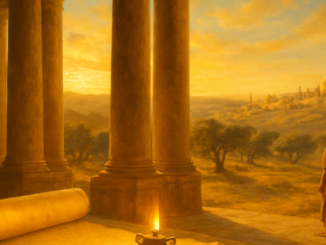
Picture a lodge draped in silence, candlelight flickering across the black-and-white checkered floor. A brother reads aloud from the Book of Exodus — the story of a people who cast off their chains in the dead of night and set out into the wilderness, moving toward something they cannot yet name. The words hang in the air, and everyone in the temple feels it: this story is not merely about an ancient people in a distant land. It is about us. What makes the story of Exodus so indelible? Why does this tale of slavery, liberation, and an endless trek through the desert still move us, thousands of years after it was first told? And what does a Freemason gain by returning to this ancient narrative again and again — not as a historical document, but as a mirror for the soul? Egypt as Inner Captivity In the Book of Exodus, everything begins with slavery. The Israelites groan under the yoke of Pharaoh, trapped in a system that reduces them to mere instruments. Within Freemasonry, this image is far more than a historical fact — it is a powerful allegory. Egypt symbolizes every form of inner captivity: the chains of […]

Open Volume of the Sacred Law displaying Genesis in a Masonic lodge setting
Religion

Genesis and Freemasonry: The Deep Symbolism of the Beginning

A candle flickers. A man sits alone in a dimly lit room, a heavy book open on his lap. His eyes trace the very first lines of the Old Testament — words he has read dozens of times before. Yet tonight, they feel as though they are speaking to him for the first time. Not as an ancient story about the origin of the world, but as a mirror posing a single, penetrating question: where does your creation begin? It is a question that has echoed through Masonic lodges for centuries — not as a theological puzzle, but as an invitation to self-examination. The Book of Genesis is one of the most widely read texts in human history, revered across diverse faith traditions. But what makes this creation narrative so particularly meaningful to the Freemason? The answer lies in its imagery. Genesis speaks in symbols that resonate directly with Masonic philosophy: the passage from darkness to light, from chaos to order, from unconscious existence to a life lived with awareness and intention. Becoming: Every Beginning as a Threshold Experience The word Genesis derives from the Greek for “becoming” or “origin.” That alone is telling. In Freemasonry, the concept of a […]

Open Book of Proverbs with Masonic square and compasses symbolizing wisdom
Christianity

Proverbs and Freemasonry: Wisdom as a Building Block of Character

The Book of Proverbs has spoken to seekers of wisdom for millennia. For some, it is a collection of practical rules for living from an ancient world. For others, it is a timeless mirror reflecting moral principles that remain as relevant today as when they were first written. But how does a Freemason approach these ancient texts? And what does someone discovering the symbolic richness of this book for the first time see in its pages? In this exploration, we examine two perspectives on wisdom as raw material for the inner life. The Perspective of the Traditional Reader For many readers, Proverbs is primarily a collection of practical advice attributed to wise kings and teachers of ancient Israel. The book belongs to what scholars call wisdom literature, and it contains short, pithy statements about honesty, diligence, humility, and justice. The tone is direct, sometimes stern, and always oriented toward daily life. A father speaks to his son, a teacher to his student. The wisdom conveyed is concrete: avoid the foolish, seek the righteous, guard your tongue. From this perspective, the book is essentially a manual for right conduct. The reader is encouraged to listen, to learn, and to improve their […]

Open book of Psalms with Masonic square and compasses symbolizing wisdom
Christianity

Psalms and Masonic Symbolism: Practical Wisdom for Daily Life

We all know those moments — a chaotic day spiraling out of control, a difficult decision that refuses to resolve itself, or a stretch of uncertainty that just won’t lift. The Psalms, a collection of 150 songs from the Old Testament, offer surprisingly practical guidance for exactly these situations. In Freemasonry, these ancient texts serve as a rich source of symbolism that can help you take concrete steps in your personal development. This article explores how to translate the imagery of the Psalms into everyday application. The Psalms as a Toolbox for Life Written over the course of centuries, the Psalms contain songs for every human experience: joy, sorrow, fear, gratitude, and wonder. For Freemasons, this is especially relevant because the Volume of the Sacred Law holds a central place in the lodge. The Psalms are often found open upon it as a symbol of wisdom and direction. But how do you translate ancient poetry into something meaningful for your life today? The answer lies in recognizing universal patterns. When a psalmist sings of walking through a dark valley, you may recognize your own season of uncertainty. When the text speaks of building a house upon a rock, you can […]

Open ancient book with Masonic rough ashlar stone symbolizing inner growth
Christianity

The Book of Job: Suffering as a Building Block for Inner Growth

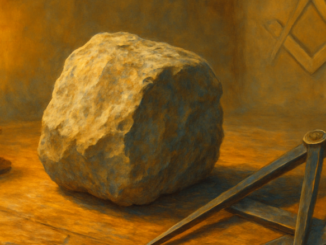
You know the feeling: a season when everything falls apart. Loss, setback after setback, and the people around you don’t seem to understand. In moments like these, a question surfaces — one that humanity has grappled with for thousands of years: why is this happening to me? The Book of Job from the Old Testament confronts us with exactly this question. But it also offers a surprisingly practical framework for anyone willing to look deeper. For Freemasons in particular, this ancient book of wisdom contains symbols that speak directly to the inner journey every Brother or Sister undertakes. The Heart of the Story: A Righteous Man Put to the Test Job is a prosperous, upright man who loses everything — his possessions, his children, his health. His friends insist he must have done something wrong to deserve such misfortune. But Job knows he is innocent. The book isn’t really about whether suffering is a punishment. It’s about how you respond when life hits you with incomprehensible adversity. Job refuses to surrender his integrity, even when everything is stripped away from him. That is the first practical lesson: character stands firm when comfort disappears. The Symbolism of the Rough Ashlar In […]

Rough ashlar stone and chisel symbolizing Masonic self-improvement journey
Personal Development & Leadership

The Broken Journey: Personality Beyond Appearances

A journey begins with a suitcase. We pack clothes, toiletries, perhaps a book. But what we truly carry with us is invisible: our expectations, our fears, our hopes of escaping the routines of daily life. When a journey ends in tragedy — as happened recently with a German family in Istanbul — we are confronted with the fragility of existence. And with a deeper question: who were these people, really, beyond the headlines? This question touches on something essential that Freemasonry continually explores: the mystery of personality itself. The Mask and the Face The word “personality” derives from the Latin persona, which originally referred to the mask worn by actors in Roman theater. The mask concealed the actor’s true face while simultaneously amplifying the voice and making the character recognizable to the audience. There is a striking paradox here that deserves reflection: our masks both hide and reveal at the same time. When a court examines a case involving the loss of human life, it attempts to see through the masks. Judges weigh facts, but also intentions, backgrounds, and the inner state of those involved. They search for the essence behind the actions. This is a task we all perform […]

Symbolic representation of Nehemiah rebuilding the wall of Jerusalem
Christianity

Nehemiah and the Symbolism of the Rebuilt Wall

Picture an ancient city wall, neglected for generations, lying in ruins. Stones scattered, gates burned, the outline of what once offered protection barely recognizable. Then someone arrives — not merely to stack stones, but to restore an entire community. The story of Nehemiah, the sixteenth book of the Old Testament, tells exactly this. Beneath the historical narrative lies a rich vein of symbolism that touches the very heart of what Freemasons strive for: building something greater than oneself, stone by stone, shoulder to shoulder. The Wall as a Boundary Between Chaos and Order A wall is more than stacked stones. In everyday life, we experience walls as unremarkable dividers — things that simply exist. But look deeper, and you discover that every wall represents a decision: here one thing ends, and there another begins. The wall of Jerusalem that Nehemiah rebuilt was literally the boundary between the holy city and the disordered world beyond it. Symbolically, it marked the transition from chaos to order, from decay to restoration. In Freemasonry, this theme of demarcation plays an essential role. The temple we build also has walls — not of stone, but of principles, of ethical boundaries that define who we aspire […]

Steering wheel symbolizing choice and Masonic responsibility in life
Philosophy & Ethics

Guilt and Responsibility: A Symbolic Masonic Exploration

A steering wheel in human hands. A split second. A decision that can never be undone. When the news reports that someone is suspected of causing a fatal accident, it touches the deepest questions about human responsibility. What does it mean to carry guilt? How do our actions relate to our conscience? These questions reach far beyond the courtroom — they strike at the very foundation of what it means to be human. The Steering Wheel as a Symbol of Choice Every vehicle has a steering wheel, a rudder, a lever that sets its direction. This seemingly practical instrument carries a deeper meaning. The steering wheel represents the human will — our capacity to chart a course through life. Whoever takes the driver’s seat accepts a responsibility that extends far beyond their own destination. In Freemasonry, this symbolism finds a parallel in the image of the Master Builder wielding his tools. Just as the square and compasses are instruments for maintaining right angles and proper measure, the steering wheel is an instrument for giving direction. Both demand awareness, attention, and the recognition that every movement carries consequences. The Inescapable Question of Guilt When a tragic accident occurs, the question arises […]