
Steam curls upward from the cup cradled between my hands. In the harbor, the boats lie still — finally still. After days of relentless wind, the morning has turned so soft that you can hear the water lapping gently against the hulls. As I take my first sip, engines begin to rumble all around me. One by one, sailboats leave the shelter of the harbor, heading home. And I remain seated, watching the departure of others, wondering: what does this moment actually reveal about who I am?
The Boat or the Man
It is a question seafarers often ask when the weather turns: can the boat handle this? But anyone who is honest knows that the real question is a different one entirely. It is rarely about the strength of the vessel. It is about the person at the helm. Can you withstand the wind, the uncertainty, the unknown waiting beyond the horizon? For the past few days, everyone stayed in port because conditions were too fierce. Not for the boats — for the souls steering them.
This distinction touches something essential. In Freemasonry, we speak of working the rough ashlar, of shaping character and personality through labor upon oneself. But what does that truly mean? It means learning to distinguish what belongs to you and what does not. Which storms can you weather? Which forces are simply too great — not because you are weak, but because wisdom demands patience?
The Ritual of Morning
There is ritual in drinking coffee. The warm cup, the rising aroma, the moment of silence before the day truly begins. For many people, this is the only moment of genuine reflection they will have all day. It is no coincidence that some philosophers call the morning the most sacred part of the day. It is the transition from night to light, from dreaming to action, from potential to reality.
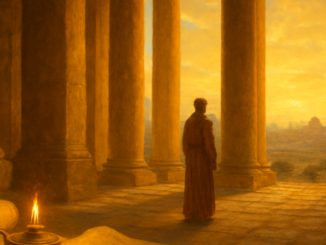
In Masonic work, we know similar moments of transition. Entering the temple, lighting the candles, the formal opening of the lodge. These rituals are not empty formalities — they are moments when we consciously cross the threshold from the ordinary into the meaningful. Morning coffee in a quiet harbor carries that same quality. It is a threshold, a beginning, a deliberate choice to be present.
To Depart or to Remain
While engines hum and sails are hoisted around me, I stay seated. There is no rush. The beach is waiting, a book lies ready — though I already suspect it will remain unopened. Sometimes watching is enough. Sometimes presence itself is the activity. This is not laziness; it is a form of knowing. Knowing what you need, knowing when motion is called for and when rest is the true labor.
The wise builder knows not only his tools, but also the moment when he must set them down.
This insight sounds simple, but it takes a lifetime to practice. Our culture celebrates movement, productivity, the ticking off of tasks. But personality is not forged in action alone. It is shaped equally in those moments when you consciously choose to do nothing — in accepting that the water today is more beautiful to look at than to sail across.
The Mirror of the Water
Water is a symbol of the unconscious in many traditions — of the depth that lies beneath the visible surface. When the wind dies down, the water becomes a mirror. You see the sky reflected in it, the clouds, the masts of the boats. And perhaps, if you look long enough, you catch a glimpse of yourself.
The Freemason is invited to look into the mirror regularly. Not the mirror on the wall, but the symbolic mirror we carry within us. Who am I truly, beyond the roles I play, beyond the expectations others hold of me? This question is not answered with words, but with attention. With moments like these: a quiet morning, a cup of coffee, the sound of water against wood.
Enjoyment as Discipline
It sounds paradoxical, but true enjoyment requires practice. Real enjoyment, I mean — not the rushing from one pleasure to the next, but genuinely being present in a single moment. The book that may never be opened is not a missed opportunity. It is a conscious choice to release the temptation of activity and simply be.
In the Masonic tradition, we recognize this as a form of inner work. We build not only with the gavel and chisel, but also with silence and attention. The character shaped in this way is not loud or conspicuous. It is grounded, present, capable of weathering life’s storms because it knows when to take shelter and when to set sail.
The Day That Awaits
Soon I will grab a chair and walk to the beach. The book comes along — more as a companion than an obligation. The sun is already high, and the water gleams like polished metal. Others are on their way to their destinations, and that is as it should be. Each of us charts our own course. Today, my course is the beach, the water, the emptiness that turns out to be fullness.
Perhaps this is the lesson of this morning: that personality is not about what you do, but about how consciously you choose. That the question is never only whether the boat can handle it, but whether you know who you are in the silence after the storm. And that a cup of coffee in a harbor sometimes teaches more than a thousand books.
The wind has died down, and with it the noise that drowned out everything else. What remains is clarity. A quiet harbor, a warm cup, a day stretching out like an unwritten page. The Freemason in me knows: this, too, is work. This watching, this waiting, this conscious choice to be present. For the temple we build does not stand in stone alone — it also rises in those moments when we allow ourselves simply to be.
Copyright text & image: devrijmetselaar.nl
Texts are based on the ideas and content of the author of devrijmetselaar.nl, reviewed, corrected, and supplemented with the assistance of OpenAI. Images are created based on the ideas of the author of devrijmetselaar.nl using OpenAI/DALL-E.
Frequently Asked Questions
What does Freemasonry mean by 'working the rough ashlar'?
In Freemasonry, working the rough ashlar refers to the continuous process of shaping and refining one's own character and personality through dedicated self-improvement and labor upon oneself. It means learning to distinguish between what truly belongs to you and what does not, and developing the wisdom to know when to act and when to exercise patience. This foundational concept teaches us that personal growth is an active, intentional practice that unfolds throughout our lives.
Why do Masonic rituals and ceremonies matter if they seem formal?
Masonic rituals are far more than empty formalities—they are sacred moments of conscious transition that help us cross the threshold from the ordinary into the meaningful. Like morning coffee in a quiet harbor, these rituals create spaces for genuine reflection and intentionality in our daily lives. By engaging in these ceremonies with awareness, we align ourselves with deeper truths and prepare our minds and spirits for meaningful work.
Is it un-Masonic to rest and not constantly be productive?
Not at all—in fact, Freemasonry teaches that personality and character are shaped equally through rest and contemplation as through action. A wise builder knows not only how to use his tools but also when to set them down, understanding that some of our most important growth happens in moments of conscious stillness and presence. True Masonic work includes recognizing when rest is the labor itself.
How can I find moments of genuine reflection in my daily life?
The article suggests that morning rituals—like having coffee in stillness—can serve as thresholds into meaningful reflection if we approach them with intention and presence. Creating deliberate moments of transition in your day, whether through meditation, a quiet morning routine, or entering a space with conscious awareness, mirrors the sacred quality that Masonic rituals provide. These small moments of genuine presence are often the only opportunities many people have for deep self-reflection.



Be the first to comment