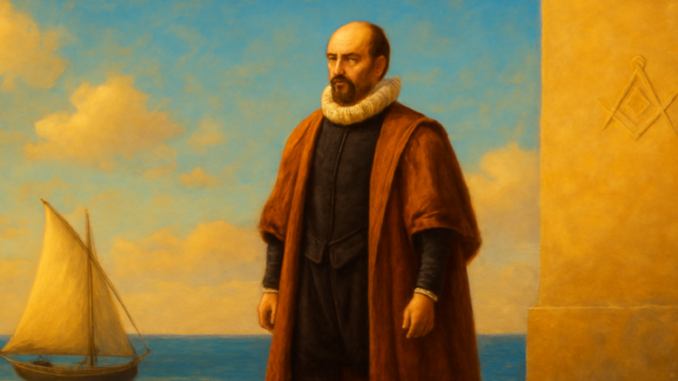
What does it truly mean to lie? And why does that question cut so deeply into the foundations of human connection? In his ninth essay from the first book of The Essays, Michel de Montaigne examines the phenomenon of lying with a sharpness that still resonates four centuries later. His observations touch unexpectedly on the very heart of what Freemasons strive for: a brotherhood built on trust, honesty, and the tireless pursuit of truth.
The Paradox of Memory
Montaigne opens his essay with a remarkable confession: he possesses an exceptionally poor memory. This personal shortcoming, he reasons, has actually shielded him from the temptation to lie. For anyone who lies, the philosopher argues, must possess an excellent memory. The liar must remember what he has fabricated, to whom he has told which story, and how all the loose threads must remain woven together.
Here we encounter a curious paradox. Memory — typically regarded as a virtuous instrument for preserving knowledge — becomes a tool of deception when placed in the service of the lie. Truth, by contrast, requires no construction, no maintenance, no constant vigilance. It simply exists. This observation casts new light on the Masonic idea that truth is not so much found as it is revealed. The light the Brother seeks does not need to be created. It waits patiently until the seeker is willing to open his eyes.
The Lie as a Betrayal of Community
Montaigne goes beyond the practical objections to lying. He examines what the lie means for human society as a whole. His conclusion is devastating: the liar commits a betrayal against the very foundations of community itself. After all, if words can no longer be trusted, every exchange between people becomes impossible. Commerce, politics, friendship — all forms of human connection require that we can rely on what others say.
“If we truly grasped the full weight of the lie, we would punish it with the stake more justly than we do other crimes.”
However drastic this statement may sound, it reveals Montaigne’s deep conviction: the lie damages the fabric of society in a way that other transgressions do not. For the Freemason, a familiar principle echoes here. The Brotherhood rests on mutual trust, on the certainty that words carry meaning and that promises are kept. When a Brother speaks, that speech must be truthful — not because the rules demand it, but because without truthfulness no genuine connection is possible.
Truth as the Foundation of Inner Growth
Montaigne’s analysis reaches beyond the social dimension. The liar does not only deceive others — he ultimately deceives himself. Anyone who grows accustomed to distorting reality gradually loses the ability to recognize the truth at all. The boundary between what is real and what is fabricated begins to blur. The liar becomes an inhabitant of a self-constructed world that drifts ever further from reality.
This touches on a core aspect of the Masonic path: the unceasing labor on the rough ashlar, the shaping and refining of one’s own character. This inner growth demands honesty with oneself as its first condition. The seeker who deceives himself about his shortcomings, his motives, or his progress can never truly grow. The square that tests our own actions loses its meaning when the Mason refuses to look honestly at what he measures.
The Courage to Be Truthful
There is a still deeper layer in Montaigne’s argument. Lying, he suggests, is often a sign of weakness. Anyone who does not dare to speak the truth fears its consequences. The liar protects himself — his reputation, his comfort. But this protection is illusory. For truth has a stubborn tendency to surface, and the fall of the unmasked liar is always harder than the consequences he tried to avoid.
Truthfulness, then, demands courage. It requires the willingness to be vulnerable, to take responsibility, to accept the consequences of reality as it is. This resonates with the Masonic virtue of fortitudo — the inner strength that consists not in avoiding difficulties but in standing upright through them. The Brother who is truthful demonstrates a courage that runs deeper than physical bravery. He stands in the light, even when that light reveals uncomfortable truths.
Connection Through Honesty
Montaigne’s essay invites us to fundamentally reconsider what connection means. True brotherhood, true friendship, true community — these are only possible among people who are honest with one another. This does not mean that every thought must be spoken aloud, or that diplomacy has no place. It does mean that when words are spoken, those words must carry the truth to the best of one’s knowledge and conscience.
Consider these principles that emerge from the intersection of Montaigne’s philosophy and Masonic tradition:
Truth makes us vulnerable, yet simultaneously forges unbreakable bonds. Honesty with ourselves is the prerequisite for honesty with others. Trust, once shattered by lies, rarely fully recovers. And the pursuit of truth begins with the simple refusal to speak untruth.
In these ideas, the insights of a sixteenth-century philosopher and the principles of the Masonic Brotherhood find a remarkable harmony. Both recognize that human connection can only flourish on a foundation of truthfulness. Both understand that this truthfulness is not merely a social virtue but a prerequisite for personal growth and the discovery of meaning in life.
When we read Montaigne’s words on liars anew in the light of Masonic values, a question arises that admits no easy answer — a question each Brother must take into the silence of his own reflection: How truthful am I, not only with those around me, but with myself? It is in the honest confrontation with that question that the real work on the rough ashlar begins, and where the foundation of genuine brotherhood is either strengthened or quietly undermined.
Copyright text & image: devrijmetselaar.nl
Texts are based on the ideas and content of the author of devrijmetselaar.nl, reviewed, corrected, and supplemented with the assistance of OpenAI. Images are created based on the ideas of the author of devrijmetselaar.nl using OpenAI/DALL-E.
Frequently Asked Questions
How does Montaigne's essay on lying relate to Freemasonry?
Montaigne's exploration of truth and dishonesty directly mirrors the Masonic foundation of trust and brotherhood. His argument that lies destroy the fabric of community aligns perfectly with the Masonic principle that genuine connection requires truthfulness and mutual reliance among Brothers. The essay illuminates why Freemasonry places such profound emphasis on honesty as the bedrock of its fraternal bonds.
Why does Montaigne say liars need a good memory?
Montaigne observes that a liar must remember every fabrication, keep track of which stories were told to whom, and maintain consistency across multiple deceptions. In contrast, truth requires no such maintenance because it simply exists as reality. This insight reveals that truthfulness is actually the more natural and sustainable path for human interaction.
What does this article mean by 'truth is revealed, not found'?
The article suggests that truth doesn't need to be invented or constructed—it exists waiting to be discovered by those willing to seek it with clear eyes. This Masonic principle reflects the idea that the journey toward enlightenment is about removing obstacles to understanding, much like a sculptor reveals the form already within the stone.
How does lying affect a person's own relationship with reality?
According to Montaigne's analysis presented here, habitual liars gradually lose their ability to distinguish between what is real and what they have fabricated, becoming trapped in a self-constructed world increasingly divorced from truth. This personal deception mirrors the Masonic concept of the 'rough ashlar'—the work each Brother must do on himself to refine his character and maintain clarity of mind and spirit.



Be the first to comment