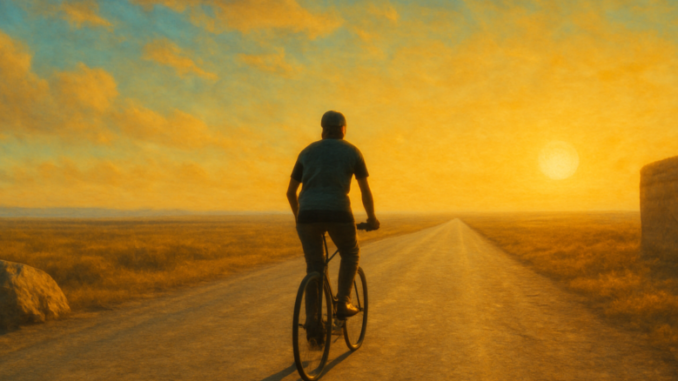
The cycling world was recently turned upside down by a breathtaking 175-kilometer solo breakaway. Commentators called it madness and genius in equal measure. But beyond the athletic spectacle lies a deeper truth — one that resonates far beyond the world of sport. A feat like this demands more than physical strength. It requires mental fortitude, discipline, and the ability to keep going when every fiber of your being screams at you to stop. These are precisely the qualities that Freemasons have cultivated for centuries — not to win races, but to become better human beings and contribute meaningfully to society.
The Power of Going It Alone
Imagine this: you’re riding alone, kilometer after kilometer, while the peloton hunts you down from behind. No one sets your pace. No one cheers you on. It’s just you, your thoughts, and the road ahead. This scenario is familiar to anyone who has ever undertaken a major personal challenge — building a career from scratch, overcoming an addiction, or working through a difficult relationship. Sometimes, you simply have to push through on your own.
In Freemasonry, we call this working on the rough stone. Every Mason begins as unrefined material and must shape himself, step by step, into something of value. This process is ultimately a solitary one. Yes, the lodge offers support and inspiration, but the real work happens in silence, in the honest confrontation with yourself. Just as a cyclist on a lonely stretch of road must decide whether to give up or press on, every person faces that same choice at critical moments in life.
Discipline as a Daily Practice
You don’t win a 175-kilometer solo on talent alone. Behind such a performance lie years of training — early mornings, long hours in the saddle, careful attention to nutrition and recovery. This requires a discipline that goes far beyond motivation. Motivation comes and goes, but discipline is what remains when motivation fades.
The eighteenth-century philosopher Immanuel Kant wrote extensively about duty and self-mastery as the foundations of a moral life. He argued that true freedom doesn’t mean doing whatever you want — it means being capable of doing what you ought to do. This insight is also a core value within Masonic lodges. Benjamin Franklin, himself a Freemason, kept a daily journal in which he measured his behavior against thirteen virtues. He understood that without systematic self-reflection, we inevitably slide into complacency.
Discipline is the bridge between who you are and who you could become.
Practical Steps to Build Perseverance
How do you translate the lesson of a solo cycling breakaway into your own life? Here are four practical steps you can start applying today:
1. Choose one small goal and commit to it for thirty days. Not ten goals — just one. It can be as simple as reading for ten minutes every morning or taking a daily walk.
2. Create a fixed moment for self-reflection. Freemasons traditionally do this at the end of the day: What did I do well? What could I improve? How did I treat others?
3. Find someone to hold you accountable. In the lodge, this role belongs to the Worshipful Master, but it could just as easily be a friend, partner, or mentor.
4. Accept setbacks as part of the process. A cyclist who never falls has never truly ridden. Failure isn’t a dead end — it’s feedback.
From Personal Growth to Societal Impact
This is where things get truly interesting: why would a fraternity like Freemasonry place so much emphasis on personal development? The answer is simple but powerful. A society is made up of individuals. When each individual works on his own character, the community as a whole becomes stronger, more just, and more harmonious.
Wolfgang Amadeus Mozart, Johann Wolfgang von Goethe, and Voltaire were all Freemasons. They didn’t use the insights they gained in the lodge to withdraw from the world — they used them to enrich it through music, literature, and philosophy. Their personal discipline translated into works that continue to inspire millions to this day.
A cyclist who wins a solo breakaway inspires others to push their own boundaries. A Freemason who works on himself inspires those around him through the example he sets — not by preaching, but by acting. Not by criticizing others, but by embodying the change he wishes to see.
The Courage to Begin
The hardest moment of a solo breakaway isn’t the finish — it’s the start. It’s that instant when you ride away from the peloton with no guarantee of success. The same is true for personal change. The first step always feels uncertain. What if I fail? What if people laugh at me?
Marcus Aurelius wrote in his Meditations that we should not fear the opinions of others, but only our own failure to live according to our principles. This Stoic insight resonates deeply with Masonic practice. In the lodge, you learn that respect doesn’t come from what you have, but from who you are and how you act.
Start today. Choose your goal. Ride your solo. Not because it’s easy, but because it’s worth it.
A 175-kilometer solo breakaway is more than a sporting achievement — it’s a lesson in human potential. Discipline, perseverance, and the courage to stand alone are qualities that each of us can develop. Freemasonry provides a framework for that journey: not as a magical solution, but as a methodical path toward self-improvement. And when enough individuals walk that path, society itself slowly but surely begins to change. That transformation doesn’t start tomorrow — it starts now, with your first push on the pedal.
Copyright text & image: devrijmetselaar.nl
Texts are based on the ideas and content of the author of devrijmetselaar.nl, reviewed, corrected, and supplemented with the assistance of OpenAI. Images are created based on the ideas of the author of devrijmetselaar.nl using OpenAI/DALL-E.
Frequently Asked Questions
What does Freemasonry have to do with a 175km cycling race?
The article uses the 175-kilometer solo breakaway as a metaphor for personal perseverance and self-improvement. Just as the cyclist must push through alone against all odds, Freemasons cultivate mental fortitude and discipline to become better human beings. Both require qualities like mental strength, discipline, and the ability to persevere when facing difficult challenges.
What does 'working on the rough stone' mean in Freemasonry?
In Freemasonry, 'working on the rough stone' refers to the process of self-improvement and personal refinement. Every Mason begins as unrefined material and must shape himself step by step into something of value. While the lodge provides support and inspiration, the real work of self-transformation is ultimately a solitary journey that requires honest self-confrontation.
Why is discipline more important than motivation in achieving major goals?
According to the article, discipline is more important than motivation because motivation is temporary and comes and goes, while discipline remains constant. The article references Immanuel Kant's philosophy that true freedom means being capable of doing what you ought to do, not just what you want to do. Without systematic discipline and self-reflection, people inevitably slide into complacency, making discipline the essential bridge between who you are and who you want to become.


Be the first to comment