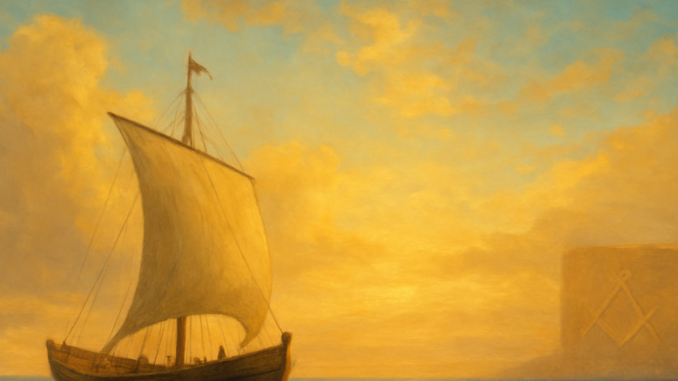
There is a key lying on the table. Cast in bronze, worn smooth by countless hands. You could pick it up, walk outside, and open any door you encounter. Yet you remain seated — not because the door is locked, but because you are not sure you truly want to be free. Lucius Annaeus Seneca wrote about precisely this paradox in his eighteenth letter to Lucilius: the human being who remains captive even though the cage stands wide open.
The Key Nobody Picks Up
In Letter XVIII, Seneca addresses his friend Lucilius with a question that has remained equally urgent across the centuries: what truly makes a person free? The answer Seneca offers is as simple as it is unsettling. Freedom does not begin with breaking external chains — it begins with recognizing the shackles we have placed upon ourselves. The slave who fears his master is less enslaved than the free citizen who refuses to face his own fears.
Seneca describes how we bind ourselves to possessions, to the approval of others, to habits that once offered comfort but have since become prisons. The philosopher invites us to periodically live as though we own nothing, thereby loosening the grip of the material world. Not as some form of ascetic punishment, but as an exercise in awareness.
The Rough Ashlar as a Symbol of Bondage
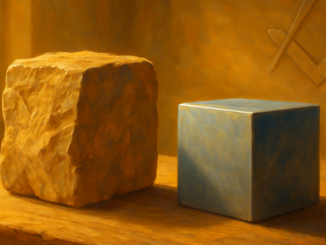
Within Freemasonry, there is the well-known image of the rough ashlar — the unworked stone representing the state in which every seeker begins. This stone still carries all its imperfections, its jagged edges and sharp corners that make it difficult to fit harmoniously into a greater whole. What Seneca describes as the chains of habit and fear, the Freemason sees as the rough surfaces that still require work.
The critical difference from a literal prison is that these inner shackles are invisible. We can carry them for years without ever noticing. The Freemason learns, however, to take up the chisel and mallet — symbolically speaking — and work upon himself. Each strike is a moment of self-reflection, an attempt to move closer to the perfect ashlar, the cubic stone that fits into the edifice of a virtuous life.
True freedom is not the absence of boundaries, but the conscious choice to shape yourself according to your own insight and virtue.
An Exercise in Detachment
Seneca proposes a concrete exercise that remains surprisingly relevant today. Live for a few days as though you are poor, he writes. Eat simple food, sleep on a hard surface, wear coarse clothing. Not to suffer, but to discover how dependent you have become on comfort. This voluntary austerity reveals which of your needs are genuine and which are merely habits in disguise.
The Masonic tradition contains strikingly similar practices within its rituals. The candidate who undergoes initiation passes through symbolic trials that confront him with his own vulnerabilities. The blindfold — or hoodwink — worn at the outset symbolizes not only ignorance, but also the willingness to let go of old certainties. Only the person who dares to acknowledge that he does not see everything can truly begin to see.
The Power of Brotherhood in Liberation
Although Seneca addresses his letters to a single individual, he constantly speaks about human beings as social creatures. True freedom is not a solitary undertaking. We do not liberate ourselves in isolation, but in dialogue with others who have embarked on the same quest. Lucilius is to Seneca what a Brother is to the Freemason: a mirror, a witness, a companion on the road.
The Lodge provides a space where this dialogue can take place. Brothers come together not to convert one another or to teach absolute truths, but to search collectively. Within that shared search, a remarkable form of freedom emerges: the freedom to fail, to doubt, and still be accepted. This fraternal bond makes it possible to look honestly into the mirror without flinching.
Light as a Metaphor for Liberation
Seneca frequently uses the imagery of light and darkness. The person who is trapped in his passions lives in a kind of twilight. Only when reason is kindled like a lamp does what truly binds us become visible. This resonates deeply with Masonic ritual, where the transition from darkness to light forms a central and transformative moment.
The light that the Freemason seeks is not an external illumination but an inner awakening. It is the moment you realize that the chains you carried were chains of your own making. That discovery can be painful, but it is also profoundly liberating — for what you have forged yourself, you can also dismantle yourself.
The Daily Choice
Seneca closes his letter with a sober observation. Freedom is not a destination but a daily exercise. Every morning, we make choices that either set us freer or bind us more tightly. The Stoic philosopher and the Freemason share this understanding: the work upon oneself is never finished. There is always another corner of the stone that demands attention.
Consider these principles that both traditions hold dear:
- Self-reflection as a daily practice — not an occasional luxury, but a discipline.
- Detachment as an exercise, not a goal — learning to hold loosely what the world presses firmly into our hands.
- Brotherhood as mirror and support — because honest self-examination requires the presence of trusted companions.
- Light as a symbol of inner awakening — the moment when we finally see what has always been there.
The key still lies on the table. It was cast from the bronze of ancient wisdom and polished by generations of seekers. The question Seneca asks is the same question that echoes through every Lodge: are you willing to pick it up?
Letter XVIII of Seneca reminds us that freedom begins where we recognize our own chains. The Freemason who works upon his rough ashlar walks the same path as the Stoic who examines his dependencies. Both traditions point toward the same truth: genuine liberation is an inner process that demands honesty, courage, and the willingness to search alongside others. The key has always been within reach. All that is required is the choice to pick it up.
Copyright text & image: devrijmetselaar.nl
Texts are based on the ideas and content of the author of devrijmetselaar.nl, reviewed, corrected, and supplemented with the assistance of OpenAI. Images are created based on the ideas of the author of devrijmetselaar.nl using OpenAI/DALL-E.
Frequently Asked Questions
What is Seneca's main argument about true freedom according to the article?
Seneca argues that true freedom does not come from breaking external chains, but from recognizing and overcoming the invisible shackles we place upon ourselves, such as fear, attachment to possessions, and the need for others' approval. He suggests that a slave who fears his master is less enslaved than a free citizen who refuses to face his own fears.
How does Freemasonry relate to Seneca's philosophy of freedom?
In Freemasonry, the rough ashlar (unworked stone) symbolizes the invisible bonds and imperfections Seneca describes. Like Seneca's concept of inner shackles, the rough ashlar represents the work a Mason must do on himself through self-reflection and virtue. The symbolic use of the chisel and mallet represents the process of working toward true freedom and becoming a perfect cubic stone fit for a virtuous life.
What practical exercise does Seneca recommend to achieve freedom?
Seneca proposes living for several days as though you are poor—eating simple food, sleeping on a hard surface, and wearing coarse clothing. This exercise is not meant as punishment or asceticism, but as a practical way to discover how deeply attached you are to material possessions and to loosen the grip that material dependence has on your freedom.

Be the first to comment