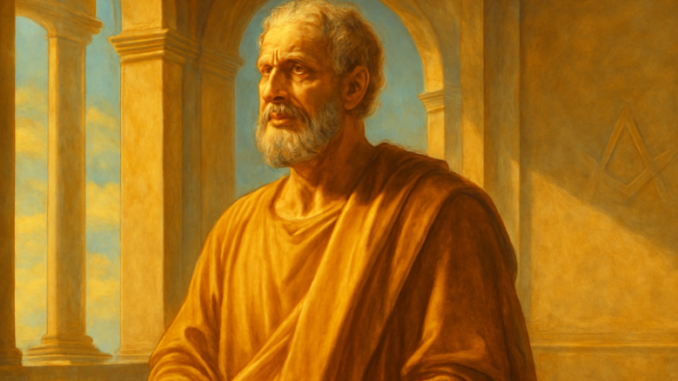
What does it truly mean to possess time? Lucius Annaeus Seneca opens his famous correspondence with Lucilius with a paradox that still strikes an uncomfortable chord today: we are exceedingly careful with our money and possessions, yet we squander our time as though it were infinite. This first letter, written in the first century AD, confronts the reader with a sobering truth about how we live — and how we might choose to live instead.
Time as Our Only True Possession
In this opening letter, Seneca poses a simple but deeply unsettling question: if time is the only thing we truly possess, why do we treat it as though it were the least valuable? The philosopher observes how people carefully guard their money, protect their property, and defend their reputations — yet freely give away their hours and days to distraction, procrastination, and meaningless activity.
The central theme revolves around what Seneca calls “reclaiming” ourselves. He urges Lucilius to treat each day as a complete life in itself. Not in the sense of rushing to accomplish everything, but with the awareness that every moment that passes unused is gone forever. This is not a call to obsess over productivity — it is a call to presence.
Three Forms of Wasted Time
Seneca identifies three distinct ways in which people lose their time. The first is the most obvious: spending time on pointless activities, on entertainment without depth, on busyness without purpose. The second is more subtle: losing time to the past through regret and endless rumination over what has already been. The third is perhaps the most insidious of all: losing time to the future by endlessly planning, postponing, and waiting for the “right moment.”
The person who lives each day as though it were their last has truly taken possession of their time — not through fear of death, but through being fully present in life.
The Stoic solution Seneca offers is not to be constantly busy, but to be consciously aware. He asks Lucilius to take stock at the end of each day: How much time did I actually live? How much was taken from me by others? How much did I let slip away on my own? This practice of self-examination forms the foundation of what Seneca considers the philosophical life.
Striking Metaphors: Money, Water, and Stolen Hours
Seneca employs a vivid comparison with material wealth. Imagine that someone stole a small sum of money from you every single day, he writes. You would be furious. But when people steal your time — burdening you with unnecessary obligations, dragging you into hollow conversations, imposing expectations that are not your own — you allow it without protest. We guard our wallets more carefully than our lives.
Another image Seneca paints is that of water slipping through one’s fingers. Time, he argues, is by its nature fleeting. But this does not make us powerless. The wise person does not learn to hold on to time; they learn to be fully present as it flows. The difference between a life well lived and a life wasted lies not in the number of years, but in the quality of attention brought to each passing moment.
Why Seneca Opens with Time
It is no coincidence that Seneca chose to open his collection of one hundred and twenty-four letters with this particular subject. Time — and how we relate to it — forms the bedrock upon which all of his subsequent advice rests. Without the awareness that our time is finite and precious, every other piece of philosophical counsel loses its urgency. The choice of this opening theme reveals Seneca’s pedagogical insight: before Lucilius can learn how to live, he must first realize that he is alive.
The letter is characteristic of Seneca’s style: personal, direct, and practical. He does not write as a detached teacher lecturing from on high, but as a friend who wrestles with the same questions himself. He admits that he too has wasted time, that he too must work daily at cultivating this awareness. This vulnerability makes his message more accessible and far more credible.
Timeless Relevance in a Distracted Age
Nearly two thousand years later, Seneca’s first letter remains strikingly relevant. In an era of constant distraction, endless information streams, and the illusion of unlimited possibilities, his warning may sound more urgent than ever. The Stoic invitation to not merely fill the day but to truly live it, to be present rather than perpetually busy, offers a powerful counterweight to the modern obsession with productivity and optimization.
Seneca does not ask for perfectionism, nor does he demand that we punish ourselves for every lost moment. He asks for awareness. He asks us to take seriously the question: if this were my last day, would I be content with how I spent it? The answer to that question, posed anew each day, is what the Stoic philosopher considers the key to a life truly lived.
Seneca’s first letter to Lucilius lays the foundation for all the wisdom that follows: without a deep sense of the finitude and preciousness of time, every philosophy of life rings hollow. The invitation is not to live in fear, but to be awake — to treat each day as a gift that calls for our full presence. In that simple yet radical shift of perspective lies the very heart of Seneca’s Stoic philosophy of life.
Copyright text & image: devrijmetselaar.nl
Texts are based on the ideas and content of the author of devrijmetselaar.nl, reviewed, corrected, and supplemented with the assistance of OpenAI. Images are created based on the ideas of the author of devrijmetselaar.nl using OpenAI/DALL-E.
Frequently Asked Questions
How does Seneca's philosophy on time relate to Masonic teachings?
Seneca's emphasis on self-examination and living with purpose aligns beautifully with Masonic principles of self-improvement and conscious living. Both traditions encourage members to examine their actions daily and strive to become better versions of themselves through deliberate practice and awareness. The Masonic journey, like Seneca's philosophy, teaches that time is precious and should be devoted to meaningful personal development and service to others.
What does it mean to 'reclaim ourselves' according to Seneca?
Reclaiming ourselves means taking back control of our time from distractions, regrets, and endless postponement, and instead living with full presence and intentionality. This concept resonates deeply with Freemasonry's focus on self-mastery and personal enlightenment. By becoming aware of how we spend each moment, we align ourselves with our true purpose, much as a Mason works to shape himself into a better instrument of virtue and wisdom.
How can Seneca's practice of daily self-examination help Masons?
Seneca's recommendation to examine each day—asking how much time was truly lived versus wasted—mirrors the Masonic practice of reflection and moral accounting. This daily examination helps Masons identify areas for growth, strengthen their commitment to lodge work, and ensure their time is spent in pursuit of knowledge and fellowship. Such conscious reflection is essential to the Mason's path of continuous improvement.
Why does Seneca compare time to money and water?
These metaphors illustrate that while we fiercely protect material wealth, we carelessly let time slip away—yet time is our most irreplaceable possession. Freemasonry teaches that wisdom lies in understanding true value, and Seneca's comparison helps Masons recognize that the hours devoted to study, brotherhood, and charitable work are investments in the most precious currency of all. This perspective encourages Masons to prioritize their lodge obligations and spiritual development above trivial pursuits.


Be the first to comment