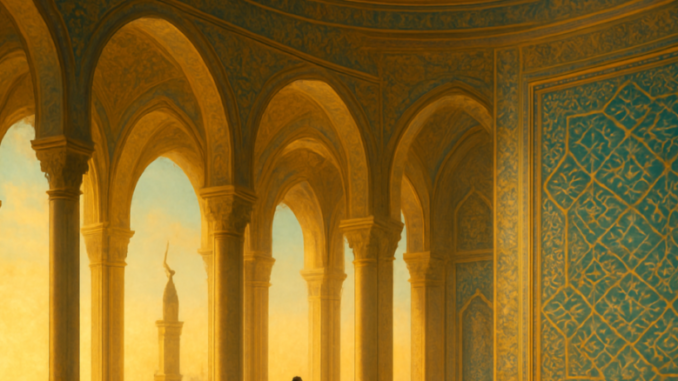
Rock. A word that evokes steadfastness, protection, something that endures the test of time. In the fifteenth surah of the Quran, known as Al-Hijr or The Rock Formation, we encounter the story of a people who carved their homes directly into stone. What does this image mean for the devout Muslim? And what can the Freemason — accustomed to building symbolically — recognize in this ancient tale of stone and spirituality?
A Warning Carved in Stone: The Believer’s Perspective
For the Muslim, Surah Al-Hijr is a text of layered meaning. The name refers to a historical site in the northwest of present-day Saudi Arabia, where the people of Thamud once lived. This civilization had been gifted with the ability to carve magnificent dwellings out of solid rock. Their technical mastery was legendary. And yet they perished — not from a lack of skill, but from spiritual blindness.
The surah tells how the prophet Salih warned his people, but they refused to listen. They placed their trust in material achievements, in the seeming indestructibility of their rock-hewn homes. The message is clear: no human construction, however impressive, offers true protection when the inner foundation is missing. The believer reads here a call to humility — a reminder that real safety lies not in stone, but in surrender to the Divine.
The Inner Temple: A Masonic Perspective
The Freemason approaches stone with a different eye, yet recognizes the same tension between outer and inner building. In the Masonic tradition, the rough ashlar symbolizes the unrefined individual, with all their imperfections. The Mason’s work is to shape this stone, to polish it, to make it fit for a greater structure: the temple of humanity.
Hiram Abiff, the legendary master builder of Masonic tradition, dedicated his life to the construction of a physical temple. Yet the story of his death teaches us that the true treasure was never the building itself, but the secret of mastery — inner knowledge that cannot be taken by force. Like the rock dwellers of Thamud, we can erect impressive structures. But without the right spiritual foundation, they become hollow.
Where Both Traditions Meet
Despite their different backgrounds, the Islamic and Masonic visions on this theme converge on an essential point. Both warn against spiritual pride. Both emphasize that material accomplishments, no matter how grand, can never substitute for inner growth.
True spiritual strength lies not in the hardness of the stone you build, but in the softness with which you allow yourself to be shaped.
Surah Al-Hijr also contains verses about the creation of humanity and the role of Iblis, who refused to bow. This theme of pride versus humility runs like a thread through the entire text. The Freemason recognizes here the ongoing struggle between the ego and the higher self. The ritual work within the lodge is aimed precisely at this: tempering lower impulses, cultivating virtue.
Protection and Sacred Boundaries
Another striking element in the surah is its emphasis on protection. The Quran itself is described as guarded, unchangeable. The heavens are shielded against intruders. This theme of sacred boundaries resonates powerfully with the Masonic practice of the Tyler — the guardian who secures the lodge from the outside world, ensuring that the work within can take place in concentrated stillness.
Protection here is not a defense born of fear, but the creation of the right conditions for growth. A garden needs a fence — not to shut out the world, but to give vulnerable seedlings the chance to take root. The human soul is no different: it needs sacred space in which to develop.
Two Paths, One Insight
The Muslim who recites Surah Al-Hijr and the Freemason who takes up the gavel walk different paths. Yet they share a fundamental understanding: humanity is called to something greater than material construction. The rock is not the destination — it is the raw material. The real work takes place in the invisible realm: in the heart, in the mind, in the gradual transformation of character.
Both traditions value craftsmanship, but place it in the service of something higher. Both see pride as the greatest pitfall on the spiritual path. Both stress the necessity of protected space for inner growth. And both acknowledge that outward forms are impermanent without inner substance.
What We Can Learn
Studying a sacred text from another tradition is not an act of appropriation, but an act of listening. The Freemason who reads The Rock Formation does not encounter a foreign world, but recognizes ancient truths clothed in new garments. This is the essence of Masonic spirituality: openness to wisdom regardless of its origin, grounded in the understanding that truth is universal.
The rocks of Thamud no longer stand. Their inhabitants have been forgotten. But the lesson written in stone still echoes: do not build only with your hands — build with your heart. Do not be seduced by the illusion of invulnerability. The true master builder knows that his most important work is invisible.
Surah Al-Hijr invites us to look beyond the surface — beyond the impressive facade to the foundation beneath. For the Freemason, this is a familiar invitation. In the encounter between these two traditions, we find not conflict but recognition: the rock that truly protects is not the stone around us, but the inner strength we build with patience and devotion. That is the work that endures.
Copyright text & image: devrijmetselaar.nl
Texts are based on the ideas and content of the author of devrijmetselaar.nl, reviewed, corrected, and supplemented with the assistance of OpenAI. Images are created based on the ideas of the author of devrijmetselaar.nl using OpenAI/DALL-E.
Frequently Asked Questions
What is Surah Al-Hijr and why is it significant in Islamic teachings?
Surah Al-Hijr, meaning 'The Rock Formation,' is the fifteenth surah of the Quran. It refers to a historical site in northwest Saudi Arabia where the people of Thamud once lived. The surah tells of how Prophet Salih warned his people, but they refused to listen and instead placed their trust in their material achievements and impressive rock-hewn homes. The surah serves as a spiritual lesson that no human construction, however impressive, offers true protection without a strong inner spiritual foundation and surrender to the Divine.
How do Freemasons interpret the symbolism of stone and building?
In Masonic tradition, stone carries deep symbolic meaning. The rough ashlar represents the unrefined individual with all their imperfections, while the Mason's work involves shaping and polishing this stone to make it fit for a greater structure—the temple of humanity. The story of Hiram Abiff, the legendary master builder, teaches that the true treasure lies not in the physical building itself, but in inner knowledge and spiritual mastery that cannot be taken by force.
What common message do Islamic and Masonic traditions share regarding spiritual development?
Both Islamic and Masonic traditions converge on the essential warning against spiritual pride and the danger of relying solely on material accomplishments. They both teach that no matter how grand or impressive one's external achievements and constructions may be, they can never substitute for inner spiritual growth. True spiritual strength comes from inner development and foundation, not from the hardness of the stone one builds.

Be the first to comment