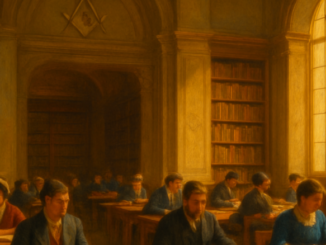
Historic library interior symbolizing Freemasonry's contribution to public education
Freemasonry & Society

Libraries and Cultural Centers Built by Freemasonry

Freemasonry has always maintained a profound connection with knowledge, education, and culture. In the Netherlands, this commitment led to the establishment of libraries and cultural centers that offered far more than books — they provided spaces for dialogue, intellectual growth, and community building. Often supported by Masonic lodges, these institutions played a crucial role in making literature, science, and the arts accessible to a broad public. The Importance of Libraries in the 19th Century In the 19th century, libraries were rare and often exclusively accessible to the wealthy and privileged. Freemasons viewed this inequality as a significant barrier to social progress and decided to take action. They founded libraries that were open to everyone, regardless of background or social standing. These libraries were far more than simple repositories for books. They functioned as centers of enlightenment where people could meet, share knowledge, and explore new ideas together. In an era when access to information was a luxury, these Masonic-supported institutions represented a radical commitment to intellectual freedom. The Role of Freemasonry in Promoting Knowledge and Culture Freemasonry played a key role in the founding of libraries and cultural centers, guided by several core principles. First and foremost was the belief […]
Historic building associated with Koninklijke Visio and Freemasonry in the Netherlands
Freemasonry & Society

Visio and Freemasonry – A Remarkable Historical Connection

Freemasonry, a fraternity built on the ideals of equality, brotherhood, and enlightenment, has supported countless social initiatives throughout the centuries. One of the most remarkable examples in the Netherlands is the involvement of Freemasons in the founding and ongoing support of Koninklijke Visio — an organization dedicated to helping people with visual impairments. Its success owes much to the philanthropic efforts of members of the Craft. The Origins of Koninklijke Visio Visio, officially known as Koninklijke Visio (Royal Visio), started as a modest institution for the education of the blind and gradually grew into a nationwide organization supporting people with visual disabilities. Its roots stretch back to the nineteenth century, an era in which philanthropy was essential for addressing societal needs that governments often overlooked. Freemasons, with their emphasis on individual development and the betterment of society, played a significant role in establishing institutions like these. Members of the fraternity saw it as their duty to provide blind and visually impaired individuals with access to education and the skills they needed to participate meaningfully in society. This mission aligned perfectly with core Masonic values: personal growth and collective responsibility. The Philosophy Behind the Support Freemasons have long been involved in […]

Symbols of Freemasonry and New Age spirituality representing universal connection
Religion

New Spirituality and Freemasonry: A Path to Universal Connection

Individual spirituality is gaining momentum across the modern world. New spiritual movements — often grouped under the umbrella of New Age — offer flexible and deeply personal approaches to finding meaning and purpose. But how do these contemporary spiritual currents relate to Freemasonry, a tradition that similarly emphasizes freedom, growth, and self-discovery? New Spiritual Movements: The Quest for Personal Meaning New spiritual movements are inherently eclectic. They blend elements from Eastern philosophies, Western psychology, and traditional religions into personalized frameworks for understanding the self and the world. Meditation, yoga, crystal healing, astrology, and energy work are just a few of the practices that have gained widespread popularity within these movements. A defining characteristic of these spiritual currents is their emphasis on personal development. Rather than following prescribed dogmas, practitioners forge their own path toward enlightenment and self-knowledge. This freedom of choice resonates with a growing number of seekers who feel confined by more rigid religious structures. Freemasonry: A Traditional Yet Flexible Approach Freemasonry shares with new spiritual movements a deep commitment to personal growth and introspection. While the Craft works with centuries-old rituals and rich symbolism, it also allows ample room for individual interpretation. Much like New Age practices, the […]

Symbolic representation of Freemasonry evolving in the 21st century
History

The History of Freemasonry in the 21st Century

The 21st century ushered in an era of globalization, digital transformation, and rapid social change. For Freemasonry — an institution with roots stretching back centuries — this has presented a unique challenge: how to remain relevant in a world that looks vastly different from the one in which it was founded. In this post, we explore how the Craft is blending its time-honored traditions and values with modern technology, greater diversity, and a renewed sense of purpose. Digital Transformation One of the most significant shifts of the 21st century has been the rise of digital communication, and Freemasonry has not been immune to its influence. Lodges around the world now use websites, social media platforms, and email newsletters to share information, promote events, and connect members across geographic boundaries. What once required physical correspondence and word of mouth can now reach thousands with the click of a button. The COVID-19 pandemic accelerated this digital adoption dramatically. When lodges were forced to close their doors, platforms like Zoom and Microsoft Teams became lifelines for fraternal connection. Virtual meetings, educational lectures, and even degree discussions moved online, allowing brothers to stay engaged during an unprecedented period of isolation. Many of these digital […]

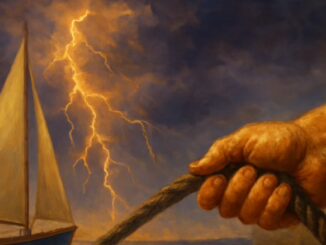
Thunderstorm over a harbor at night with lightning illuminating moored boats
Personal Development & Leadership

Storm and Character: What Thunder Reveals About Who You Are

The evening sky above the harbor turns purple, and the first flash of lightning illuminates the masts of moored boats. A man walks calmly to his vessel and unplugs the shore power cable. Behind him, other boat owners laugh: “That storm is nothing to worry about!” But when the morning sun breaks through the clouds, every single one of them has quietly done the same thing. Sometimes a single action says more about character than a thousand words. The Silence Before the Storm There is a peculiar moment just before a thunderstorm breaks. The wind drops, birds fall silent, and the air itself seems to hold its breath. In that instant of tension, something essential about human behavior reveals itself. Some people ignore the signs and carry on as if nothing is happening. Others take quiet precautions — not out of fear, but out of prudence. It is precisely this distinction that Freemasonry has explored for centuries: the difference between outward display and inner authenticity. The man who unplugs his shore power is not acting out of panic. He is following an inner compass that tells him: take responsibility for what you can influence, and accept what you cannot control. […]

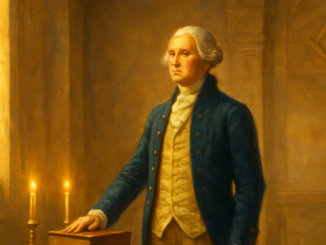
George Washington in Masonic regalia during the Capitol cornerstone ceremony
Personal Development & Leadership

George Washington: Freemason and Father of America

George Washington, the first President of the United States, is widely recognized as one of the most influential figures in American history. What is less commonly known — yet equally significant — is his deep involvement in Freemasonry. Washington’s membership in the Craft was not merely a social affiliation; it reflected the personal values and ideals that guided him as he helped build a new nation from the ground up. Initiation into Freemasonry On November 4, 1752, at the age of just twenty, George Washington was initiated as a Freemason at Fredericksburg Lodge No. 4 in Virginia. This moment marked the beginning of a lifelong association with the fraternity — one devoted to personal development, moral integrity, and service to the community. Washington would go on to advance through the degrees, eventually becoming a Master Mason and, later in life, the Worshipful Master of Alexandria Lodge No. 22. Freemasonry in His Life and Leadership As a Freemason, Washington embraced the core values of the Brotherhood: liberty, equality, and fraternity. These principles profoundly influenced his leadership during the American Revolutionary War and throughout his presidency. He viewed Freemasonry as a space where men from diverse backgrounds could come together to work […]

Historical image representing Freemasonry during the Second World War
History

Freemasonry During the Second World War

The Second World War marked one of the darkest chapters in the long history of Freemasonry. Across Nazi Germany and the occupied territories, Freemasons were systematically targeted, persecuted, and silenced. Yet even in the face of totalitarian oppression, the Craft’s core ideals of liberty, equality, and brotherhood endured — sometimes at extraordinary personal cost. Why the Nazis Targeted Freemasonry Nazi ideology was built on antisemitism, extreme nationalism, and elaborate conspiracy theories. Freemasonry, with its emphasis on universal brotherhood and its tradition of private meetings, became an easy target. The regime falsely portrayed the fraternity as a shadowy network conspiring against the state, lumping it together with Jewish communities and other perceived enemies. In reality, Freemasonry stood for exactly the kind of values — tolerance, free thought, and human dignity — that totalitarian regimes cannot tolerate. The Ban on Freemasonry in Germany and Occupied Territories When Adolf Hitler rose to power in 1933, Freemasonry was swiftly banned throughout Germany. Lodges were forced to close their doors, their assets seized, and their records confiscated. Well-known Masonic symbols such as the Square and Compasses were deliberately distorted in propaganda materials to fuel conspiracy theories and public distrust. As German forces swept across Europe, […]

Masonic square and compasses symbolizing Freemasonry and brotherhood
Philosophy & Ethics

What Is Freemasonry? A Journey of Self-Discovery and Brotherhood

This article on Freemasonry has been recently updated to give you the clearest and most current picture of what this ancient brotherhood is all about. Whether you’re encountering Freemasonry for the first time or have been curious for a while, read on to discover what it truly means to be a Freemason — and why a growing number of people are choosing this path of self-discovery. Freemasonry has a way of sparking curiosity. Perhaps you’ve heard references to rituals, symbols, or lodges. Maybe you’ve been drawn in by the rich history and the air of mystique that surrounds it. But what is Freemasonry really, and why do people choose to join this centuries-old brotherhood? What Is Freemasonry? At its core, Freemasonry is a philosophy of life that places personal development and ethical living at the center of everything it does. It is not a religion, but it welcomes people of all faiths — provided they acknowledge the existence of a higher power, however they choose to define it. Freemasons work on becoming better versions of themselves through symbolism, ritual, and the bonds of brotherhood. The goal? To become a better person. Not better than someone else, but better than the […]

Worshipful Master conducting a home visit with a Freemasonry candidate
Joining & The Path Within

The Master’s Home Visit: A Key Step in Joining Freemasonry

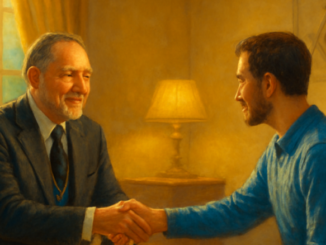
When a candidate expresses interest in Freemasonry and considers joining a lodge, one of the most meaningful moments in the admission process is the home visit by the Worshipful Master. Far more than a formality, this personal meeting is a cornerstone of mutual understanding and trust — and it sets the tone for the entire journey that lies ahead. The Significance of the Home Visit The home visit is a tradition that reflects the deeply personal nature of Freemasonry. This is not an anonymous organization — it is built on brotherhood and trust. By meeting the candidate in the comfort of their own home, the Worshipful Master gets to know the person behind the application in a relaxed and familiar setting. For the candidate, the visit offers a valuable opportunity to ask questions, gain deeper insight into the workings of the lodge, and feel at ease with the process. It is a moment of open dialogue where expectations on both sides are discussed honestly and without pressure. What Is Discussed During the Visit? The conversation during a home visit typically centers on personal motivations and values. The Worshipful Master may ask questions such as: What drew you to consider Freemasonry? […]

Freemasons meeting with a candidate during a Committee of Inquiry session
Joining & The Path Within

The Committee of Inquiry: What to Expect as a Candidate

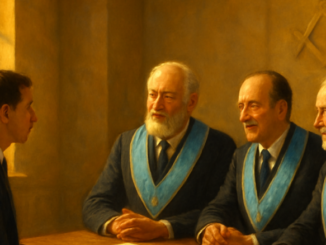
If you’ve expressed interest in joining Freemasonry, one of the most important steps you’ll encounter is the meeting with the Committee of Inquiry. This recently updated article gives aspiring Freemasons a clear and current overview of what this mutual conversation involves and how you can prepare for it — whether you’ve just reached out or are already in contact with a lodge. What Is the Committee of Inquiry? The Committee of Inquiry is a small group of experienced Freemasons appointed by the lodge where you’ve submitted your interest. Their role is twofold: to get a thorough understanding of your background, intentions, and expectations, and to give you genuine insight into what membership actually involves. This process is carried out thoughtfully and with care. Freemasonry is not a casual club you join on a whim — it’s a brotherhood built on specific values and traditions. The committee needs to feel confident that you understand these principles and are willing to commit to them. The Conversation: A Two-Way Exchange One of the most important things to understand is that the meeting with the Committee of Inquiry is not an exam. It’s an open, respectful dialogue — a genuine two-way exchange. As a […]

A Masonic candidate in conversation during the Master's Interview at a lodge
Joining & The Path Within

The Master’s Interview: A Journey to the Heart of Freemasonry

In the world of Freemasonry, few moments are as pivotal as the Master’s Interview. This conversation marks a defining point in a candidate’s path toward possible membership. It is not a job interview, not a test, and certainly not an interrogation. Rather, it is a meeting rooted in mutual curiosity — a chance for both the candidate and the lodge to truly get to know one another. But what exactly makes this conversation so significant? A Meeting of Intentions At its core, the Master’s Interview revolves around intention. Why is the candidate knocking at the door of Freemasonry? What does he hope to find — and, perhaps more importantly, what is he willing to contribute? Freemasonry is not an organization one joins for status or networking opportunities. It is a brotherhood in which personal growth, introspection, and service to others stand at the center. During the interview, the candidate is given space to share his motivations. More often than not, this goes far deeper than surface-level answers. The conversation naturally invites reflection: What does brotherhood mean to him? How does he feel about the symbolism and rituals that characterize Freemasonry? The Role of the Masters For the Masters conducting the […]

A rough ashlar stone and gavel symbolizing Masonic personal transformation
Symbolism & Rituals

The Sledgehammer Blow: A Masonic Moment of Revelation

In Freemasonry, we work on ourselves. The idea is simple yet profound: by chipping away at our own rough stone, we strive to become better human beings. Every now and then, a presentation or discussion in Lodge strikes so deeply that it changes something inside you. I experienced such a moment — a sledgehammer blow of emotion that came from nowhere and left me transformed. Working on the Rough Stone Freemasonry is often described as a journey of self-improvement. We see ourselves as rough ashlar stones, and through reflection, ritual, and fellowship, we gradually shape ourselves into something more refined. Some Lodge meetings pass quietly, offering gentle lessons. Others hit you like a sledgehammer. The meeting I want to share with you was very much the latter. Some time earlier, I had attended a presentation about the concept of the Daimon — an idea I will write about separately another time. That earlier talk planted a seed in my mind, one I didn’t fully understand at the time. But seeds have a way of growing in the dark, and what happened next proved exactly that. The Blow That Came from Nowhere During a subsequent Lodge meeting, we had a round […]

Vrijmetselarij - First Visit to the Masonic Lodge
My Story

First Visit to the Masonic Lodge

After initiating contact through the lodge’s website, I had arranged a first visit to get acquainted. Upon entering the lodge in my hometown for the first time, I was warmly welcomed by two Masonic brothers. They had organized an extra information evening due to my enthusiasm; otherwise, I would have had to wait nearly six months for an open evening. Other interested individuals had been invited, but unfortunately, they couldn’t attend on such short notice. Reception The reception was very friendly and warm. I was immediately offered a cup of coffee, and they explained what Freemasonry is. Although still somewhat vague, this was more due to my understanding. It became increasingly clear that they work on life’s questions here. The setting was like a clubhouse with a bar and tables—nothing fancy, just “ordinary.” This part of the lodge is also known as the 7th degree, used for reception, breaks, and discussions. I was then given a tour of some other areas. First, we went to the meeting room, also called the “Voorhof” (forecourt), and from there to the “Werkplaats” (workshop), also known as the temple. Voorhof / Meeting Room In the Voorhof, “comparing” takes place. This involves someone giving a […]

Vrijmetselarij - Gnosis, Gnostiek en Agnostiek in de Vrijmetselarij
Spirituality

Gnosis, Gnosticism, and Agnosticism in Freemasonry

The quest for truth and knowledge is a fundamental aspect of the human experience. In esoteric and spiritual traditions, three concepts play a significant role: gnosis, gnosticism, and agnosticism. Each of these terms has its own meaning and philosophical implications. In this blog, we explore these concepts and how they relate to Freemasonry, a fraternity where personal development and spiritual insight are central. What is Gnosis? Gnosis is derived from the Greek word γνῶσις, meaning “knowledge.” Unlike scientific or intellectual knowledge, gnosis refers to inner, spiritual knowledge. It is a profound insight gained through personal experience rather than external teachings. Gnosis is often associated with mysticism and esotericism, emphasizing the direct experience of the divine or higher consciousness. In many spiritual traditions, including certain branches of Freemasonry, gnosis is a crucial concept. It signifies that true knowledge is not imparted through books or teachers but through personal transformation and inner enlightenment. In Freemasonry, gnosis is often symbolized by light. Freemasons speak of “seeking the light,” which is a metaphor for the quest for wisdom and understanding. This light represents not only rational knowledge but also spiritual awakening and awareness. Gnosticism: The Philosophy of Gnosis Gnosticism is a religious and philosophical […]

Vrijmetselarij - De Symboliek van de Koevoet
Symbolism

The Symbolism of the Crowbar

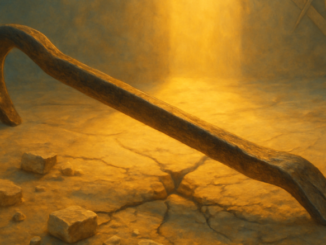
The crowbar is a powerful tool often associated with demolition and force. In everyday life, it is used to overcome resistance, pry things open, or break something apart. However, behind this robust tool lies a deeper symbolism, which also holds significance in Freemasonry. In Everyday Life As a tool, the crowbar is simple yet effective. It is designed to break open things that cannot be moved or accessed by hand alone. This gives it connotations of perseverance, strength, and overcoming obstacles. In daily life, the crowbar can symbolize: From construction workers to emergency responders, the crowbar is widely used to make the impossible possible. The Crowbar in Freemasonry Within Freemasonry, the crowbar carries a more symbolic meaning. It does not refer to physical breaking but to opening the mind and breaking through mental barriers. While we cannot reveal the deeper meaning within Freemasonry, we can share some universal lessons that align with the tool’s function: The Crowbar as a Life Lesson Beyond its physical and symbolic uses, the crowbar can also be seen as a lesson in transformation. In a constantly changing world, it is important to sometimes push forward and embrace change. Whether it’s personal growth, overcoming obstacles, or […]

Vrijmetselarij - Allusive
Spirituality

Allusive

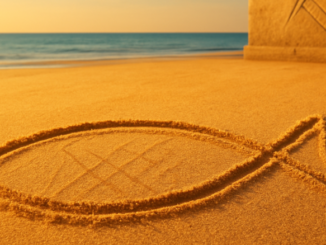
In Freemasonry, symbols, signs, and words are often used to convey meaning. For the Apprentice Freemason, it can be quite an adjustment and hard work to uncover the meaning behind everything. Fortunately, there are always brothers willing to help with this effort. That’s how I came across the word “allusive.” I thought I knew what it meant. What I thought “allusive” meant The Masonic method is an allusive method. That is to say: a method one must get used to and learn to use. Allusive (hinting) is the act of conveying a symbol or ritual within the group, which can have various meanings and, therefore, can be expressed in different ways by those participating in the ‘secret.’ A beautiful example of this is the fish. In the earliest Christian communities, this symbol was drawn in the sand. It hinted at vigilance (a fish never sleeps) but also at participation in Christ, which could then be interpreted in different ways by members of the community. In Freemasonry, this allusive method is used. A common combination of two symbols is the compass and the square. Outsiders know that this symbol represents Freemasonry. The Freemason, as an initiated member of the group, associates […]

Vrijmetselarij - Poetry Evening: Who Am I?
Reflection

Poetry Evening: Who Am I?

Who am I? The gatherings after my initiation have been quite unique, not in any way standard. This is the second evening, dedicated to Poetry. A brother previously introduced the Poetry evening, focusing on poetry with a Masonic meaning. I was tasked with selecting a poem that holds personal significance and can be interpreted Masonically. The chosen poem is: Who Am I? This is quite challenging, being only two weeks into my apprenticeship. Nonetheless, I have made an effort and presented the following. Please note that certain parts have been abbreviated to avoid revealing aspects of the Initiation ritual, preserving the experience for future Freemasons. Presentation: Who Am I? Worshipful Master, Esteemed Brothers,Two weeks ago, I was initiated as an Apprentice. A new world is unfolding before me. I have been asked to recite a poem and provide a Masonic interpretation.Worshipful Master, Esteemed Brothers, I am not yet able to offer a Masonic interpretation, given my brief time as an Apprentice. I hope for your understanding. However, I can explain why I chose this poem. The initiation left a profound impression on me, and I am processing these experiences daily. The chamber of reflection made a significant impact. Sitting alone, […]

Vrijmetselarij - Research Free Mason
My Story

Research Free Mason

During my burnout, the question kept coming up: Who am I, really? Sure, I knew what I had done over the years and where I came from. But was I still happy with everything I was doing? And so, I entered the research phase. Profile Test In the past, I had taken profile tests, and the results were always the same. I was also told that intrinsic values never change. Well, they got that wrong, because in my case, they certainly did. I noticed I had become more sensitive, perhaps even more human. Now, Google can be quite helpful, and somehow, it once showed me a Freemasons website. But I wasn’t particularly drawn to it at the time—it didn’t resonate with me. Coaches I had conversations with coaches due to my burnout, and also with a lifestyle coach. But did they help me with the questions I had? Not really. These were existential questions—questions about existence. They concern “your” being, who you are, the meaning of life, and the deeper foundations of existence. That explanation isn’t entirely complete, but it encapsulated what this research phase was for me. Religion, Church, Bible Religion, the church, and the Bible don’t suit me. […]

Vrijmetselarij - My story
My Story

My story

Without revealing my name, I will try to explain who I am. Anonymous, therefore. Anonymous Why the anonymity, you might wonder? First, my identity is irrelevant; it’s the content that matters, not the name behind it, so Anonymous. Second, Freemasonry unfortunately evokes negative reactions from some people—ranging from prejudice and hate to even threats. That’s a risk I’m not willing to take. What’s important to me is that visitors to this website understand what Freemasonry is and what it can mean for people. Background For the past 25 years, my life revolved entirely around building a career. Especially during the first 15 years, I completely neglected my private life and social relationships, which took a heavy toll. After losing loved ones, I hit rock bottom and found myself struggling with a severe burnout. It took me three years to recover, with the support of loved ones and professionals. A valuable lesson: don’t hesitate to ask for help and accept it when it’s offered! That period fundamentally changed my life. Things like career, business growth, and status suddenly became unimportant. I realized I was missing something in life. Questions began to surface, such as:Who am I? What do I want? Why […]