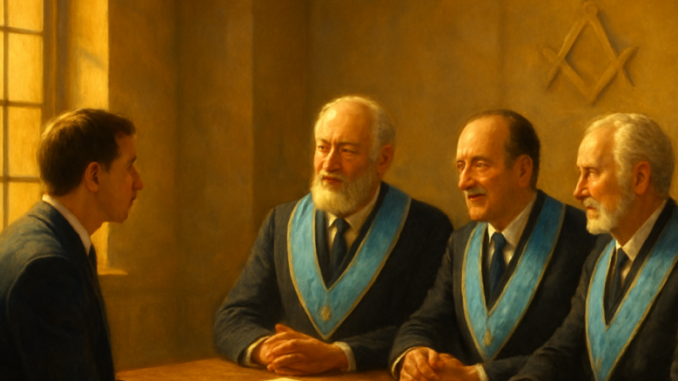
If you’ve expressed interest in joining Freemasonry, one of the most important steps you’ll encounter is the meeting with the Committee of Inquiry. This recently updated article gives aspiring Freemasons a clear and current overview of what this mutual conversation involves and how you can prepare for it — whether you’ve just reached out or are already in contact with a lodge.
What Is the Committee of Inquiry?
The Committee of Inquiry is a small group of experienced Freemasons appointed by the lodge where you’ve submitted your interest. Their role is twofold: to get a thorough understanding of your background, intentions, and expectations, and to give you genuine insight into what membership actually involves.
This process is carried out thoughtfully and with care. Freemasonry is not a casual club you join on a whim — it’s a brotherhood built on specific values and traditions. The committee needs to feel confident that you understand these principles and are willing to commit to them.
The Conversation: A Two-Way Exchange
One of the most important things to understand is that the meeting with the Committee of Inquiry is not an exam. It’s an open, respectful dialogue — a genuine two-way exchange. As a candidate, this is your opportunity to ask questions about the lodge, its rituals, and what is expected of members. At the same time, the committee will ask you questions to better understand your motivation.
Common questions you might encounter include:
- What drew you to Freemasonry?
- What does brotherhood mean to you?
- How do you see your role within a community?
The committee isn’t just listening for polished answers. What matters most is your sincerity and capacity for self-reflection. This conversation helps both sides determine whether there’s a genuine mutual fit.
Background Checks
In addition to the conversation, the committee may gather some background information about you. This is always done with full respect for your privacy and confidentiality. Freemasonry expects its members to uphold a reputation of integrity and to live in accordance with its ideals, so this step helps ensure alignment between the candidate and the fraternity.
How the Committee Influences the Decision
After completing their inquiry, the committee reports its findings and impressions to the lodge. They provide an advisory recommendation regarding your suitability for membership. However, the final decision doesn’t rest with the committee alone — it’s the lodge as a whole that collectively decides whether to invite you to join.
While the committee’s advice carries significant weight, it is not the sole determining factor. The brotherhood makes its decision together.
What This Means for You as a Candidate
For candidates, this process is a valuable opportunity — not a hurdle to overcome. It’s a chance to present yourself authentically and to develop a deeper understanding of what Freemasonry truly is. There is no pass or fail. Think of it as a mutual introduction, one that also encourages you to reflect on your own motivations and expectations before taking the next step.
Trust and Transparency
The meeting with the Committee of Inquiry is built on a foundation of trust. Everything discussed during the conversation remains confidential — shared only within the committee and the lodge. This ensures a safe and respectful environment where you can speak openly and honestly.
The Committee of Inquiry is an essential part of the Masonic journey, designed to support both the candidate and the lodge in making a well-considered decision. The process calls for openness, reflection, and mutual respect — core values that remain central to Freemasonry long after initiation. For anyone considering membership, this meeting marks a meaningful first step on a path of personal and spiritual growth.
Copyright text & image: devrijmetselaar.nl
Texts are based on the ideas and content of the author of devrijmetselaar.nl, reviewed, corrected, and supplemented with the assistance of OpenAI. Images are created based on the ideas of the author of devrijmetselaar.nl using OpenAI/DALL-E.
Frequently Asked Questions
Is the Committee of Inquiry meeting like a job interview or exam?
No, it's not an exam at all — it's a respectful, open dialogue between you and experienced Freemasons. The committee is genuinely interested in understanding your motivations and background, while also giving you the chance to ask questions about lodge life, rituals, and membership expectations. What matters most is your sincerity and willingness to reflect on what Freemasonry means to you.
What kind of questions will the Committee ask me?
The committee typically asks thoughtful questions like "What drew you to Freemasonry?" and "What does brotherhood mean to you?" These questions help them understand your genuine motivations and values. There are no trick questions — they're simply trying to ensure a good mutual fit between you and the lodge.
Will my privacy be protected during the background check process?
Yes, absolutely. Any background information gathered by the committee is handled with full respect for your privacy and confidentiality. This step simply ensures that candidates align with Freemasonry's values of integrity and helps the fraternity maintain its reputation as an honorable organization.
Does the Committee of Inquiry make the final decision on my membership?
The committee provides an important advisory recommendation to the lodge, but they don't make the final decision alone. The entire lodge brotherhood comes together to collectively decide whether to invite you to join, making it a truly fraternal process where the whole community has a voice.
What should I do to prepare for my meeting with the Committee?
The best preparation is to be yourself and think authentically about why you're interested in Freemasonry and what it means to you. It's also a great opportunity to prepare questions about the lodge, its traditions, and what members do — remember, this is a two-way conversation designed to help both you and the fraternity determine if it's the right fit.


Be the first to comment