
Can a person truly find peace of mind by reading voraciously — or does that restless hunger for the next book actually work against the very calm we seek? This paradox, set down nearly two thousand years ago by the Stoic philosopher Lucius Annaeus Seneca in his second letter to Lucilius, touches a tension that Freemasons know well. The search for knowledge and light stands among the most exalted ideals of the lodge, yet when does that noble search tip over into mere distraction? Seneca’s words invite a philosophical exploration that proves remarkably relevant for anyone who takes brotherhood, wisdom, and inner growth seriously.
Less Is More: Seneca’s Counterintuitive Warning
Seneca opens his second letter with advice that cuts against the grain. He cautions his friend Lucilius against jumping from one book to the next, the way a drifter moves from town to town without ever putting down roots. The compulsive reader, Seneca argues, suffers from a kind of intellectual restlessness that achieves the opposite of what he seeks. Instead of gathering wisdom, he collects impressions that slip through his fingers like sand.
It is a provocative claim. We live in an age of seemingly unlimited access to knowledge, where any question can be answered in seconds. And yet the feeling of unease grows — the sense of never knowing enough, of always running behind. Seneca suggests the problem is not a shortage of information but a shortage of digestion, of stillness, of what he calls rest of the mind.
The Lodge as a Space of Slowness
The Masonic lodge offers a powerful countermodel to the restless appetite for knowledge that Seneca describes. Ritual demands silence. Symbols do their work slowly — not through explanation but through repetition and contemplation. A Freemason does not simply look up the meaning of the square and compasses in a handbook; he lets that meaning grow within him over years, encountering these symbols again and again, experiencing and reflecting upon them anew each time.
Seneca would have recognized this approach. He writes that it is better to truly understand a few great thinkers than to know a hundred names without any depth. We find the same wisdom echoed in the Masonic tradition. The Entered Apprentice is not flooded with every secret at once. On the contrary, he receives just enough to wrestle with, to dig into, to discover for himself what the working tools mean for his own rough ashlar.
The Counterweight: Why We Still Need the New
But is Seneca’s counsel too restrictive? Should a seeker truly confine himself to a handful of masters and ignore the rest? Here we encounter a necessary counterweight. Freemasonry also emphasizes the perpetual search for light — the idea that knowledge is never complete, that the journey matters more than the destination. There is a tension between depth and breadth that cannot be easily resolved.
Perhaps the key lies not in how much we read, but in how we read. Seneca does not advocate ignorance; he advocates a particular attitude. Read slowly. Read with the heart. Read to become, not to possess. This resonates deeply with the Masonic understanding that knowledge acquires real value only when it is transmuted into virtue, into action, into character.
True knowledge is not what you have read, but what you have become through the reading.
Reading as a Fraternal Act
There is yet another dimension that Seneca touches upon — one deeply connected to Freemasonry: the relationship between reader and author. Seneca writes to Lucilius, his friend and student, and in the very act of writing a bond is formed that stretches across distance and time. Reading, understood this way, becomes a form of brotherhood. The great thinkers of the past — Marcus Aurelius, Voltaire, Plato, Montaigne — become, in a real sense, brethren of the mind. They hand us thoughts we could not have conceived on our own, and in return we give their words new life by weighing them, challenging them, integrating them into our being.
In the lodge we call this working the rough ashlar. The material comes from outside — from the great thinkers, from the rituals, from the brothers around us — but the work itself is inner work. Seneca’s call for stillness is not a call for passivity; it is an invitation to let what we have read settle, ferment, and become part of who we are.
The Question That Remains
What does it truly mean to find inner peace in a world that constantly stimulates us? Seneca’s answer is clear: choose a few sources, go deep, and let the rest go. But is that answer final? Perhaps the Masonic tradition invites us to think one step further. The peace Seneca seeks may not simply be a matter of reading less, but of reading differently — with an attitude of receptivity and respect, as a Fellow Craft listens to the words of a Master.
The question that lingers is this: how do we distinguish the books that truly shape us from those that merely distract us? And who are the thinkers with whom, across the centuries, we wish to form a genuine brotherhood of the mind? The answer does not lie in this article, but in the silence that follows the reading of it.
Seneca’s second letter is far more than reading advice; it is an invitation to reflect on our relationship with knowledge, stillness, and human connection. For Freemasons, this ancient wisdom holds up a mirror in which the Masonic values of depth, brotherhood, and inner growth are sharply illuminated. The art is not to read everything, but to read truly — with an open mind and a receptive heart, as one enters a lodge: prepared to receive and to become.
Copyright text & image: devrijmetselaar.nl
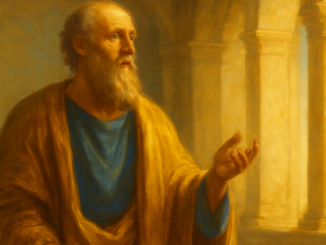
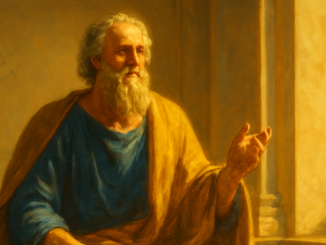
Texts are based on the ideas and content of the author of devrijmetselaar.nl, reviewed, corrected, and supplemented with the assistance of OpenAI. Images are created based on the ideas of the author of devrijmetselaar.nl using OpenAI/DALL-E.
Frequently Asked Questions
What is Seneca's main warning about reading voraciously?
Seneca cautions against jumping from one book to the next without reflection, arguing that compulsive reading creates intellectual restlessness rather than wisdom. He suggests the problem is not a lack of information but a lack of digestion and stillness of mind. Instead of gathering true wisdom, the restless reader merely collects passing impressions that slip away like sand.
How does the Masonic lodge approach learning differently from voracious reading?
The Masonic lodge embodies Seneca's ideal of slowness and depth. Rather than flooding initiates with all knowledge at once, Masonry uses ritual, silence, and repeated contemplation of symbols over years. Masons encounter the same symbols repeatedly, allowing their meaning to grow and deepen through personal reflection and experience, much like Seneca's preference for truly understanding a few great thinkers rather than knowing many names superficially.
Why is the concept of 'rest of the mind' important in both Seneca's philosophy and Freemasonry?
Both Seneca and Masonic tradition recognize that genuine inner peace and wisdom require mental stillness and focused reflection, not endless consumption of information. Seneca calls for 'rest of the mind' to allow for proper digestion of knowledge, while the Masonic lodge creates this space through ritual practices that demand silence and contemplation, enabling members to develop deeper understanding of themselves and the principles they are learning.


Be the first to comment