
What does it truly mean to believe? Is faith something you carry quietly in your heart, or does it only come alive when it shows up in your actions? These are the questions posed by the Epistle of James with a directness that still resonates after two thousand years. For Freemasons — who dedicate themselves to the daily work of building a better self — this short but powerful letter from the New Testament offers remarkably relevant insights.
Who Was James and Why Did He Write This Letter?
Tradition attributes this epistle to James, known as the brother of Jesus and a leading figure in the early Christian community in Jerusalem. He addressed his letter to the “twelve tribes scattered abroad” — early believers dispersed throughout the Roman Empire. But what made his message so urgent that he felt compelled to put pen to paper?
James saw a danger we still recognize today: people who claim to believe, yet whose lives show no evidence of that belief whatsoever. He didn’t write a theological treatise. Instead, he produced a practical guide for daily living. His words are direct, sometimes confrontational, and always aimed at concrete change. This makes his letter remarkably accessible, even for readers outside the Christian tradition.
What Did James Mean by Faith Without Works?
Here we arrive at the heart of the epistle. In the second chapter, James writes the famous words: “Faith without works is dead.” This isn’t theological hair-splitting — it’s a call for honesty. You can say you care about your neighbor, but if you send a hungry brother out the door with nothing more than “Go in peace, stay warm and well fed,” what is your faith actually worth?
Faith that never translates into action remains an empty gesture — a blueprint without a building.
For Freemasons, this rings familiar. The lodge is no place for hollow promises or abstract ideals. The rituals, symbols, and bonds of brotherhood are not ends in themselves but means toward genuine transformation. Just as the rough ashlar is shaped into a perfect cube through labor and dedication, James demands that inner conviction become visible through outward action.
The Power and Peril of the Tongue
One of the most striking themes in the Epistle of James is his treatment of the tongue — its extraordinary power and its inherent danger. He compares it to a small rudder that steers a great ship, and to a tiny spark that can set an entire forest ablaze. Words, he warns, can both bless and curse. How often do we speak without thinking, only to witness the damage afterward?
This connects directly to a fundamental Masonic principle: circumspection in speech. In the lodge, a brother learns to listen before he speaks, to weigh before he judges. The tongue is a tool that must be handled with great care. James would not have felt out of place in a Masonic lodge, where discretion and thoughtfulness are held in the highest regard.
Two Kinds of Wisdom: Which Do We Seek?
James draws a sharp distinction between two types of wisdom. The first is earthly, unspiritual — even “demonic,” as he bluntly puts it. This wisdom is driven by jealousy, selfish ambition, and conflict. The second kind of wisdom comes from above and is characterized by purity, peacefulness, gentleness, and mercy. The question for each of us is: which wisdom are we pursuing?
Freemasonry places the search for light — for knowledge and wisdom — at the center of its tradition. But it is not about intellectual superiority or the mere accumulation of facts. True wisdom reveals itself in how we treat others, in the fruits we bear. This aligns seamlessly with what James teaches: “The wise man shows his wisdom through his good conduct, through deeds performed in gentle wisdom.”
Wealth, Justice, and Brotherly Equality
The epistle contains surprisingly sharp criticism of those who hoard wealth while exploiting their workers. James calls on the rich to “weep and wail” over the misery that awaits them. Their treasures have rotted, their garments are moth-eaten, their gold and silver have corroded.
This is not a rejection of prosperity itself, but a warning against injustice and attachment to material possessions. In Freemasonry, we recognize this as the call to brotherly equality. Within the lodge, all brethren stand as equals, regardless of their position in society. The apron covers what distinguishes us outwardly; our deeds reveal who we truly are.
How Can We Apply This Epistle Today?
The Epistle of James is not abstract philosophy — it is a mirror. It asks us plainly: are you merely a hearer of the word, or a doer as well? This distinction is crucial. We can study endlessly, repeat rituals, analyze symbols, but if our behavior never changes, we remain standing still.
Consider these practical applications drawn from James’s teachings:
Test your convictions against your daily choices. Speak with deliberation and be sparing with judgment. Seek wisdom that expresses itself through peacefulness and gentleness. Treat every brother and sister as an equal.
The strength of James lies in his directness. He doesn’t ask for blind obedience — he asks for honest self-reflection. That is precisely what Freemasonry does as well: it holds up a mirror and invites us to keep working on the rough stone within ourselves.
The Epistle of James reminds us that faith only acquires meaning when it becomes visible through our actions. For Freemasons, this is a familiar truth: the lodge is a workshop, not a shelter. Every day, we are invited not merely to listen, but to act. Let the question James poses travel with you as you go about your day: what are you building today?
Copyright text & image: devrijmetselaar.nl
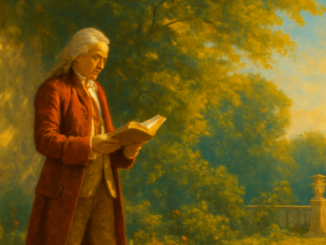
Texts are based on the ideas and content of the author of devrijmetselaar.nl, reviewed, corrected, and supplemented with the assistance of OpenAI. Images are created based on the ideas of the author of devrijmetselaar.nl using OpenAI/DALL-E.
Frequently Asked Questions
What is the main message of the Epistle of James?
The main message of the Epistle of James is that faith without works is dead. James argues that true belief must be demonstrated through concrete actions and practical living. He emphasizes that claiming to have faith while taking no action to help others or improve oneself is meaningless and hollow.
Who was James and why is his letter still relevant today?
James was traditionally known as the brother of Jesus and a leading figure in the early Christian community in Jerusalem. He wrote to believers scattered throughout the Roman Empire to address a practical problem: people claiming to believe while showing no evidence of that belief in their lives. His direct, action-oriented approach remains relevant because it focuses on concrete change rather than abstract theology, making it accessible to people across different traditions, including Freemasons.
How does the Epistle of James relate to Freemasonry?
The Epistle of James resonates with Freemasonry because both emphasize the importance of transforming oneself through dedicated work and action. Just as James demands that inner conviction become visible through outward action, Freemasonry uses rituals, symbols, and bonds of brotherhood as means toward genuine personal transformation—not as ends in themselves. Both traditions reject hollow promises and abstract ideals in favor of tangible, meaningful change.



Be the first to comment