Explore the intersection of Freemasonry and Enlightenment philosophy. Discover how reason, tolerance, and intellectual freedom shaped this transformative era.
Symbolism & Rituals
Voltaire on Equality: Philosophical Roots and Freemasonry
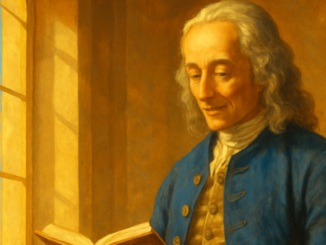
What did Voltaire actually mean when he wrote about equality? And why does his vision still resonate in Masonic lodges around the world? In his Philosophical Dictionary of 1764, François-Marie Arouet — better known as Voltaire — devoted a sharp and ironic essay to the concept of equality. To understand what he was truly arguing, we need to trace the philosophical sources that shaped his thinking. Which Thinkers Shaped Voltaire’s View of Equality? Voltaire did not operate in an intellectual vacuum. His thinking on equality was profoundly influenced by both classical and modern philosophers. The Stoics — particularly Seneca and Marcus Aurelius — had introduced the idea that all human beings are naturally equal in their capacity for reason. This cosmopolitan insight, that the slave trader and the emperor share the same rational faculty, flowed as an underground current into Enlightenment thought. But it was John Locke, above all, who directly shaped Voltaire’s ideas about equality. During his exile in England (1726–1728), Voltaire immersed himself in Locke’s political philosophy. Locke’s argument that human beings are born into a natural state of equality — without any inherent right of one person over another — became a cornerstone of Voltaire’s social criticism. […]