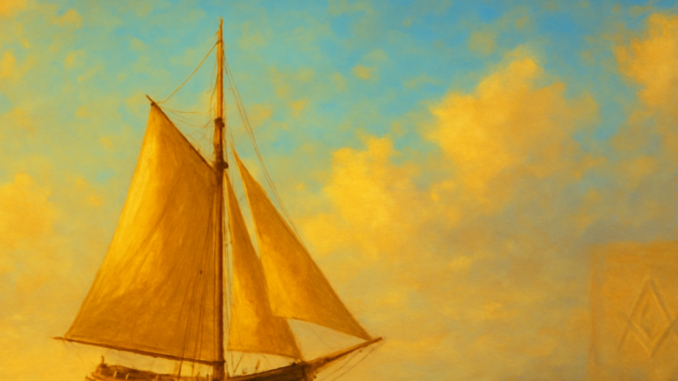
In a dimly lit London study sometime in the 1720s, a young French exile bent over the works of an English philosopher who had died just decades earlier. François-Marie Arouet — better known as Voltaire — discovered in the writings of John Locke a revolutionary idea: the human mind is born a blank slate. No innate ideas, no predetermined truths, only the pure possibility of growth through experience. This discovery would change Voltaire forever, and it forms the heart of his third philosophical letter.
The Context of Voltaire’s Exile
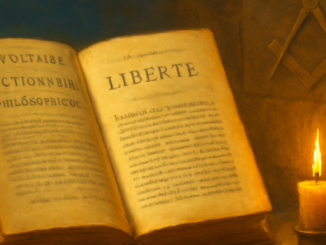
When Voltaire lived in England between 1726 and 1728, he was fleeing not only the Bastille but also the suffocating intellectual climate of Louis XV’s France. In England, he encountered a society where freethinkers could debate openly, where Isaac Newton’s science was celebrated, and where John Locke’s philosophy was considered common knowledge. He later gathered these experiences into his Philosophical Letters, a collection of essays that introduced English thought to the French public.
The third letter, devoted to Locke, stands out because Voltaire does more than simply report on scientific discoveries. He poses a fundamental question about human nature itself: Who are we, and how do we arrive at our knowledge? The answer Locke provides — and that Voltaire embraces with unmistakable enthusiasm — carries far-reaching consequences for religion, morality, and society at large.
Locke’s Central Idea: The Tabula Rasa
In his 1689 Essay Concerning Human Understanding, John Locke argued that the human mind is born a tabula rasa — a blank slate. All knowledge, all ideas, all convictions arise from sensory experience and our reflection upon it. There are no innate ideas about God, about good and evil, or about the nature of reality. Voltaire presents this thought with palpable excitement to his readers, for it undermines the authority of anyone who claims certain truths are self-evident.
Human beings are not born with knowledge, but with the capacity to acquire it through experience and reflection.
Voltaire emphasizes how Locke dismantles the philosophy of René Descartes, who believed that certain ideas — such as the proof of God’s existence — were innate. Where Descartes reasoned from abstract principles toward reality, Locke started from observation. This difference is far more than academic; it strikes at the question of who holds the authority to determine what is true.
The Soul and the Material Question
One of the most provocative passages in Voltaire’s letter concerns Locke’s suggestion that God might have given matter the capacity to think. Locke raises this possibility carefully, almost in passing, but Voltaire immediately recognizes its explosive implications. If thought could be a property of matter, the necessity of a separate, immaterial soul collapses. The entire metaphysical framework upheld by the Church begins to totter.
Voltaire notes how English theologians pushed back against this idea, but he does so with a gentle irony that implies their objections had more to do with protecting institutional power than with genuine philosophical reasoning. At the same time, Voltaire is shrewd enough not to declare his own position explicitly. He lets Locke do the heavy lifting and presents himself as a neutral reporter — a masterful rhetorical move.
Freemasonry and the Blank Slate
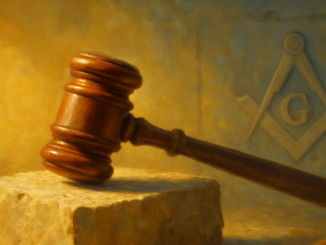
For Freemasons, Locke’s idea resonates in a particularly powerful way. The rough ashlar — one of the central symbols in Freemasonry — represents the individual at the beginning of his initiatory journey: unworked, full of potential, but still lacking the refinement that labor and reflection bring. Just as Locke saw the mind as a blank slate shaped by experience, the Freemason regards himself as a stone that must be hewn through conscious effort.
This parallel is no coincidence. The eighteenth century, during which Voltaire wrote and modern Freemasonry took shape, was steeped in Enlightenment ideals. The notion that human beings could improve themselves through reason and experience — without depending on predetermined dogmas — was revolutionary. The lodge became a space where men of different backgrounds came together to put these principles into practice, working side by side on the great project of self-improvement.
A Plea for Intellectual Freedom
Voltaire’s essay is ultimately more than a summary of Locke’s philosophy. It is a plea for the right to doubt, to ask questions, to challenge the authority of tradition. Voltaire admires Locke not only for his ideas but also for his method: modest, empirical, willing to acknowledge what he does not know. In an era when philosophers often spoke with absolute certainty, Locke’s intellectual humility was a breath of fresh air.
Any Freemason reading this will likely recognize the value of the same attitude. In the lodge, no definitive truth is proclaimed; instead, there is searching, questioning, and working. The rituals and symbols are not answers but invitations to reflection. Just as Locke saw the mind as something shaped by experience, the Freemason views his own character as something perpetually in the making — never finished, always capable of further refinement.
The Enduring Relevance of Locke Through Voltaire
Nearly three centuries later, the core idea remains strikingly relevant. In a world where algorithms attempt to predict what we think and want, Locke’s philosophy reminds us that the human mind is fundamentally open. We are shaped, but not determined. Voltaire’s enthusiasm for this insight was not exaggerated; he saw in Locke an ally in the struggle against dogmatism and intellectual tyranny.
For the modern reader, Voltaire’s third philosophical letter offers an accessible introduction to one of the most influential thinkers in the Western tradition. His clear prose strips away centuries of academic jargon and presents Locke’s ideas with a clarity and urgency that still compels. For Freemasons in particular, the letter is a reminder that the Craft’s commitment to personal growth, intellectual freedom, and moral inquiry stands on the same philosophical foundation that Voltaire celebrated with such passion.
Voltaire’s encounter with Locke’s blank slate was more than an intellectual curiosity — it was a defining moment for Enlightenment thought and, by extension, for the philosophical soil in which Freemasonry grew. The idea that we are not born with fixed truths but must discover them through experience and reflection lies at the very heart of the Masonic journey. Every time a Freemason takes up the gavel to work on his rough ashlar, he enacts Locke’s insight: we are unfinished beings, endowed not with ready-made answers but with the extraordinary capacity to learn, to grow, and to shape ourselves through the honest labor of mind and spirit.
Copyright text & image: devrijmetselaar.nl
Texts are based on the ideas and content of the author of devrijmetselaar.nl, reviewed, corrected, and supplemented with the assistance of OpenAI. Images are created based on the ideas of the author of devrijmetselaar.nl using OpenAI/DALL-E.
Frequently Asked Questions
What is the 'tabula rasa' theory that Voltaire discovered in Locke's work?
The tabula rasa, or 'blank slate,' is John Locke's revolutionary idea that the human mind is born empty of innate ideas. According to this theory, all knowledge, ideas, and convictions arise solely from sensory experience and reflection upon it. There are no pre-existing ideas about God, morality, or reality—only the capacity to acquire knowledge through experience.
Why was Voltaire's discovery of Locke's philosophy so significant?
Locke's blank slate theory was transformative because it challenged the authority of anyone claiming certain truths are self-evident. By rejecting the Cartesian view that ideas like God's existence are innate, Locke's philosophy shifted the foundation of knowledge from abstract principles to observation and experience. This undermined religious and philosophical dogma and fundamentally changed how Voltaire understood human nature.
How did Voltaire's time in England influence his engagement with Locke's ideas?
During his exile in England from 1726 to 1728, Voltaire encountered a society that celebrated freethinkers, scientific inquiry, and philosophical debate—a stark contrast to the restrictive intellectual climate of Louis XV's France. This environment allowed him to engage deeply with Locke's work and other English thought. Voltaire later documented these experiences in his Philosophical Letters, introducing English philosophy to the French public through his enthusiastic embrace of Locke's revolutionary ideas.


Be the first to comment