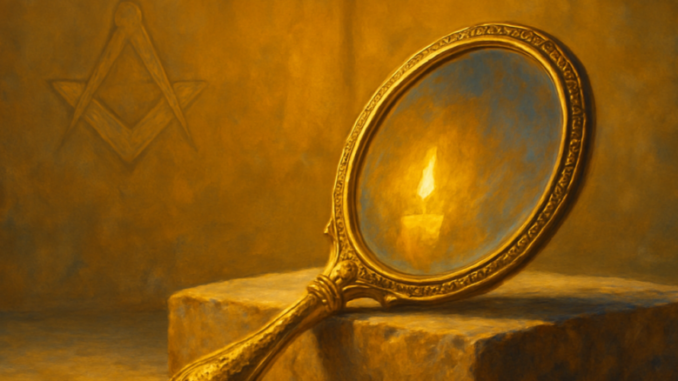
In a dimly lit lodge room, an older Freemason leans toward a younger brother. ‘See those cracks in the ceiling?’ he asks quietly. ‘Some want to plaster over them, but they tell the story of this building. Without those lines, it would be a soulless space.’ The younger brother nods thoughtfully — while outside, the world grows ever more obsessed with erasing every perceived flaw.
A Fivefold Increase That Raises Deeper Questions
Reports of botched cosmetic procedures involving injectable treatments have increased fivefold in recent years. Behind that statistic lie personal tragedies: people who sought enhancement and ended up with scars, infections, or permanent disfigurement. But perhaps behind this troubling trend lies a deeper question — one that touches the very core of what it means to be human. Why are we so willing to risk our health for an appearance that conforms to some external ideal?
The philosopher Michel de Montaigne wrote in the sixteenth century about the human compulsion to correct what is imperfect. In his essays, he reflected on the paradox that we often place more value on what others think of us than on who we truly are. That observation is more relevant today than ever. The pressure to meet external expectations has only intensified with social media and our increasingly image-driven culture.
The Rough Ashlar as a Metaphor for Life
Within Freemasonry, the concept of the rough ashlar plays a central role. Every Freemason begins symbolically as an unworked stone — rough, irregular, full of imperfections. The work does not consist of replacing that stone with a perfect specimen, but of patiently shaping it. The imperfections are not denied or concealed; they are transformed through inner labor.
True beauty does not emerge from masking imperfections, but from cultivating character and wisdom from within.
This stands in stark contrast to the promise of cosmetic procedures, which suggest that perfection is attainable through external adjustment. The Masonic tradition teaches that authentic development occurs precisely when we acknowledge our shortcomings and learn to work with them — rather than cutting them away or numbing them into silence.
Socrates and the Mirror of the Soul
The Greek philosopher Socrates, famously known for his less-than-flattering appearance, maintained that the body is merely the housing of the soul. His student Plato developed this idea further in dialogues such as the Symposium, where beauty is described as something that begins with physical attraction but ultimately must ascend toward an appreciation of inner virtue — and eventually toward Beauty itself. In this view, physical beauty is merely the lowest rung of a ladder that leads upward to something far greater.
Freemasons recognize this philosophical heritage. In the lodge, no one is asked about their appearance, status, or wealth. The question that matters is: what kind of person do you aspire to become? What inner qualities are you striving to develop? This perspective offers a powerful counterweight to a culture that seems to value surface over depth.
The Courage to Age
Marcus Aurelius, the Roman emperor and Stoic philosopher, wrote extensively in his Meditations about impermanence. He reminded himself that everything changes, that youth gives way to old age, and that this is no tragedy but the natural order of things. Rather than fighting against this current, he advised living in harmony with nature.
The surge in cosmetic procedures suggests that many have forgotten this wisdom. The wrinkle, the laugh line, the graying hair — these are the marks of a life fully lived. They bear witness to experiences, to joy and sorrow, to the wisdom that comes only with years. To erase these signs is to erase part of one’s own story.
Brotherhood Beyond Appearance
In a Masonic lodge, people meet who might never cross paths in everyday life. The banker sits beside the carpenter, the young professional next to the retiree. What binds them is not their appearance or social standing, but their shared pursuit of self-improvement and their willingness to support one another along the way.
Personality is shaped through reflection, not through injections. Character grows through adversity, not through avoiding it. Authenticity requires the courage to show yourself as you truly are. And genuine connection arises only when masks are set aside.
These principles offer an alternative narrative in a time when the pressure to look perfect only continues to mount. They remind us that the most valuable human qualities are not visible to the eye, but felt in the way we treat one another.
An Invitation to Self-Reflection
The news about the rise in failed cosmetic treatments is more than a warning about medical risks. It is a mirror held up to society. What does it say about our values that so many are willing to risk their health for a younger or smoother appearance? And what would happen if we invested that same energy in developing our inner qualities?
Johann Wolfgang von Goethe, himself a Freemason, wrote that a person only truly becomes human through self-formation. Not through external modifications, but through the patient work of building character, knowledge, and wisdom. That charge is timeless — and more urgent than ever.
As reports of cosmetic complications continue to accumulate, the Masonic tradition offers a profoundly valuable perspective. It reminds us that true character is not found in the mirror, but in the quiet labor we perform upon ourselves. We do not shape the rough ashlar with syringes or scalpels, but with reflection, virtue, and the courage to be imperfect. And it is precisely within that imperfection that our deepest humanity resides.
Copyright text & image: devrijmetselaar.nl
Texts are based on the ideas and content of the author of devrijmetselaar.nl, reviewed, corrected, and supplemented with the assistance of OpenAI. Images are created based on the ideas of the author of devrijmetselaar.nl using OpenAI/DALL-E.
Frequently Asked Questions
What is the 'rough ashlar' and how does it relate to cosmetic surgery?
In Freemasonry, the rough ashlar is a symbol representing the unfinished state of every person—rough, irregular, and full of imperfections. Rather than replacing or hiding these imperfections, the Masonic tradition teaches that true development comes from patiently shaping oneself through inner work and character building. This contrasts with cosmetic surgery's promise of external perfection, as the Masonic perspective emphasizes that authentic beauty emerges from cultivating wisdom and character within, not from masking or removing imperfections.
Why does the article mention the increase in botched cosmetic procedures?
The article references a fivefold increase in botched cosmetic procedures involving injectable treatments to highlight a troubling trend where people risk their health and well-being in pursuit of external appearance conforming to societal ideals. This statistic serves as evidence of a deeper cultural problem—that modern society, particularly through social media and image-driven culture, places excessive pressure on individuals to meet external expectations rather than valuing who they truly are.
How does the Masonic perspective differ from modern society's view on physical imperfection?
The Masonic tradition teaches that imperfections should be acknowledged and worked with as part of one's personal development, rather than concealed or eliminated. This stands in contrast to modern culture's pressure to erase every perceived flaw through cosmetic procedures. The article argues that true beauty comes from inner development and character cultivation, not from conforming to external ideals. This perspective, rooted in ancient philosophy and Masonic symbolism, challenges today's obsession with achieving a flawless external appearance.

Be the first to comment