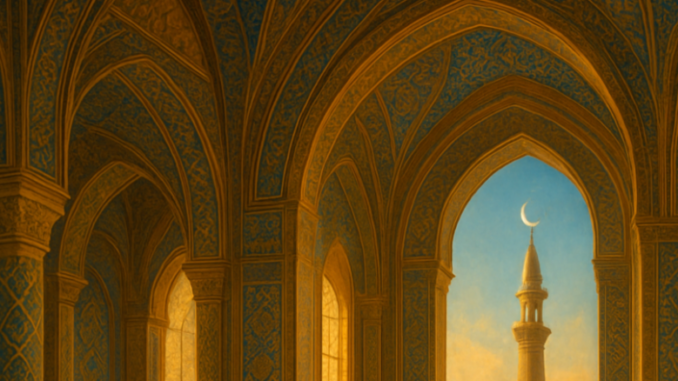
When a Muslim opens the third chapter of the Quran, they encounter the story of the Family of Imran — a lineage that produced prophets and passed faith from generation to generation. When a Freemason enters the lodge, they step into a tradition that likewise speaks of spiritual ancestors, of builders who transmitted wisdom to those who followed. Two worlds, seemingly separate, yet united by a shared question: how do we pass the light to those who come after us?
The Surah Through the Eyes of the Believer
For the Islamic reader, the Family of Imran is a story of divine election and responsibility. The surah describes how the family of Imran was elevated by God above all peoples, how Mary emerged from this lineage, and how she gave birth to Jesus — recognized in the Quran as a prophet and messenger. It is a text that speaks to the continuity of revelation: from Adam to Noah, from Abraham to the prophets of Israel, and ultimately to Muhammad. Each generation receives the light and carries it forward.
The believing reader sees in this surah a confirmation of God’s plan unfolding through human generations. It is not merely about individual piety, but about a chain of transmission. Mary withdraws into the sanctuary, is nourished by divine providence, and brings forth a child who will illuminate the world. This pattern of withdrawal, inner preparation, and subsequent return to the world bearing a message forms the backbone of this surah.
The Lodge Through the Eyes of the Builder
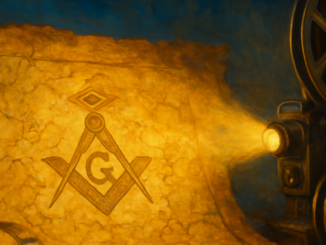
The Freemason knows a comparable story, though expressed in different terms. The tradition speaks of Hiram Abiff, the legendary master builder of Solomon’s Temple, whose knowledge and virtue were passed down to the masons who came after him. The lodge itself is a symbolic space in which the brother withdraws from the profane world to work on his inner temple. Much like Mary in the sanctuary, the initiate seeks silence in order to receive the light.
Where the Quran speaks of prophetic lineages, Freemasonry speaks of a chain of initiation. The master passes knowledge to the fellow craft, the fellow craft to the apprentice. It is not a physical bloodline but a spiritual inheritance that connects the generations. The rituals, symbols, and teachings together form a heritage that is carefully guarded and transmitted. The Freemason asks himself: what have I received, and what will I pass on?
What Both Traditions Share
Despite their different origins and forms, the surah and the Masonic tradition share remarkable themes. Both emphasize the value of spiritual inheritance over material possession. Both recognize that wisdom does not arise in a vacuum but is passed down by those who walked the path before. And both place the individual within a larger story: the human being as a link in a chain that transcends the self.
Both the Quran and Freemasonry teach that we do not begin with ourselves. We receive from those who came before us, so that we may pass it on to those who follow. The Family of Imran speaks explicitly of divine election, while Freemasonry employs a more universal language. Yet the underlying movement is the same: the recognition that a person carries something greater than themselves. This awareness demands humility, a willingness to learn, and the responsibility not to extinguish the received light but to strengthen it.
The Theme of Inner Retreat
A striking detail in the surah is Mary’s stay in the mihrab — the prayer niche where she withdraws to serve God. This retreat is not an escape but a preparation. She is nourished and shaped in solitude before she can fulfill her purpose in the world. The Freemason recognizes this pattern in the Chamber of Reflection, the space of contemplation where the candidate is prepared for their entry into the light of the lodge.
Both traditions understand that growth requires time and silence. The spiritual person needs moments when the outside world falls silent so that the inner voice can speak. This is not passivity but active receptivity. The withdrawal makes the return possible; the silence makes the word meaningful.
What We Can Learn
The comparison between the Family of Imran and Freemasonry is not an attempt to equate the two. Islam and Freemasonry are different paths, with their own structures, beliefs, and practices. But the comparison reveals that humanity’s search for meaning, direction, and continuity has universal roots. We all long for connection with what came before us and what will outlive us.
For the Freemason who is curious about the Quran, this surah offers a mirror. It reminds him that spiritual heritage is not a possession but a charge. The light he received is meant to be passed on. And for the reader who observes both traditions from the outside, the comparison demonstrates that religious and philosophical traditions converge more often than they diverge — united in their shared reverence for that which transcends the human condition.
The core principles that emerge from both traditions can be distilled into four essential insights: spiritual inheritance matters more than material wealth; the individual is a link in a greater chain; inner retreat serves as preparation for engagement with the world; and light is received so that it may be given onward.
The Family of Imran and Freemasonry speak from different sources, yet their voices blend into a shared melody. Both invite us to see ourselves as receivers and bearers of something precious. In an age where individualism often dominates, they remind us that we are part of a current that began before our birth and will continue long after our death. The question that both traditions pose to us is ultimately the same: what will we do with the light that has been entrusted to us?
Copyright text & image: devrijmetselaar.nl
Texts are based on the ideas and content of the author of devrijmetselaar.nl, reviewed, corrected, and supplemented with the assistance of OpenAI. Images are created based on the ideas of the author of devrijmetselaar.nl using OpenAI/DALL-E.
Frequently Asked Questions
What is the Family of Imran and why is it significant in Islam?
The Family of Imran refers to the lineage described in the third chapter of the Quran that produced prophets and transmitted faith across generations. It is significant because it illustrates divine election and responsibility, showing how God elevated this family above all peoples. The surah describes Mary's emergence from this lineage and her role in giving birth to Jesus, recognized as a prophet in Islam. It represents the continuity of revelation from Adam through the prophets to Muhammad, emphasizing a chain of transmission where each generation receives divine light and carries it forward.
How does the Freemasonic tradition compare to the spiritual heritage described in Surah Family of Imran?
Both traditions share a common emphasis on spiritual inheritance and the transmission of wisdom across generations. Where the Quran speaks of prophetic bloodlines, Freemasonry speaks of a chain of initiation passing knowledge from master to fellow craft to apprentice. Both involve a pattern of withdrawal from the outer world (Mary in the sanctuary, the initiate in the lodge) for inner preparation, followed by a return bearing spiritual illumination. Rather than physical inheritance, Freemasonry emphasizes spiritual inheritance through rituals, symbols, and teachings carefully guarded and transmitted between generations.
What does the article suggest is the central question shared by both Islamic and Masonic traditions?
The central question shared by both traditions is: how do we pass the light to those who come after us? This reflects a shared concern with spiritual legacy and intergenerational transmission. Both the Family of Imran and Freemasonry grapple with the responsibility of receiving wisdom and ensuring it is faithfully transmitted to future generations, whether through prophetic lineage in Islam or through the initiation chain in Masonry. Each tradition asks its adherents to consider what they have received and what they must pass on.

Be the first to comment