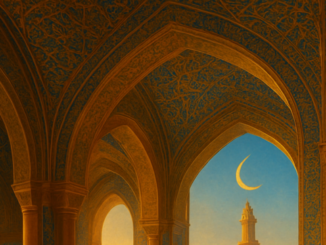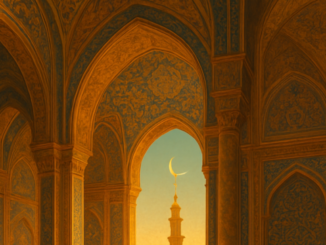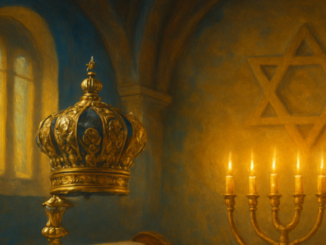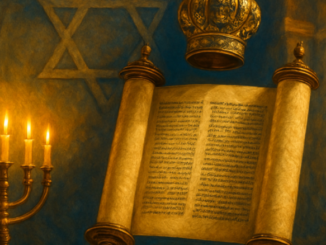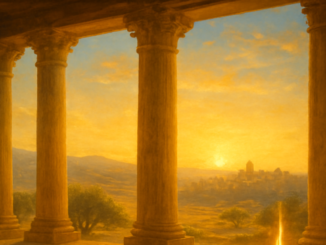
Rough ashlar stone symbolizing forgiveness and inner transformation in Freemasonry
Islam

Forgiveness as a Spiritual Building Block in Freemasonry

In the year 622 CE, a small community of believers fled from Mecca to Medina. This hijra, or emigration, marked not only the beginning of a new calendar but also a turning point in the history of forgiveness as a spiritual concept. Among the surahs revealed during this period, we find Ghafir — literally, The Forgiver. This fortieth chapter of the Quran bears a name that points directly to one of the most fundamental qualities humanity has ever attributed to the divine: the capacity to forgive. For Freemasons, who strive toward moral refinement and inner transformation, this ancient text offers surprisingly rich insights. A Name with Ancient Roots The surah takes its name from the third verse, in which the divine attribute of forgiveness takes center stage. In early Islamic tradition, surahs were often named after a striking word or theme in their opening verses. Ghafir, in Arabic, means “the one who covers” or “the one who removes” — a reference to the removal of sins. This etymology resonates with older Semitic traditions in which forgiveness was understood as a form of spiritual purification. The fortieth surah belongs to the so-called Meccan revelations and was revealed during a time of […]
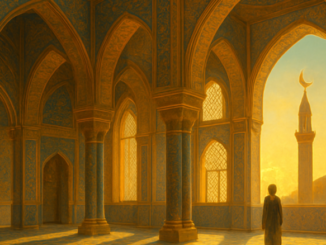
Rows of figures standing in ordered formation symbolizing brotherhood and devotion
Islam

The Ranged Ones: What the Quran Teaches About Order and Brotherhood

Have you ever wondered why people stand in rows during a ceremony? Or why a choir sings in formation? There is something profoundly meaningful about ordered arrangement — something that reaches far beyond mere practicality. The thirty-seventh surah of the Quran, known as As-Saffat or The Ranged Ones, opens with an image that strikes at the heart of this mystery: rows of beings who align themselves in service of something greater than themselves. For anyone familiar with Freemasonry, the resonance is immediate and unmistakable. The Opening: A Vision of Cosmic Order The surah begins with three powerful oaths — by those who range themselves in rows, by those who drive with a reproof, and by those who recite the reminder. This is not random poetry. It paints a picture of a universe governed by order, in which every entity has a place and a function. The angels stand in ranks, not out of compulsion, but out of devotion. Together they form a whole far greater than the sum of its parts. You may recognize this from your own experience: those moments when you were part of something that transcended you. A team working in unison, a community gathered with shared […]

Pilgrims in white garments symbolizing the inner journey of Freemasonry
Islam

Pilgrimage as Inner Journey: Lessons from Surah Al-Hajj

Imagine standing at the threshold of a journey that will transform your entire being. You leave behind status, comfort, and familiar habits. You join thousands of others pursuing the same goal, dressed in simple white garments that erase all outward distinctions. This is the essence of pilgrimage as described in Surah Al-Hajj, the twenty-second chapter of the Quran. And remarkably, this description resonates with something every Freemason recognizes: the conscious decision to embark on an inner journey that changes you forever. What Surah Al-Hajj Teaches Us About Transformation Surah Al-Hajj, named after the great pilgrimage to Mecca, reaches far beyond a physical journey. The text describes how pilgrims shed their ego, surrender to something greater than themselves, and return as changed individuals. The surah opens with a powerful reminder of the transience of earthly existence and calls for humility. This is not abstract theology — it is a concrete call to action. The pilgrimage requires you to literally leave your daily identity behind. No expensive clothing, no status symbols, no distinction between rich and poor. Everyone wears the same simple white garments. This equality is not a symbolic gesture but a profound practice that forces you to see yourself without […]

Symbolic night journey from darkness to light representing Masonic initiation
Islam

The Night Journey: Spiritual Ascent in Surah Al-Isra

What if the deepest spiritual truth is not found in broad daylight, but precisely in the dark of night? The seventeenth surah of the Quran, Al-Isra, opens with an enigmatic nocturnal departure — and within it lies a paradox that every Freemason will recognize: the path toward light begins in total darkness. This essay explores the mystical layers of this surah and asks what the Night Journey can teach us about spiritual transformation. The Opening: A Journey Through the Night Al-Isra begins with the words: “Glory be to Him who carried His servant by night from the Sacred Mosque to the Farthest Mosque.” This single sentence has captivated the imagination of mystics, theologians, and seekers for centuries. This is no ordinary journey. It is a movement that transcends the boundaries of time and space — a passage from the earthly to the celestial, from the known to the unknown. The choice of night is deeply significant. Night is the time when the outer senses fail and the inner eye grows sharper. In many spiritual traditions, night does not symbolize the absence of light but rather the preparation for it. The soul must first wade through darkness before it can bear […]

Symbolic darkness and light representing Masonic initiation and spiritual rebirth
Islam

Surah Yunus: Darkness as a Gateway to Inner Light

There are moments when the world around you falls away completely. Moments of total darkness, where no horizon is visible and no direction is clear. Surah Yunus — the tenth chapter of the Quran — tells of precisely such a moment: a prophet swallowed into the belly of a great fish, surrounded by three layers of darkness. What initially appears to be a story of despair reveals, upon deeper reflection, a profound lesson in spiritual transformation — one that resonates powerfully with the principles and rituals of Freemasonry. The Belly of the Fish: A Concrete Darkness Imagine it: complete severance from light, sound, and orientation. The prophet Jonah — known as Yunus in the Islamic tradition — found himself in what scripture describes as a threefold darkness: the darkness of the night, the darkness of the sea, and the darkness inside the creature’s belly. This is not a metaphor for mild discomfort. It represents the total absence of every familiar reference point. No stars to navigate by. No horizon to orient yourself. No ground beneath your feet. In our own lives, we encounter comparable moments, though usually less dramatic. The loss of someone we love, a sudden health crisis, the […]

Desert landscape symbolizing the Masonic journey of inner transformation
Judaism

Numbers: The Desert as an Inner School of Transformation

An empty plain. No trees, no rivers, no marked roads. Only sand, sky, and silence. At first glance, the desert seems like a place of absence — a space where nothing grows. Yet this very emptiness forms the backdrop of one of the most transformative narratives in the Torah. The fourth book, known in Hebrew as Bamidbar — literally meaning “in the desert” — invites us to see emptiness not as loss, but as a precondition for growth. For Freemasons, who regard the inward journey toward self-knowledge as the work of a lifetime, the symbolism of the desert passage resonates deeply. The Census as a Mirror The Book of Numbers opens with a census. Moses is commanded to count every able-bodied man of Israel, tribe by tribe, family by family. On the surface, this seems like a dry administrative exercise — a practical preparation for the journey through the wilderness. But in Jewish tradition, the act of counting carries a deeper meaning. To be counted is to be seen. Each individual is given a place within the greater whole, not as part of an anonymous mass, but as an irreplaceable member of the community. The Midrash teaches that God counts […]

Open Torah scroll with Masonic square and compasses symbolizing holiness
Judaism

Leviticus: The Call to Holiness and Masonic Symbolism

What does it mean to be called? This question opens the third book of the Torah, known in Hebrew as Vayikra — Leviticus. The book begins with the words “And He called,” a divine summons inviting Moses to draw near. But is this call reserved solely for a biblical prophet, or does it also speak to us — modern seekers of meaning and purpose? In this article, we explore the deeper layers of this remarkable book and discover how its themes of purification, sacrifice, and holiness resonate powerfully with the symbolism of Freemasonry. Why Does Leviticus Begin with a Call? The Hebrew word Vayikra literally means “And He called.” In Jewish tradition, great significance is attached to this opening word because it sets the tone for the entire book. The call is personal and intimate. God does not speak in abstract terms but addresses Moses directly with an invitation. According to rabbinical commentators, including the medieval scholar Rashi, this phrasing expresses affection. It is not a command from a distant authority but a loving summons to draw closer to the sacred. For Freemasons, this theme is immediately recognizable. In the Lodge, too, the journey begins with a call — an […]

Symbolic veil falling away revealing light in a Masonic temple setting
Christianity

2 Corinthians: The Veil That Falls From the Heart

A veil is more than a piece of fabric. It is a boundary between seeing and not seeing, between the known and the hidden. In Paul’s Second Letter to the Corinthians, this veil plays a central role as a symbol for the transformation of human consciousness. For those familiar with the symbolic language of Freemasonry, the text opens up a rich dialogue between two traditions that both speak of breaking through darkness and discovering inner light. The Earthen Vessel and the Hidden Treasure Picture a simple clay pot — rough, unglazed, the kind you might find in any archaeological museum. In 2 Corinthians, Paul uses precisely this everyday object as a metaphor for the human condition. “We have this treasure in earthen vessels,” he writes, referring to the divine light that dwells within the fragile human body. It is an image that resonates directly with Freemasonry, where the rough ashlar represents the unworked human being who is transformed through labor and reflection. The pot itself is not worthless because of its simplicity. On the contrary, it is precisely the vulnerability of the material that makes the presence of the treasure within all the more remarkable. Paul invites his readers to […]

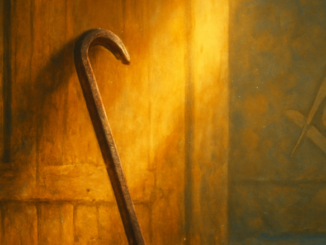
Crowbar as a Masonic symbol representing spiritual leverage and inner transformation
Spiritual Traditions

The Crowbar Symbol and Its Meaning: A Lever for the Soul

Sometimes you need a crowbar to pry something open — not just in the physical world, but in your inner life as well. The crowbar symbol and its meaning reach far beyond the practical tool we know from construction sites. This simple instrument carries a powerful spiritual message: some doors in our lives only open when we are willing to apply real force. In Freemasonry, where working tools serve as central symbols, the crowbar offers a surprisingly compelling perspective on personal transformation. What the Crowbar Symbol Tells Us About Resistance You probably know the feeling. Something in your life has rusted shut. A habit you cannot let go of. A belief that limits you but that you cannot seem to break through. A relationship that no longer works but that you cling to anyway. In moments like these, the image of the crowbar acts as a mirror. The pry bar does not ask for subtlety — it asks for honesty about what is truly needed. The meaning of this tool lies in its directness. Where other instruments perform fine, delicate work, the crowbar is designed for one purpose: overcoming resistance. In a spiritual sense, it represents those moments when a […]