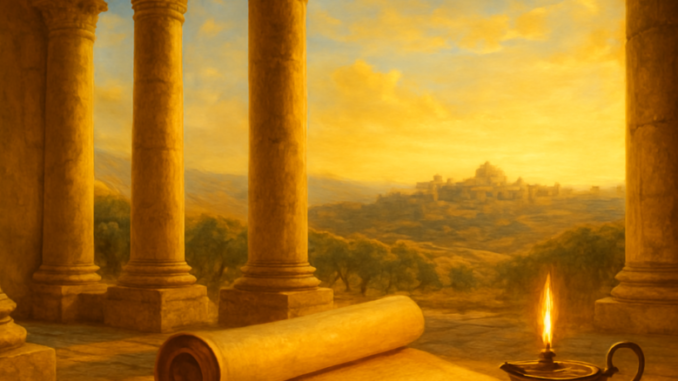
Why would a Freemason spend time studying an ancient love poem from the Bible? The Song of Solomon contains no moral law, no historical narrative, no prophecy. It is pure poetry — brimming with longing, beauty, and mysterious imagery. And yet, hidden within that imagery are symbols that touch the very heart of Freemasonry. Let’s explore this remarkable book and the surprising connections it holds for the Craft.
What Is the Song of Solomon?
The Song of Solomon — sometimes called the Song of Songs or Canticles — is the twenty-second book of the Old Testament. It consists of lyrical dialogues between a bridegroom and a bride, interspersed with choruses and interludes. On the surface, it reads as a collection of love poems filled with sensory descriptions: the fragrance of myrrh, the taste of wine, the sight of blossoming vineyards. But is that really all there is?
For centuries, scholars and theologians have searched for deeper layers beneath the poetic language. In the Jewish tradition, it was read as an allegory for the relationship between the Eternal and His people. In Christian circles, the bride was seen as the Church, the soul, or humanity itself seeking union with the Divine. Across all these interpretations, the same question persists: what does this longing truly represent?
What Does This Have to Do with Freemasonry?
A fair question. Freemasonry is not a religion and does not bind itself to any single sacred text. Yet Freemasonry works with symbols — and the Song of Solomon is profoundly symbolic. The language of this book speaks in images: the garden, the well, the sealed fountain, the lily among thorns. These are precisely the kinds of symbols that appear in Masonic thought, though often in different contexts.
Consider the garden. In the Song of Solomon, the beloved is described as an enclosed garden — a hidden space where beauty flourishes. In Freemasonry, we recognize the concept of the inner temple: a spiritual space that the initiate must cultivate, tend, and protect. Both traditions speak of something that grows only when it is lovingly maintained.
Is Love a Masonic Theme?
Absolutely. Brotherly love stands as one of the principal tenets of Freemasonry. This is not romantic love in the way the Song of Solomon portrays it, but rather a deeper bond — love for one’s fellow human being, love of truth, love of the ideal of self-improvement. And yet, there is a kinship between the two. For what is longing, if not the driving force behind every search?
“I sought him whom my soul loveth; I sought him, but I found him not.”
This line from the Song of Solomon describes a universal experience. The seeker who sets out on a journey, not yet knowing where the path will lead. Isn’t this precisely the position of the candidate who enters the lodge for the first time? He is searching for something he cannot yet name. He longs for light, for meaning, for connection.
Symbolic Imagery That Resonates with Masonic Thought
The Song of Solomon employs a wealth of natural imagery that echoes through Masonic symbolism:
The rose and the lily: Signs of beauty and purity, these symbols appear across multiple traditions as markers of inner development and spiritual refinement.
The cedar and the cypress: Building materials for the Temple, but also images of steadfastness and growth — qualities every Mason aspires to embody.
The fountain of living water: A symbol of wisdom that never ceases to flow, of knowledge that never runs dry. The search for further light in Masonry carries a remarkably similar resonance.
Night and morning: The transition from darkness to light — a theme that recurs constantly throughout Masonic ritual and ceremony.
These images are not exclusive to either tradition, but they form a shared symbolic language. Anyone who reads the Song of Solomon with a symbolic eye will recognize patterns that are also cultivated within the lodge.
Can Poetry Be a Teacher?
Without question. Poetry works differently than prose. It compels us to slow down, to feel, to experience multiple layers simultaneously. Freemasonry uses ritual and symbol with the very same purpose: not to provide direct answers, but to awaken questions. The Song of Solomon does exactly this. It offers no moral lesson, no commandment, no prohibition. It sings — and in that singing, it opens a space for contemplation.
Perhaps this is the greatest lesson the Song of Solomon has to offer: that truth does not always reside in propositions and statements, but sometimes in images, in rhythm, in the silence between words. The Freemason who takes his symbols seriously may find in this ancient love song an unexpected companion on the journey.
What Can We Take Away from This Exploration?
The Song of Solomon invites a different way of reading — not to gather information, but to undergo an experience. The bride who searches for her beloved is the soul seeking fulfillment. The garden that blooms is the inner world waiting for attention. The night that gives way to morning is the journey from ignorance to insight.
For the Freemason who remains open to multiple sources of wisdom, the Song of Solomon is a treasure chest of symbolism. It does not speak in the language of working tools, but in the language of nature, love, and longing. And therein lies its power: it reminds us that the work of building ourselves is not merely a craft — it is also a work of art.
The Song of Solomon is far more than a love poem. It is a mirror for anyone who seeks deeper meaning. The symbolic language of flowers, gardens, and fountains resonates powerfully with the Masonic journey toward light and self-knowledge. Those who read this ancient book with an open heart will discover that longing and wisdom lie closer together than we often realize. In the dialogue between bride and bridegroom echoes the eternal question that every seeker carries: where will I find that which my soul desires?
Copyright text & image: devrijmetselaar.nl
Texts are based on the ideas and content of the author of devrijmetselaar.nl, reviewed, corrected, and supplemented with the assistance of OpenAI. Images are created based on the ideas of the author of devrijmetselaar.nl using OpenAI/DALL-E.
Frequently Asked Questions
Why do Freemasons study the Song of Solomon if Freemasonry isn't a religion?
Freemasonry is built on symbolism rather than religious doctrine, and the Song of Solomon is rich with symbolic imagery that speaks to Masonic principles like the inner temple, spiritual growth, and the search for enlightenment. Freemasons study various sacred texts and literary works not for religious binding, but to extract universal truths and symbols that deepen understanding of the Craft's teachings.
How does the Song of Solomon connect to Masonic ideals?
The Song of Solomon's themes of longing, searching, and spiritual seeking mirror the journey of a Masonic candidate entering the lodge for the first time. The book's symbolic language—including images like the garden, the well, and the sealed fountain—parallels Masonic concepts of cultivating an inner spiritual temple and the pursuit of light and truth.
Is love actually important in Freemasonry?
Yes, brotherly love is one of the principal tenets of Freemasonry. While not romantic love as portrayed in the Song of Solomon, Masonic love represents a deeper bond of compassion, brotherhood, and commitment to truth and self-improvement that unites all members of the Craft.
What can a Masonic candidate learn from the Song of Solomon?
A Masonic candidate can recognize their own experience in the Song of Solomon's portrayal of spiritual seeking and longing. The poetic language teaches that the search for meaning and connection is universal, and that personal growth requires cultivation and care—principles central to the Masonic journey of self-discovery and enlightenment.
Are there specific symbols in the Song of Solomon that Freemasons use?
Yes, the Song of Solomon employs symbolic imagery such as gardens, wells, fountains, and flowers that resonate with Masonic thought and appear throughout Masonic teachings, though sometimes in different contexts. These shared symbols demonstrate how timeless wisdom traditions speak to the same fundamental human experiences of growth, beauty, and spiritual aspiration.


Be the first to comment