

Philosophy & Ethics
Grieving a Colleague: What Loss Teaches Us About Ethics
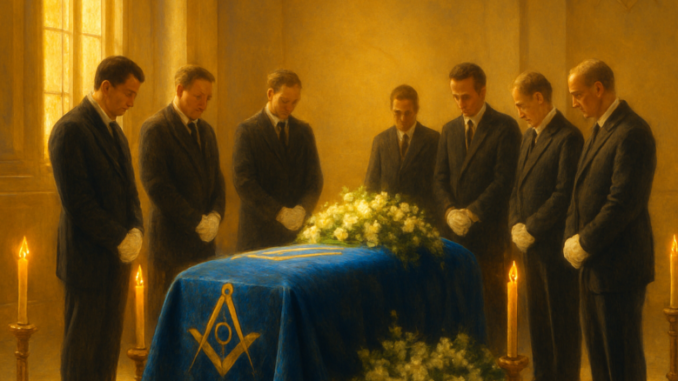
The phone goes silent after the message. A referee stares at an empty field where yesterday a familiar face still stood. The news of a valued colleague’s sudden death hits like a hammer blow. In that moment of loss, a question emerges that reaches far beyond personal grief: what does our mourning reveal about who we truly are — and how we treat one another? The Silence After Loss When a colleague dies unexpectedly, a hole opens up in the world. Not just in the workplace, but in the fabric of everyday connections. The world of refereeing, like any tight-knit community, knows this feeling of collective grief. These are moments when achievements and results suddenly seem meaningless. What remains is the memory of a person — shared experiences, the way someone carried themselves through life. In Freemasonry, we know these moments of stillness as well. When a Brother enters the Eternal East, as passing is described in Masonic terms, the lodge gathers in reflection. Not to judge what someone accomplished, but to remember who someone was. This tradition reminds us that ethics is not only about action — it is also about remembrance and honor. Ethics in the Face of […]
Symbolism & Rituals
Voltaire’s Candide and Freemasonry: Finding Connection in Chaos
You probably know the feeling. Someone tells you that everything happens for a reason, that life has meaning, that we live in the best of all possible worlds. And something doesn’t sit right. Because you’ve also seen the suffering, the randomness, the misfortune that strikes people without cause. This exact tension lies at the heart of Voltaire’s masterpiece Candide. And hidden within that tension is a surprising connection to the values of Freemasonry. The Illusion of the Best Possible World Voltaire wrote Candide in 1759 as a satirical attack on the philosophical optimism of Gottfried Wilhelm Leibniz. The story’s hero, Candide, grows up under the tutelage of Professor Pangloss, who insists that we live in the best of all possible worlds. Every misfortune, every disaster serves a purpose. Everything is ultimately good. But Voltaire then drags Candide through an unrelenting chain of catastrophes — earthquakes, war, slavery, betrayal. The naïve hero gradually loses faith in Pangloss’s doctrine. Not through philosophical arguments, but through raw, concrete experience. By witnessing what human beings are capable of doing to one another. What Seekers of Truth Can Learn from Candide The first lesson from Candide is confrontingly simple: do not blindly trust systems. This […]
Marcus Aurelius – Freemasonry & Connection
Marcus Aurelius on Virtue as the Only True Value
What if everything you own — your status, your reputation, even your body — were to vanish tomorrow? Would anything of real value remain? Marcus Aurelius, the Roman emperor-philosopher who ruled nearly nineteen centuries ago, posed this question to himself again and again. In the sixth book of his Meditations, he arrives at an answer that is both radical and consoling: only virtue holds genuine worth. This insight resonates profoundly with Freemasonry, where the pursuit of moral perfection and the cultivation of inner qualities stand at the very center of practice. Both traditions converge on a fundamental conviction: who you are matters far more than what you have. The Paradox of the Powerful Philosopher Here we enter curious territory. Marcus Aurelius wielded virtually unlimited power. As emperor, he could amass wealth, destroy enemies, and have his name chiseled in marble for all eternity. Yet night after night, he wrote in his private journal that none of these things moved him. More than that — he regarded them as distractions from what truly matters. Throughout Book VI, he repeats like a mantra that external circumstances are neither good nor bad. They are indifferent, neutral, merely the raw material with which the […]