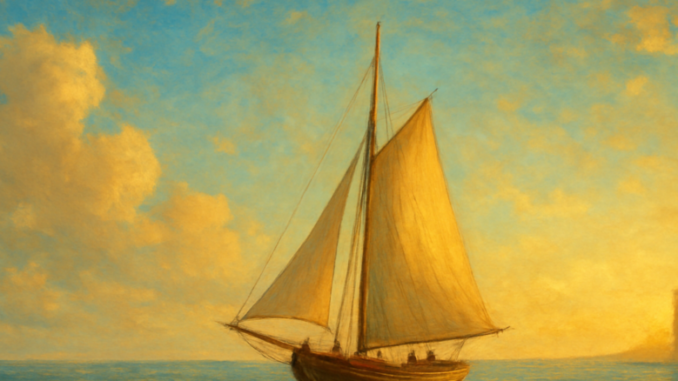
You probably know the feeling. Someone tells you that everything happens for a reason, that life has meaning, that we live in the best of all possible worlds. And something doesn’t sit right. Because you’ve also seen the suffering, the randomness, the misfortune that strikes people without cause. This exact tension lies at the heart of Voltaire’s masterpiece Candide. And hidden within that tension is a surprising connection to the values of Freemasonry.
The Illusion of the Best Possible World
Voltaire wrote Candide in 1759 as a satirical attack on the philosophical optimism of Gottfried Wilhelm Leibniz. The story’s hero, Candide, grows up under the tutelage of Professor Pangloss, who insists that we live in the best of all possible worlds. Every misfortune, every disaster serves a purpose. Everything is ultimately good.
But Voltaire then drags Candide through an unrelenting chain of catastrophes — earthquakes, war, slavery, betrayal. The naïve hero gradually loses faith in Pangloss’s doctrine. Not through philosophical arguments, but through raw, concrete experience. By witnessing what human beings are capable of doing to one another.
What Seekers of Truth Can Learn from Candide
The first lesson from Candide is confrontingly simple: do not blindly trust systems. This applies to religious dogma, political ideologies, and even your own deeply held beliefs. Freemasonry asks precisely this of its members. The search for truth begins with the courage to question what you think you already know.
You can put this into practice by regularly pausing to examine your assumptions. Ask yourself: why do I actually believe this? Have I investigated it for myself, or have I simply absorbed it from others? This isn’t a cynical exercise — it’s an act of intellectual honesty.
Genuine connection doesn’t come from blind optimism. It comes from facing reality together and choosing to keep building anyway.
Connection Through Shared Doubt
This is where Voltaire’s message touches one of Freemasonry’s core values: brotherhood. In the Lodge, people from vastly different backgrounds, faiths, and convictions meet as equals. What binds them isn’t a shared answer — it’s a shared question. The question of meaning, of truth, of how to live as a good person.
Candide ultimately finds peace not in a watertight philosophy, but in community. At the end of the story, he settles on a small farm with a group of companions. They work together, each contributing what they can. The famous closing words are: we must cultivate our garden.
This is not resignation — it’s practical wisdom. Rather than endlessly debating whether this is the best of all possible worlds, it’s better to roll up your sleeves and get to work. Together. That is connection in its most concrete form.
Three Steps to Apply This in Your Own Life
How do you translate Voltaire’s insights into daily practice? Here are three concrete steps you can take today:
1. Seek out a conversation with someone who thinks differently than you. Not to convince them, but to understand them. Ask questions and truly listen.
2. Work together on something tangible. Whether it’s a project at work, a task around the house, or volunteering — shared labor creates bonds that words alone cannot.
3. Accept uncertainty as your starting point. You don’t need all the answers to live a meaningful life. The search itself is what matters.
The Garden as a Masonic Symbol
Voltaire’s garden metaphor resonates deeply with Masonic thinking. The Freemason sees himself as a rough ashlar — an unfinished stone that must be shaped into a perfect cube. This is not a passive process. It demands daily attention, patience, and labor. Just like tending a garden.
The garden also represents community. You don’t just cultivate yourself — you cultivate the relationships around you. You contribute to something larger than yourself. This is where the Masonic values of self-reflection and brotherhood converge.
Why This Matters Now
In an era of increasing polarization, where people retreat into echo chambers of like-minded voices, Voltaire’s message offers a powerful counterbalance. Connection doesn’t come from pretending everything is fine. It comes from being honest about what isn’t — and still choosing to build together.
Voltaire himself maintained ties with Masonic circles in Paris. Shortly before his death, he was even initiated into the Lodge Les Neuf Sœurs. Whether he was a devoted Freemason is debatable. But his thinking about tolerance, critical inquiry, and human dignity aligns seamlessly with what Freemasonry strives toward.
From Satire to Meaning
Candide appears, at first glance, to be a demolition job. It dismantles every form of naïve optimism. But read more carefully, and you discover something else entirely. Voltaire doesn’t reject hope — he rejects the dishonesty of false hope. He invites us to stand in the world with our eyes wide open.
And that is precisely where real meaning begins. Not in the denial of suffering, but in the choice to keep working toward improvement despite everything. Improvement of yourself, of your surroundings, of your relationships with others. That is cultivating your garden. That is the Masonic path.
Voltaire’s Candide challenges us to look at the world honestly, as it truly is — not to become discouraged, but to build genuine connection from that place of honesty. The Freemason recognizes in this story the essence of their own journey: not a search for easy answers, but a commitment to authentic growth. Start cultivating your own garden today. Not alone, but together with others who share the same questions.
Copyright text & image: devrijmetselaar.nl
Texts are based on the ideas and content of the author of devrijmetselaar.nl, reviewed, corrected, and supplemented with the assistance of OpenAI. Images are created based on the ideas of the author of devrijmetselaar.nl using OpenAI/DALL-E.
Frequently Asked Questions
What is the main connection between Voltaire's Candide and Freemasonry?
Both Candide and Freemasonry share a commitment to questioning blindly accepted beliefs and seeking truth through investigation. While Candide satirizes naive optimism by showing how raw experience challenges philosophical dogma, Freemasonry encourages members to examine their assumptions and search for truth with intellectual honesty. Additionally, both emphasize connection through shared questioning rather than shared answers.
How does Candide's journey relate to Freemasonry's values?
Candide's gradual loss of faith in Professor Pangloss's doctrine mirrors Freemasonry's core principle that seekers should not blindly trust systems—whether religious, political, or ideological. Through experiencing suffering and chaos firsthand, Candide learns that genuine connection and meaning come from facing reality together with others, which directly reflects Freemasonry's emphasis on brotherhood among people of different backgrounds who unite through shared inquiry rather than shared certainty.
What is the practical lesson from Candide for questioning your beliefs?
The article suggests regularly pausing to examine your assumptions by asking: why do I actually believe this? Have I investigated it myself, or absorbed it from others? This practice of intellectual honesty isn't cynical—it's a genuine act of critical thinking that Freemasonry encourages in its members as part of their search for truth and personal development.


Be the first to comment