Freemasonry is one of the world’s oldest and most widely recognised fraternal traditions, and at the heart of its structure lies a carefully organised system of degrees. These degrees of Freemasonry represent successive stages of moral, philosophical, and symbolic instruction through which a member progresses over time. Each degree introduces new allegories, rituals, and teachings designed to deepen a Mason’s understanding of virtue, duty, and the human condition. Whether you are newly curious about the Craft or seeking a more thorough understanding of its architecture, exploring the degree system is the most direct path into the heart of Freemasonry’s living tradition.
Historical Background of the Degree System
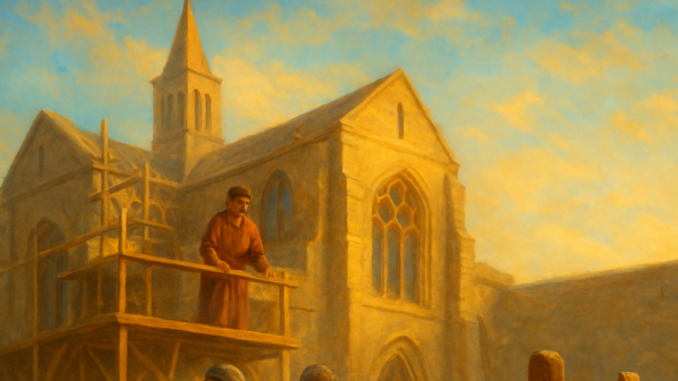
The origins of Freemasonry’s degree structure are rooted in the medieval guild traditions of operative stonemasons — the craftsmen who built the great cathedrals, castles, and civic monuments of Europe. These guilds used a system of ranks to distinguish apprentices from journeymen and master craftsmen, regulating both knowledge and access to trade secrets. When speculative Freemasonry — concerned not with physical building but with moral and philosophical development — emerged in the early eighteenth century, it inherited and transformed this hierarchical model.
The founding of the Premier Grand Lodge of England in London in 1717 marks a pivotal moment in Masonic history. At this point, the Craft operated primarily with two degrees: the Entered Apprentice and the Fellow Craft. The third degree, that of Master Mason, appears to have been introduced or formalised in the 1720s, with records suggesting its increasing prominence by around 1725. This three-degree framework, known as the Blue Lodge or Craft Lodge system, became the foundational structure of Freemasonry worldwide.
Over the following century, additional degrees proliferated as enthusiastic Masons — particularly in France, continental Europe, and eventually the United States — developed elaborated rites that built upon the symbolism of the first three degrees. Figures such as the Chevalier Andrew Michael Ramsay, an influential Scottish-born Freemason based in France, delivered a famous oration in 1736 that helped inspire the development of chivalric and higher degrees. By the late eighteenth century, systems such as the Scottish Rite, the York Rite, and numerous other rites had codified extended degree programmes that offered Masons a deeper philosophical journey beyond the Craft Lodge.
The Three Degrees of the Blue Lodge
The foundation of all Masonic experience rests in the three degrees of the Craft, conferred within the symbolic lodge. These are the degrees that every Freemason receives, regardless of which appendant bodies or higher rites they may later explore. Together, they form a complete allegorical narrative using the symbolism of the stonemason’s art.
The First Degree: Entered Apprentice
The journey begins with the degree of Entered Apprentice. In this degree, the candidate is symbolically received into the world of Freemasonry as a new member of society — uninstructed, humble, and seeking light. The ceremony uses powerful allegory to illustrate the themes of transition, trust, and the beginning of moral inquiry. The candidate is divested of material possessions and enters the lodge in a particular manner that symbolises vulnerability and openness to instruction.
The working tools presented in this degree are the twenty-four inch gauge and the common gavel. These tools, drawn from the stonemason’s trade, are applied allegorically: the gauge teaches the Mason to divide time wisely between labour, refreshment, and service to God and others, while the gavel symbolises the conscience — the force that chips away at the rough edges of one’s character. The lessons of the Entered Apprentice degree focus on the fundamentals of Masonic virtue: brotherly love, relief, and truth.
The Second Degree: Fellow Craft
Having made progress in the first degree, the Mason is advanced to the degree of Fellow Craft. This degree shifts the philosophical emphasis toward intellectual development and the pursuit of knowledge. Where the Entered Apprentice represented the beginning of moral education, the Fellow Craft represents its expansion — a call to study the liberal arts and sciences, to apply reason to the understanding of both the natural and the divine.
The working tool of the Fellow Craft is the square, an instrument used to test and prove the accuracy of right angles. Allegorically, it teaches the Mason to square their actions by the moral law. The degree makes extensive reference to the liberal arts and sciences — grammar, rhetoric, logic, arithmetic, geometry, music, and astronomy — positioning Freemasonry as an intellectual tradition that honours the full range of human knowledge. Geometry, in particular, holds a place of special reverence, understood as the foundational science underlying all creation.
The Third Degree: Master Mason
The third degree, that of Master Mason, is widely regarded as the most profound of the Craft degrees and one of the most moving ceremonies in all of Freemasonry. It tells the allegorical story of Hiram Abiff, the legendary master architect of King Solomon’s Temple, who is said to have been slain by three ruffians who sought to extort from him the secrets of a Master Mason before the Temple was complete. The drama of the degree explores themes of fidelity, mortality, the immortality of the soul, and the triumph of integrity over adversity.
The working tools of this degree are the skirret, the pencil, and the compasses, teaching lessons about the straight and narrow path, the recording of one’s moral conduct, and the importance of circumscribing one’s behaviour within due bounds. Upon completion of this degree, a Mason is considered a full member of the fraternity — a Master Mason — and is entitled to full participation in lodge life. All the degrees that follow in any rite or appendant body are supplementary to, and build upon, the foundation laid here.
The York Rite and Its Degrees
For many Masons who wish to continue their Masonic education beyond the Blue Lodge, the York Rite offers a rich and historically significant path. The York Rite is not a single organisation but a collection of three separate bodies, each conferring additional degrees that amplify and extend the symbolism of the Craft degrees.
The Chapter of Royal Arch Masons
The Royal Arch Chapter confers four degrees: the Mark Master Mason, the Past Master (Virtual), the Most Excellent Master, and the Royal Arch. In many Masonic jurisdictions — including those in England and Wales — the Royal Arch is considered the completion of the third degree rather than a separate entity. The Duke of Sussex, as Grand Master of the United Grand Lodge of England in the early nineteenth century, championed the famous declaration that pure ancient Masonry consists of three degrees including the Royal Arch. The degree itself is considered by many to be the most sublime of all Masonic degrees, presenting a dramatic allegory of discovery and restoration that resonates deeply with themes of resurrection and enlightenment.
The Council of Cryptic Masons
The Cryptic degrees — the Royal Master and the Select Master, with the Super Excellent Master in some jurisdictions — fill in the symbolic narrative surrounding King Solomon’s Temple, providing backstory and context to both the third degree and the Royal Arch. The term “cryptic” derives from the word crypt, as these degrees deal allegorically with secret vaults and hidden chambers beneath the Temple. They are widely valued for their dramatic richness and the way they connect the story of Hiram Abiff to the preservation and eventual recovery of sacred wisdom.
The Commandery of Knights Templar
The Knights Templar orders within the York Rite are distinctive in that they are explicitly Christian in their orientation — the only part of the mainstream Masonic structure that requires a specific religious affiliation (Christian belief) for membership. The orders conferred include the Illustrious Order of the Red Cross, the Order of Malta, and the Order of the Temple. These chivalric orders draw on the historical legacy of the medieval Knights Templar and the Hospitallers, clothing Masonic moral instruction in the romantic symbolism of crusading knighthood and Christian devotion.
The Scottish Rite and Its Degrees
The Ancient and Accepted Scottish Rite — known in England and Wales as the Ancient and Accepted Rite — is the most extensive degree system in Freemasonry, conferring degrees numbered from the 4th to the 32nd, with the 33rd degree awarded as an honour for distinguished service. Despite its name, the Scottish Rite did not originate in Scotland; it was largely codified in France and the United States during the eighteenth and nineteenth centuries.
The degrees of the Scottish Rite are organised into four bodies:
- The Lodge of Perfection — conferring the 4th through 14th degrees
- The Chapter of Rose Croix — conferring the 15th through 18th degrees
- The Council of Kadosh — conferring the 19th through 30th degrees
- The Consistory — conferring the 31st and 32nd degrees
Albert Pike, the nineteenth-century American Freemason, jurist, and scholar, made an enormous contribution to the Scottish Rite in the United States by substantially rewriting and elaborating its rituals. His monumental work Morals and Dogma of the Ancient and Accepted Scottish Rite of Freemasonry (1871) remains a landmark in Masonic literature, offering philosophical and symbolic commentary on the degrees. Pike sought to give each degree intellectual depth and to connect Masonic symbolism to a vast range of philosophical, religious, and historical traditions.
Among the best-known degrees of the Scottish Rite are the 18th degree (Knight Rose Croix), which reflects on themes of faith, hope, and charity in a context rich with Christian symbolism, and the 32nd degree (Master of the Royal Secret), which serves as the culmination of the Rite’s philosophical journey. The honorary 33rd degree is awarded by the Supreme Council to those who have rendered exceptional service to the fraternity or to society at large.
Other Rites and Appendant Bodies
Beyond the York and Scottish Rites, a remarkable diversity of Masonic degrees exists within various other rites and appendant bodies, many with long and distinguished histories.
The Ancient and Primitive Rite of Memphis-Misraïm
This rite, which traces its origins to early nineteenth-century France and Italy, is famous for the extraordinary number of degrees it once contained — at various points, as many as 97 or even more. Today it is typically reduced in practice, but it remains notable for its esoteric emphasis and its synthesis of Egyptian, Hermetic, and Kabbalistic symbolism alongside conventional Masonic allegory. The Rite of Memphis-Misraïm has attracted scholars and mystics interested in the deeper philosophical dimensions of Masonic symbolism.
The Royal Order of Scotland
The Royal Order of Scotland is an ancient and distinguished body conferring two degrees: the Heredom of Kilwinning and the Rosy Cross. Membership is restricted to Master Masons who are also Royal Arch Masons, and the organisation claims historical connections to Robert the Bruce and the Battle of Bannockburn in 1314, though these claims belong to the realm of Masonic legend rather than documented history. The order is headquartered in Edinburgh and meets with a dignified formality that reflects its sense of historical prestige.
The Shrine and Other Bodies
The Ancient Arabic Order of the Nobles of the Mystic Shrine — commonly known as the Shriners — is perhaps the best-known appendant body to the outside world, famous for its charitable work, particularly its network of Shriners Hospitals for Children. While the Shrine requires completion of either the Scottish Rite or the York Rite Templar degrees for eligibility, it is not itself a degree-conferring body in the traditional sense, but rather a social and philanthropic organisation that draws its membership from advanced Masons.
The Philosophy Behind the Degree Structure
It would be a mistake to view the degrees of Freemasonry as merely a hierarchy of status or seniority. Their deeper purpose is pedagogical and transformative. Each degree is designed as an experience — combining dramatic ritual, memorised catechism, symbolic instruction, and fraternal interaction — that leaves an impression on the candidate’s moral imagination. The gradual unfolding of Masonic teaching across the degrees reflects an ancient and widespread pedagogical principle: that profound wisdom must be approached step by step, and that the readiness to receive deeper knowledge must be cultivated through experience and reflection.
The symbolism of light is pervasive throughout Masonic degree work. The Entered Apprentice seeks light; as he progresses, more light is progressively revealed. This metaphor, familiar from philosophy and religious traditions worldwide, captures the spirit of Masonic progression beautifully. Freemasonry does not claim to possess hidden supernatural secrets, but rather to use symbol, allegory, and ritual to prompt reflection on timeless questions of morality, human dignity, the existence of God, and the proper conduct of a good life.
The requirement that a candidate believe in a Supreme Being — regardless of the specific religious tradition — means that Freemasonry’s degree work is designed to resonate across faiths. The Volume of the Sacred Law, placed upon the altar in every lodge, may be the Bible, the Quran, the Torah, the Vedas, or another scripture appropriate to the candidate’s faith. This inclusive approach reflects Freemasonry’s foundational conviction that the pursuit of moral truth transcends religious boundaries.
Frequently Asked Questions About the Degrees of Freemasonry
How many degrees of Freemasonry are there in total?
The answer depends on which rites and bodies one considers. The foundational Blue Lodge system comprises three degrees: Entered Apprentice, Fellow Craft, and Master Mason. Beyond these, the Scottish Rite adds degrees numbered 4 through 33, while the York Rite confers additional degrees through its Chapter, Council, and Commandery. Other rites, such as Memphis-Misraïm, historically claimed dozens more. In practice, the vast majority of Freemasons work primarily within the three Craft degrees and may explore one or more appendant bodies according to their interests and availability in their region.
Do higher degrees make someone a more important or senior Mason?
Not in a hierarchical sense within the Craft. The degrees of the Scottish Rite and York Rite are supplementary to — not superior to — the three Craft degrees. A 32nd-degree Scottish Rite Mason does not outrank a Master Mason in the context of the Craft Lodge. The higher degrees offer additional philosophical and symbolic content, but they do not confer authority over those who have not received them. Masonic leadership and seniority within a lodge are determined by elected office, not by appendant degree.
Is there a time requirement between degrees?
Most Masonic jurisdictions require a period of time between degrees — a practice sometimes called “proficiency” — during which the candidate is expected to study the material of the degree just received, memorise ritual responses, and demonstrate understanding before advancement. This ensures that the degrees are meaningful experiences rather than mere formalities. The specific requirements vary by jurisdiction, but the principle of measured progression is universal and reflects Freemasonry’s emphasis on genuine learning over mere ceremony.
Are the degrees of Freemasonry kept secret?
While certain specific elements of Masonic ritual — particularly the modes of recognition such as grips, words, and signs — are treated as confidential among Masons, the broad outlines, themes, and symbolism of the degrees are widely available in books, academic studies, and reputable websites. Freemasonry does not claim to hold secrets that would be harmful to others; rather, the tradition of confidentiality serves to preserve the meaning and impact of the ritual experience for candidates who receive the degrees. The journey of discovery is considered part of the value of the experience.
Can women participate in the degrees of Freemasonry?
Mainstream or “regular” Freemasonry, as recognised by the United Grand Lodge of England and most Grand Lodges worldwide, is traditionally restricted to men. However, there are several well-established organisations that confer Masonic degrees to women, including the Order of Women Freemasons and the Honourable Fraternity of Ancient Freemasons, both active in England. Additionally, co-Masonic organisations such as Le Droit Humain admit both men and women and confer the full range of Craft and higher degrees. These bodies have their own distinguished histories and traditions, and their existence reflects the enduring appeal of Masonic philosophy and practice across a broad community of seekers.
Conclusion: A Living Tradition of Progressive Wisdom
The degrees of Freemasonry represent one of the most thoughtfully constructed systems of moral and philosophical education that the modern world has inherited from earlier centuries. From the first tentative steps of the Entered Apprentice to the rich philosophical tapestry woven by the higher degrees of the Scottish and York Rites, the Masonic degree system invites each member on a personal journey of reflection, growth, and fraternal connection. Its enduring vitality across more than three centuries, in dozens of countries and across many cultures, is testament to the depth and universality of the values it embodies. For those curious about what Freemasonry truly offers, understanding its degrees is the most illuminating place to begin.
Read more about this topic
- All articles in this category: Freemasonry & Society
- What Is Freemasonry? Origins, Values, and Philosophy
- What is Freemasonry?
- What is Freemasonry?
- The Human Catapult: On Daredevils, Trust, and Brotherhood
- Falling Inflation, Rising Worries: A Philosophical Exploration
Frequently Asked Questions
What are the three degrees of Freemasonry and why are they important?
The three degrees of the Blue Lodge—Entered Apprentice, Fellow Craft, and Master Mason—form the foundation of Freemasonry and are received by every Freemason worldwide. These degrees provide a complete allegorical narrative using stonemason symbolism to teach moral, philosophical, and spiritual lessons that guide a Mason's personal development and understanding of virtue and duty.
How did the Masonic degree system originate?
The degree system evolved from medieval guild traditions of operative stonemasons, who used ranks to distinguish apprentices, journeymen, and masters. When speculative Freemasonry emerged in the early eighteenth century, it transformed this hierarchical model into a system focused on moral and philosophical development rather than physical craftsmanship.
Are there degrees beyond the three Blue Lodge degrees?
Yes, many Freemasons progress to additional higher degrees through appendant bodies and rites such as the Scottish Rite and York Rite, which developed primarily in France, continental Europe, and the United States during the eighteenth century. These extended degree programmes offer deeper philosophical exploration and are built upon the symbolism and foundation of the three Craft degrees.
What does each Masonic degree teach?
Each degree introduces new allegories, rituals, and teachings designed to deepen a Mason's understanding of virtue, duty, and the human condition. The three Craft degrees together form a complete symbolic narrative using stonemason imagery to guide personal moral and spiritual development throughout a Mason's journey in the Fraternity.

Be the first to comment