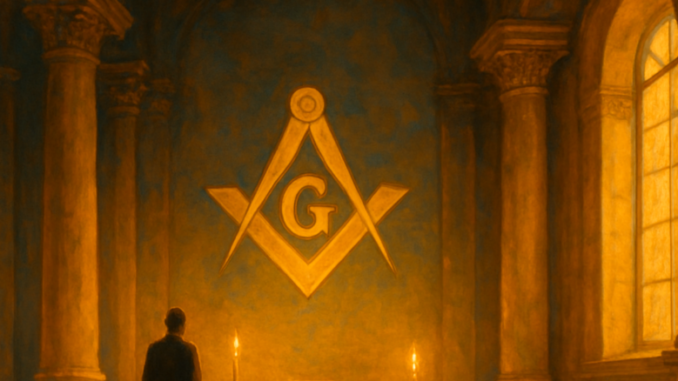
Freemasonry is one of the world’s oldest and most widely recognised fraternal organisations, uniting men across cultures, nationalities, and backgrounds under a shared commitment to moral development, brotherly love, and service to humanity. With roots stretching back several centuries and lodges active on every inhabited continent, Freemasonry has shaped the lives of millions of men and, through them, the societies they lived in. Understanding what Freemasonry is requires looking beyond myths and misconceptions to explore its genuine history, philosophy, and practice — a journey that reveals a tradition as fascinating as it is enriching.
Historical Background of Freemasonry
Origins: From Operative to Speculative Masonry
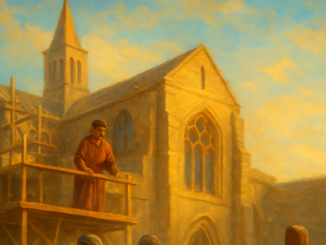
The story of Freemasonry begins with the medieval stonemasons’ guilds of Europe. Skilled craftsmen who built the great cathedrals, castles, and public buildings of the Middle Ages organised themselves into guilds to protect their trade secrets, regulate standards of workmanship, and care for their members. These were the operative masons — men who worked with actual stone and mortar.
Over time, particularly between the 16th and 17th centuries, these guilds began admitting members who were not working stonemasons. These so-called “accepted” masons were often educated gentlemen, merchants, or intellectuals who were drawn to the philosophical and symbolic dimensions of the craft. By the early 18th century, the transition from operative to speculative Masonry — using the tools and language of stonemasonry as metaphors for moral and personal development — was well underway.
The Foundation of the Grand Lodge of England
The pivotal moment in organised Freemasonry came on 24 June 1717, when four London lodges gathered at the Goose and Gridiron alehouse in St. Paul’s Churchyard and formed the first Grand Lodge of England. This event is widely regarded as the founding of modern, institutional Freemasonry. The first Grand Master was Anthony Sayer, though the organisation would grow rapidly in prominence and influence under subsequent Grand Masters.
In 1723, the Scottish minister James Anderson published The Constitutions of the Free-Masons, a foundational document that codified Masonic law, history (as then understood), and the moral obligations of members. Anderson’s Constitutions remain a landmark text in Masonic literature and established the framework of governance still used by many grand lodges today.
The Spread of Freemasonry Across the World
From England, Freemasonry spread rapidly across Europe and beyond. Grand Lodges were established in Ireland and Scotland, and lodges soon appeared in France, Germany, the Low Countries, and Scandinavia. By the mid-18th century, Freemasonry had crossed the Atlantic, taking root in the American colonies. The first American lodge met in Boston in 1733 under a charter from the Grand Lodge of England.
The Enlightenment era proved especially fertile ground for Masonic ideals. Many of the great thinkers, statesmen, and leaders of the age were Freemasons, and the fraternity’s emphasis on reason, tolerance, and the brotherhood of man resonated deeply with the intellectual currents of the time. Freemasonry also spread to the colonies of the European powers, establishing a genuinely global presence that it maintains to this day.
Notable Freemasons Throughout History
One of the most compelling ways to understand what Freemasonry has stood for is to consider the remarkable individuals who have been members. The roll call of notable Freemasons spans politics, science, the arts, and philosophy.
In the realm of statesmanship, George Washington was initiated into Freemasonry in Fredericksburg, Virginia, in 1752 and remained a committed Mason throughout his life. He presided over the laying of the cornerstone of the United States Capitol in full Masonic regalia in 1793. Fellow Founding Fathers Benjamin Franklin and Paul Revere were also prominent Masons. Franklin served as Grand Master of Pennsylvania and used his lodge in Paris as a gathering point for Enlightenment thinkers.
In Europe, Wolfgang Amadeus Mozart was a devoted Freemason, initiated in Vienna in 1784. His opera The Magic Flute is widely regarded as rich with Masonic symbolism and themes of enlightenment, brotherhood, and moral trial. Fellow composer Joseph Haydn was also a member of the craft.
The world of literature and philosophy contributed figures such as Voltaire, who was initiated just weeks before his death in 1778 in a celebrated ceremony in Paris, and Johann Wolfgang von Goethe, who became a Mason in 1780 and rose to the rank of Master Mason. In Britain, Rudyard Kipling found in Freemasonry a powerful inspiration, and lodge life is depicted in several of his works.
More recently, notable Freemasons have included astronaut Buzz Aldrin, who carried a Masonic flag to the moon during the Apollo 11 mission in 1969, and many heads of state, military leaders, and cultural figures across the centuries.
Core Concepts and Values of Freemasonry
Brotherly Love, Relief, and Truth
At the heart of Freemasonry lie three foundational principles: Brotherly Love, Relief, and Truth. These are not merely slogans but living commitments that members are expected to embody in their daily lives.
Brotherly Love refers to the genuine care and respect that Freemasons are called to extend not only to their fellow lodge members but to all of humanity. It is a practical expression of the belief that all people share a common dignity and deserve to be treated with kindness and fairness.
Relief speaks to the tradition of charitable giving and mutual support. From its earliest days, Freemasonry has maintained a strong commitment to caring for those in need — widows and orphans of members, the sick and the poor, and the broader community. Masonic charities around the world donate hundreds of millions of pounds, euros, and dollars each year to medical research, educational initiatives, disaster relief, and community programmes.
Truth encompasses both personal integrity and the philosophical pursuit of deeper understanding. Freemasons are encouraged to seek truth in their inner lives — to examine their own character honestly and strive for self-improvement — as well as in their engagement with the world around them.
The Use of Symbolism and Allegory
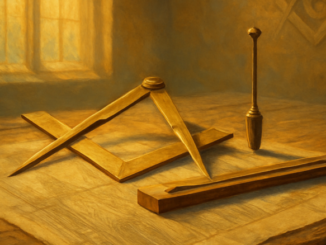
Speculative Freemasonry is distinguished by its rich use of symbolism drawn from the tools and traditions of operative stonemasonry. The square and compasses — the most universally recognised Masonic symbol — represent moral boundaries and rational thinking. The square is associated with fairness and virtue in one’s dealings with others; the compasses with the ability to circumscribe one’s desires and keep one’s actions within due bounds.
Other tools — the plumb line, the level, the gavel, the trowel — each carry their own moral and philosophical meanings. The rough ashlar and the perfect ashlar represent the Freemason at the beginning of his journey and after years of self-improvement, respectively: the unworked stone and the stone perfectly shaped for its place in the building.
The central allegorical narrative of Freemasonry draws on the legend of Hiram Abiff, the master architect of King Solomon’s Temple as described in the Biblical books of Kings and Chronicles. This legend, which forms the centrepiece of the Third Degree ceremony, uses the story of Hiram’s faithfulness unto death as a teaching tool about integrity, loyalty, and the ultimate triumph of truth.
The Degrees of Freemasonry
Craft or “Blue Lodge” Freemasonry, which forms the foundation of the Masonic journey, comprises three degrees: Entered Apprentice, Fellow Craft, and Master Mason. Each degree is conferred through a ceremonial ritual that uses dramatic narrative, symbol, and instruction to convey moral lessons.
The Entered Apprentice degree represents the beginning of the Masonic journey — a man entering the lodge for the first time and committing himself to the principles of the fraternity. The Fellow Craft degree encourages deeper intellectual engagement and the pursuit of learning. The Master Mason degree, the highest degree of Craft Masonry and the one that grants full membership, uses the Hiramic legend to teach lessons of faithfulness, fortitude, and the acceptance of mortality.
Beyond these three degrees, a wide variety of appendant bodies and additional rites offer further degrees of knowledge and ceremonial experience. These include the Scottish Rite (which extends to 33 degrees), the York Rite, the Royal Arch, and many others. These are supplementary to, rather than superior to, the three craft degrees.
The Lodge: Structure and Practice
What Is a Masonic Lodge?
The basic organisational unit of Freemasonry is the lodge. A lodge is a local group of Freemasons who meet regularly to conduct ceremonial work, manage the affairs of their organisation, and enjoy fellowship with one another. The word “lodge” can refer both to the group of men and to the physical building in which they meet.
Each lodge operates under a charter granted by its relevant Grand Lodge — the governing body of Freemasonry within a given jurisdiction, typically a country or state. The Grand Lodge sets the rules and standards for lodges within its territory and is led by a Grand Master, often a senior and respected figure in public life.
Lodge Officers and Governance
Within each lodge, a set of officers is elected or appointed to manage its work. The most senior officer is the Worshipful Master, who presides over meetings and ceremonies. He is supported by the Senior and Junior Wardens, the Secretary, the Treasurer, the Chaplain, the Senior and Junior Deacons, and others. Each officer has a specific role both in the administrative life of the lodge and in the ceremonial proceedings.
The term “Worshipful” is an archaic English honorific meaning “worthy of respect,” not a religious title. Its use reflects the traditional English character of Masonic language, which has been preserved even as the fraternity has spread across the globe.
Meetings and Fellowship
Lodge meetings typically consist of two parts: the formal business meeting, in which the affairs of the lodge are discussed and administrative matters resolved, and the festive board or dinner, at which members share a meal, enjoy toasts, and strengthen the bonds of fellowship. These dinners are often lively and convivial occasions, very different from the solemn ceremonial atmosphere of the lodge room itself.
Freemasonry has always placed great emphasis on the importance of fellowship — the simple pleasure and value of men coming together as equals, setting aside the distinctions of rank and wealth that divide society, to share one another’s company. In the lodge, all men meet on the same level, regardless of their profession, social standing, or background.
Freemasonry and Religion
One of the most commonly asked questions about Freemasonry concerns its relationship to religion. Freemasonry is not a religion, nor is it a substitute for religion. It does not have its own theology, creed, or doctrine of salvation. However, it does require that its members believe in a Supreme Being — a requirement that has historically been expressed in terms of belief in the Grand Architect of the Universe, a deliberately broad formulation intended to be inclusive of men from different faith traditions.
Within the lodge, prayers are offered and the Volume of the Sacred Law — which may be the Bible, the Quran, the Torah, or another scripture according to the faith of the members — is present on the altar. Members swear their obligations on whichever sacred text is relevant to their own faith. This arrangement reflects Freemasonry’s genuinely inclusive and non-sectarian spirit: it welcomes men of all religious backgrounds while respecting the deeply personal nature of faith.
Discussion of religion and politics in the lodge is traditionally discouraged, specifically to preserve the harmony of the brotherhood and to ensure that the lodge remains a place where men of different convictions can meet as equals.
Freemasonry’s Contribution to Society
Freemasonry’s influence on the societies in which it has operated is both broad and deep. In the sphere of charity, Masonic organisations worldwide are among the most generous philanthropic bodies in existence. In the United Kingdom alone, Masonic charities donate over £33 million to good causes each year, supporting hospices, medical research, emergency services charities, and educational projects. Similar efforts are replicated by Masonic bodies across Europe, the Americas, and beyond.
In the realm of civic life, Freemasons have historically been active participants in community governance, public service, and civic improvement. The fraternity’s emphasis on duty to one’s community, on the importance of public virtue, and on service above self has made Masons natural contributors to the civic fabric of their societies.
Freemasonry has also played an important role in the history of religious tolerance and humanistic values. At a time when religious and sectarian conflict divided European societies, Masonic lodges offered a space where men of different faiths could meet on equal terms. This tradition of tolerance and respect for the beliefs of others has been a consistent hallmark of the fraternity throughout its history.
Freemasonry Today
Today, Freemasonry remains a vital and active global fraternity, with an estimated five to six million members worldwide. The United Grand Lodge of England, the oldest Grand Lodge in the world, alone oversees more than 7,000 lodges. Grand Lodges exist in virtually every country, and the fraternity is particularly strong in the United States, the United Kingdom, Ireland, Canada, Australia, and across continental Europe, including the Netherlands.
Modern Freemasonry continues to evolve while maintaining its core traditions. Many grand lodges have made significant efforts to increase transparency and public understanding, publishing information about their activities, opening their doors for public events, and actively promoting their charitable work. The stereotypes and misconceptions that have historically surrounded the fraternity are gradually giving way to a more accurate picture of an organisation devoted to personal development, fellowship, and service.
In the Netherlands, Freemasonry has a long and distinguished history dating back to the early 18th century. The Orde van Vrijmetselaren onder het Grootoosten der Nederlanden (Order of Freemasons under the Grand Orient of the Netherlands) was formally established in 1756 and today oversees dozens of lodges across the country, continuing a tradition of Enlightenment values, civic engagement, and brotherly fellowship.
Frequently Asked Questions About Freemasonry
Is Freemasonry a secret society?
Freemasonry is often described as “a society with secrets” rather than a secret society. The existence of Masonic lodges, the identity of their members, and the broad outlines of what Freemasonry stands for are all publicly known and freely discussed. What is kept private — though much has been published over the centuries — are the specific words, gestures, and details of the ceremonial rituals. These are maintained as private not because they are sinister, but because their power and meaning are best experienced within the context of the lodge ceremony itself. Freemasonry encourages its members to speak openly about their membership and is actively committed to greater public transparency.
Who can become a Freemason?
In most traditional grand lodges, membership is open to adult men of good character who believe in a Supreme Being. There is no requirement of any particular religious denomination, political affiliation, nationality, or social background. The process typically involves a formal application, an interview with lodge members, and a ballot. Co-Masonic and women’s Masonic organisations also exist and follow similar principles, though they operate under separate governing bodies to the traditional male lodges.
What happens in a Masonic ceremony?
Masonic ceremonies, or “rituals,” are structured dramatic presentations that use allegorical narrative, symbolic gesture, and moral instruction to convey the teachings of Freemasonry. They involve the lodge officers playing specific roles and the candidate for a degree taking a central part. The ceremonies draw on themes from the building of King Solomon’s Temple and are designed to be memorable, meaningful experiences that illustrate the moral lessons of the degree being conferred. They are conducted with solemnity and care, and members take their obligations — their solemn commitments — during the ceremony.
Does Freemasonry conflict with religion?
Freemasonry does not conflict with the teachings of the major world religions, and millions of devout Christians, Jews, Muslims, Hindus, and members of other faiths have been and are Freemasons. The fraternity requires a belief in a Supreme Being but is deliberately non-dogmatic, leaving the specifics of faith to the individual member. Some religious authorities have historically raised concerns about Masonry, but many of these concerns have been addressed through greater transparency and dialogue. Freemasonry consistently affirms that it does not seek to replace or undermine the religious faith of its members.
How is Freemasonry organised in the Netherlands?
Dutch Freemasonry operates primarily under the Grootoosten der Nederlanden (Grand Orient of the Netherlands), founded in 1756. This grand lodge oversees a network of lodges (called loges) across the country, each of which works the three traditional craft degrees. The Dutch Masonic tradition is rooted in the Enlightenment values that have characterised the Netherlands as a society — tolerance, intellectual enquiry, humanistic ethics, and civic responsibility. The Grand Orient of the Netherlands is a member of the international Masonic community and maintains fraternal relations with grand lodges around the world.
Frequently Asked Questions
What is the difference between operative and speculative Freemasonry?
Operative Freemasonry refers to the medieval stonemasons' guilds whose members were skilled craftsmen working with actual stone and mortar on cathedrals and castles. Speculative Freemasonry, which developed from the 16th-17th centuries onward, uses the tools and language of stonemasonry as metaphors for moral development and personal improvement, welcoming educated individuals from all professions rather than just working masons.
When was modern Freemasonry officially founded?
Modern, institutional Freemasonry was founded on 24 June 1717, when four London lodges gathered at the Goose and Gridiron alehouse in St. Paul's Churchyard and formed the first Grand Lodge of England. This pivotal event marked the beginning of organized Freemasonry as we know it today, with Anthony Sayer serving as the first Grand Master.
How did Freemasonry spread around the world?
From England, Freemasonry rapidly spread across Europe and beyond during the 18th century, with Grand Lodges established in Ireland, Scotland, France, Germany, and Scandinavia. The movement crossed the Atlantic to the American colonies, with the first American lodge meeting in Boston in 1733, and eventually established lodges on every inhabited continent.
What is the role of James Anderson's Constitutions in Freemasonry?
Published in 1723, The Constitutions of the Free-Masons by Scottish minister James Anderson is a foundational document that codified Masonic law, history, and the moral obligations of members. This landmark text established the framework of governance that many grand lodges still use today, making it essential to understanding Masonic organization and principles.
What are the core values that unite Freemasons?
Freemasonry unites men across cultures, nationalities, and backgrounds under a shared commitment to moral development, brotherly love, and service to humanity. These fundamental principles have remained central to the organization throughout its long history, guiding members toward personal improvement and positive contributions to their communities.

Be the first to comment