No Picture
Freemasonry & Society

The Degrees of Freemasonry Explained

Freemasonry is one of the world’s oldest and most widely recognised fraternal traditions, and at the heart of its structure lies a carefully organised system of degrees. These degrees of Freemasonry represent successive stages of moral, philosophical, and symbolic instruction through which a member progresses over time. Each degree introduces new allegories, rituals, and teachings designed to deepen a Mason’s understanding of virtue, duty, and the human condition. Whether you are newly curious about the Craft or seeking a more thorough understanding of its architecture, exploring the degree system is the most direct path into the heart of Freemasonry’s living tradition. Historical Background of the Degree System The origins of Freemasonry’s degree structure are rooted in the medieval guild traditions of operative stonemasons — the craftsmen who built the great cathedrals, castles, and civic monuments of Europe. These guilds used a system of ranks to distinguish apprentices from journeymen and master craftsmen, regulating both knowledge and access to trade secrets. When speculative Freemasonry — concerned not with physical building but with moral and philosophical development — emerged in the early eighteenth century, it inherited and transformed this hierarchical model. The founding of the Premier Grand Lodge of England in London […]
No Picture
Freemasonry & Society

The Degrees of Freemasonry Explained

Freemasonry is one of the world’s oldest and most widely recognized fraternal organizations, and at the heart of its structure lies a carefully designed system of degrees. These degrees of Freemasonry are not simply ranks or titles — they are initiatory stages, each carrying its own symbolism, ritual, and philosophical teachings. Understanding how this degree system works offers a window into the rich intellectual and moral tradition that has shaped Freemasonry for centuries. Whether you are a curious newcomer, a family member of a Mason, or someone considering membership, this guide offers a thorough and balanced overview of what the degrees mean, where they come from, and why they continue to matter. Historical Background of the Masonic Degree System The origins of the Masonic degree system are rooted in the transition of stonemasons’ guilds from operative (working) craft organizations to speculative (philosophical) brotherhoods during the late 17th and early 18th centuries. The earliest clear evidence of a formal degree structure dates to the founding of the first Grand Lodge in London in 1717, though historians such as David Stevenson have argued persuasively that organized Masonic lodges existed in Scotland as early as the late 16th century. The initial structure consisted […]

Vrijmetselarij - Wat is vrijmetselarij?
Freemasonry & Society

What is Freemasonry?

Freemasonry is one of the world’s oldest and most widely recognized fraternal organizations, uniting men across cultures, borders, and generations through a shared commitment to moral development, philosophical inquiry, and brotherly fellowship. Founded on the symbolic tools of the stonemason’s craft, Freemasonry uses allegory and ritual to encourage its members — known as Masons or Freemasons — to become better versions of themselves. With millions of members worldwide and lodges active on every inhabited continent, understanding what Freemasonry is means exploring a tradition that has quietly shaped much of Western civilization for centuries. Historical Background: The Origins of Freemasonry The history of Freemasonry is a rich tapestry woven from medieval craft guilds, Renaissance philosophy, and Enlightenment idealism. While the precise origins remain a subject of scholarly discussion, most historians trace the formal establishment of speculative Freemasonry to the founding of the Premier Grand Lodge of England in London on June 24, 1717 — the feast day of St. John the Baptist. Four London lodges came together at the Goose and Gridiron Alehouse in St. Paul’s Churchyard to form this central governing body, marking the beginning of organized, modern Freemasonry as we know it. However, the roots of the fraternity stretch […]

Vrijmetselarij - Wat is vrijmetselarij?
Freemasonry & Society

What is Freemasonry?

Freemasonry is one of the world’s oldest and most widely recognised fraternal organisations, uniting men across cultures, nationalities, and backgrounds under a shared commitment to moral development, brotherly love, and service to humanity. With roots stretching back several centuries and lodges active on every inhabited continent, Freemasonry has shaped the lives of millions of men and, through them, the societies they lived in. Understanding what Freemasonry is requires looking beyond myths and misconceptions to explore its genuine history, philosophy, and practice — a journey that reveals a tradition as fascinating as it is enriching. Historical Background of Freemasonry Origins: From Operative to Speculative Masonry The story of Freemasonry begins with the medieval stonemasons’ guilds of Europe. Skilled craftsmen who built the great cathedrals, castles, and public buildings of the Middle Ages organised themselves into guilds to protect their trade secrets, regulate standards of workmanship, and care for their members. These were the operative masons — men who worked with actual stone and mortar. Over time, particularly between the 16th and 17th centuries, these guilds began admitting members who were not working stonemasons. These so-called “accepted” masons were often educated gentlemen, merchants, or intellectuals who were drawn to the philosophical and […]

Vrijmetselarij - Wat is vrijmetselarij?
Freemasonry & Society

What is Freemasonry?

Freemasonry is one of the world’s oldest and most widespread fraternal organisations, uniting men of good character across cultures, faiths, and backgrounds under a shared commitment to moral development, brotherly love, and service to society. Understanding what is Freemasonry means exploring a tradition that stretches back centuries, encompassing a rich tapestry of symbolism, ritual, philosophy, and charitable action. Far from being a secret society, Freemasonry is better described as a society with secrets — an organisation that is open about its existence and values while preserving certain ceremonial traditions as part of its unique character. Today, millions of Freemasons meet in lodges around the world, continuing a tradition that has shaped culture, philosophy, and civic life in profound ways. Historical Background and Origins The history of Freemasonry is as fascinating as it is complex. While the organisation as we know it today was formally established in the early eighteenth century, its roots reach much deeper — both in documented history and in the symbolic traditions it has adopted. The Stonemason Guilds The most widely accepted historical account traces the origins of Freemasonry to the medieval stonemason guilds of Europe. Skilled craftsmen who built the great cathedrals, castles, and public buildings […]

Vrijmetselarij - First Visit to the Masonic Lodge
My Story

First Visit to the Masonic Lodge

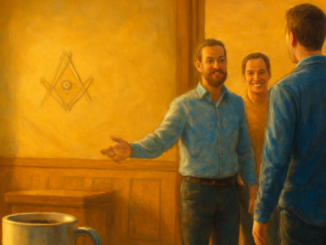
After initiating contact through the lodge’s website, I had arranged a first visit to get acquainted. Upon entering the lodge in my hometown for the first time, I was warmly welcomed by two Masonic brothers. They had organized an extra information evening due to my enthusiasm; otherwise, I would have had to wait nearly six months for an open evening. Other interested individuals had been invited, but unfortunately, they couldn’t attend on such short notice. Reception The reception was very friendly and warm. I was immediately offered a cup of coffee, and they explained what Freemasonry is. Although still somewhat vague, this was more due to my understanding. It became increasingly clear that they work on life’s questions here. The setting was like a clubhouse with a bar and tables—nothing fancy, just “ordinary.” This part of the lodge is also known as the 7th degree, used for reception, breaks, and discussions. I was then given a tour of some other areas. First, we went to the meeting room, also called the “Voorhof” (forecourt), and from there to the “Werkplaats” (workshop), also known as the temple. Voorhof / Meeting Room In the Voorhof, “comparing” takes place. This involves someone giving a […]

Vrijmetselarij - Poetry Evening: Who Am I?
Reflection

Poetry Evening: Who Am I?

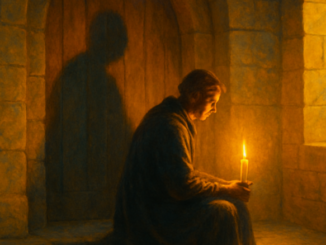
Who am I? The gatherings after my initiation have been quite unique, not in any way standard. This is the second evening, dedicated to Poetry. A brother previously introduced the Poetry evening, focusing on poetry with a Masonic meaning. I was tasked with selecting a poem that holds personal significance and can be interpreted Masonically. The chosen poem is: Who Am I? This is quite challenging, being only two weeks into my apprenticeship. Nonetheless, I have made an effort and presented the following. Please note that certain parts have been abbreviated to avoid revealing aspects of the Initiation ritual, preserving the experience for future Freemasons. Presentation: Who Am I? Worshipful Master, Esteemed Brothers,Two weeks ago, I was initiated as an Apprentice. A new world is unfolding before me. I have been asked to recite a poem and provide a Masonic interpretation.Worshipful Master, Esteemed Brothers, I am not yet able to offer a Masonic interpretation, given my brief time as an Apprentice. I hope for your understanding. However, I can explain why I chose this poem. The initiation left a profound impression on me, and I am processing these experiences daily. The chamber of reflection made a significant impact. Sitting alone, […]