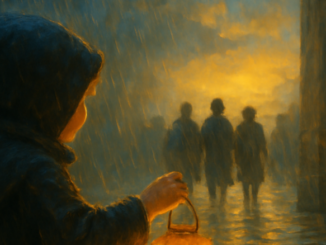
Children with lanterns walking together on a rainy November evening
Personal Development & Leadership

St. Martin, the Eleventh, and the Masonic Spirit of Brotherhood

It’s November 10th, and tomorrow thousands of children will brave the rain with paper lanterns in hand. Meanwhile, in the southern Netherlands and across the Rhineland, carnival season kicks off on the Eleventh of the Eleventh. The forecast calls for layers and waterproofs. But why do people venture out at all, despite the cold and the wet? And what does that deep human urge to take to the streets together have to do with an ancient tradition of brotherhood? Let’s sit with that question for a moment — as if gathered around a warm table for a good conversation. Why Do We Go Outside When the Weather Fights Us? It’s a question most of us ask ourselves on a bitter November evening. The wind tears through the streets, the rain threatens every paper lantern, and yet parents and children stand shoulder to shoulder, singing at their neighbors’ doors. The same is true for the thousands of revelers who flood cities like Maastricht, Den Bosch, and Eindhoven on November 11th to herald the new carnival season — often in costumes that are anything but waterproof. The answer is both simple and profound: human beings are wired for connection. Not despite difficult […]
Montaigne's philosophical sources on equality illustrated with ancient texts
Michel de Montaigne – Philosophical Background

Montaigne on Equality: Discovering the Philosophical Sources

When you first encounter Montaigne’s thoughts on human equality, there is a flash of recognition. His ideas feel strikingly modern, as though they could have been written yesterday. But behind that apparent simplicity lies a rich intellectual heritage. Stoic philosophers, Greek biographers, and Renaissance humanists all left their mark on this brief but powerful essay. Understanding these philosophical sources not only deepens your appreciation of Montaigne — it also offers practical tools for applying his insights on equality in your own life and, for those who walk the Masonic path, within the Lodge. The Stoic Foundation of Human Worth Montaigne was an avid reader of the Roman Stoics, and Seneca served as his foremost guide. In Seneca’s letters to Lucilius, the same message appears again and again: fortune, birth, and social standing are external trappings that reveal nothing about a person’s inner worth. Seneca wrote that a slave could be morally superior to his master — a remarkably radical idea in the first century AD. Montaigne absorbed this insight and applied it to his own era, where the lines between nobility and common citizenry were sharply drawn. Marcus Aurelius, the philosopher-emperor, likewise emphasized in his Meditations that all human beings […]

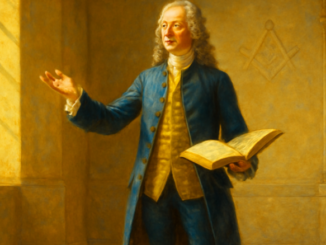
Portrait of Voltaire with Masonic symbols representing equality and Enlightenment
Symbolism & Rituals

Voltaire on Equality: Philosophical Roots and Freemasonry

What did Voltaire actually mean when he wrote about equality? And why does his vision still resonate in Masonic lodges around the world? In his Philosophical Dictionary of 1764, François-Marie Arouet — better known as Voltaire — devoted a sharp and ironic essay to the concept of equality. To understand what he was truly arguing, we need to trace the philosophical sources that shaped his thinking. Which Thinkers Shaped Voltaire’s View of Equality? Voltaire did not operate in an intellectual vacuum. His thinking on equality was profoundly influenced by both classical and modern philosophers. The Stoics — particularly Seneca and Marcus Aurelius — had introduced the idea that all human beings are naturally equal in their capacity for reason. This cosmopolitan insight, that the slave trader and the emperor share the same rational faculty, flowed as an underground current into Enlightenment thought. But it was John Locke, above all, who directly shaped Voltaire’s ideas about equality. During his exile in England (1726–1728), Voltaire immersed himself in Locke’s political philosophy. Locke’s argument that human beings are born into a natural state of equality — without any inherent right of one person over another — became a cornerstone of Voltaire’s social criticism. […]

The Masonic Level symbolizing equality inspired by Voltaire's philosophy
Symbolism & Rituals

Voltaire on Equality: What Does It Truly Mean to Be Equal?

What do we actually mean when we say that all people are equal? Is it a fact, an ideal, or perhaps an illusion? In his celebrated Philosophical Dictionary, Voltaire tackles this question head-on. His entry on equality is a masterwork of nuance, irony, and intellectual precision. For Freemasons — who meet as Brothers on equal footing within the Lodge — this essay remains strikingly relevant. Let us engage in conversation with this great Enlightenment philosopher. What Exactly Does Voltaire Write About Equality? The entry on “Equality” in Voltaire’s Philosophical Dictionary is anything but a dry definition. It is a vivid, carefully crafted argument. Voltaire opens with a deceptively simple observation: all human beings are born with the same basic needs. Hunger, thirst, the drive to reproduce, the same organs. So far, equality seems self-evident. But then comes the twist. Voltaire asks aloud: if we are so equal, why do we live so unequally? He describes how society generates inequality. Some own land, others do not. Some rule, others serve. The philosopher dissects this reality not with moral outrage but with cool analysis. His central thesis is that absolute equality is impossible in any organized society — yet this does not […]