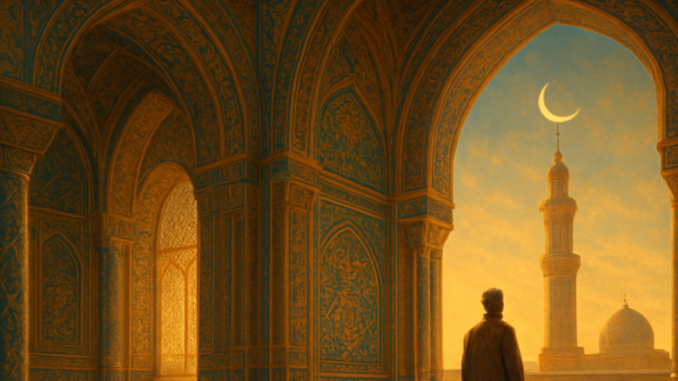
There is a curious paradox at the heart of human spirituality: the deepest truths are often expressed through the most ordinary images. A table set for a meal. Bread being broken. Guests gathering around a shared dish. In the fifth surah of the Quran — known as Al-Ma’ida, or The Table — we encounter just such a deceptively simple image, one that reveals extraordinary layers of meaning upon closer examination. For Freemasons, who are intimately familiar with ritual meals and the symbolism of fraternal communion, this ancient text opens a fascinating dialogue about what it truly means to sit together at one table.
The Heavenly Table: More Than a Miracle Story
Surah Al-Ma’ida takes its name from a remarkable narrative in which the followers of Jesus — known as Isa in the Islamic tradition — ask for a table to descend from heaven as a sign of divine grace. At first glance, the request seems strange. Why would people who had already witnessed miracles need yet another sign? The text itself suggests that the table is not so much intended as proof, but as confirmation of a covenant. The heavenly feast becomes a space where the earthly and the transcendent touch, where food nourishes both body and spirit simultaneously.
Within this idea lies a deeper truth that extends far beyond the literal narrative. The table functions as a meeting place — a space of surrender and receptivity. To take a seat at a table is to accept both the hospitality of the host and the presence of the other guests. A community emerges that is greater than the sum of its parts. This principle resonates powerfully with anyone who has experienced the atmosphere of a Masonic Lodge at labor or at refreshment.
Covenants and Their Weight
A central theme in Al-Ma’ida is the covenant. The surah speaks repeatedly about the promises people make, both to the Divine and to one another. “Remember the favor of God upon you and His covenant with which He bound you,” the opening verses declare. This covenantal thinking resonates strongly with the Masonic tradition, in which the obligation and the given word are fundamental building blocks of the ideal of brotherhood.
A covenant is not a contract between parties — it is a transformation of those who enter into it. It turns strangers into brothers. This is something every Freemason recognizes from the moment of initiation, when solemn promises reshape the relationship between the individual and the Craft.
Yet the text also warns about the fragility of covenants. Human promises can be broken — not only through ill will, but through forgetfulness, through the gradual dimming of attention. The surah calls for vigilance, for keeping alive the memory of what has been pledged. For the Freemason, this echoes the purpose of ritual repetition and symbolic action. These are not empty forms but ongoing reminders of an inner commitment — a way of rekindling the flame of obligation each time we gather in Lodge.
Justice as a Spiritual Calling
Al-Ma’ida contains some of the most powerful verses on justice in the entire Quran. “Be steadfast for God, witnesses in equity, and do not let the hatred of a people lead you to be unjust,” reads one of the key passages. This verse places justice above personal feeling, above vengeance, above the natural human tendency to treat enemies differently from friends.
Here the Quranic text touches upon a universal human question that occupied Plato, Aristotle, and later Montesquieu: can a person truly act justly when their emotions pull them in the opposite direction? Al-Ma’ida suggests that just action does not come from suppressing emotions, but from cultivating a deeper orientation. The person who turns their face toward the Divine finds within that relationship the strength to reach beyond their own prejudices.
This idea will feel familiar to Freemasons. The Craft does not demand the elimination of personal bias — an impossible task — but rather invites the Mason to aspire toward a standard of conduct that transcends individual interest. Meeting on the Level is not merely a phrase; it is a daily spiritual practice, a commitment to see the dignity in every person regardless of station, creed, or background.
The Lodge as a Table of Meeting
Freemasons know the ritual meal as an integral part of their gatherings. The Table Lodge — in which Brethren eat and drink together after the ritual work — is far more than a social occasion. It is a continuation of the Work in a different form, a space where the hierarchy of the Lodge temporarily dissolves into the equality of those who sit together at one table. The symbolism of bread, wine, and salt points to the elemental bond between people who choose to seek one another’s company.
Seen in this light, the Quranic table descending from heaven becomes a mirror. Both traditions — however different in origin and expression — recognize that the sharing of food can carry a sacred quality. It is not about the dishes themselves, but about what they represent: the willingness to receive, the acknowledgment of mutual dependence, the celebration of community. Every Festive Board, every agape, every shared meal after a Lodge meeting participates in this ancient human ritual of communion.
Many Traditions, One Search
Al-Ma’ida is remarkable in its explicit recognition of religious plurality. The surah mentions Jews, Christians, and other faith communities not as opponents to be combated, but as bearers of earlier revelations — as peoples with whom covenants have been made. “For each of you We have appointed a law and a way,” the text states. “If God had willed, He would have made you one community, but He wished to test you in what He has given you. So compete with one another in good works.”
This verse can be read as a call to humility: no single tradition possesses truth as its exclusive property. At the same time, it is an invitation to dialogue — to recognizing kinship within diversity. Freemasonry, which welcomes Brethren of all faiths around the Volume of the Sacred Law, operates within this same creative tension. The Craft does not ask for uniformity of belief, but for sincerity of seeking. It is this openness — this willingness to acknowledge that the Great Architect may be approached by many paths — that gives Masonic brotherhood its unique depth and breadth.
A Table That Remains Open
The paradox with which we began does not resolve itself neatly. The everyday image of the set table remains at once simple and unfathomably deep. What Al-Ma’ida offers us is not a finished doctrine but an invitation. The table is laid, the chairs stand ready — but the guests must make the choice to sit down, to break bread, to enter into communion.
For Freemasons, this is a powerful image. The Lodge door is always there, but it must be knocked upon. The obligation is offered, but it must be spoken. The Brother stands beside you, but the hand of fellowship must be extended. In both the Quranic narrative and the Masonic tradition, the table of meeting demands something of those who approach it: not perfection, but presence; not certainty, but sincerity; not uniformity, but the courage to sit down with those who are different and discover what is shared.
Across centuries and civilizations, the image of the shared table endures as one of humanity’s most potent spiritual symbols. Surah Al-Ma’ida and the Masonic Table Lodge, each in their own language and context, point toward the same essential truth: that genuine brotherhood is forged not in abstract ideals alone, but in the concrete, humble act of coming together, of receiving and offering, of remembering the covenants we have made. The table stands set. The question, as it has always been, is whether we will take our place — and what we are willing to bring.
Copyright text & image: devrijmetselaar.nl
Texts are based on the ideas and content of the author of devrijmetselaar.nl, reviewed, corrected, and supplemented with the assistance of OpenAI. Images are created based on the ideas of the author of devrijmetselaar.nl using OpenAI/DALL-E.
Frequently Asked Questions
What is Surah Al-Ma'ida and why is it significant to this discussion?
Surah Al-Ma'ida is the fifth chapter of the Quran, named 'The Table' after a narrative in which followers of Jesus ask for a table to descend from heaven as a sign of divine grace. Rather than being simply a miracle story, the table functions as a symbol of a meeting place where the earthly and transcendent touch, and where a community greater than the sum of its parts emerges. This symbolism resonates with Masonic traditions of fraternal communion and shared meals.
How does the concept of covenant in Al-Ma'ida relate to Freemasonry?
Al-Ma'ida emphasizes covenants as central themes—promises made both to the Divine and to one another. In Freemasonry, the obligation and given word are fundamental building blocks of brotherhood. Like the covenantal thinking in the surah, a Masonic covenant transforms strangers into brothers, beginning at the moment of initiation when solemn promises reshape the relationship between the individual and the Craft.
What does it mean spiritually to sit at a shared table according to this article?
To sit at a table is to accept both the hospitality of the host and the presence of other guests. It becomes a space of surrender and receptivity where a community emerges that transcends individual participants. This principle of gathering at a shared table for spiritual communion has deep resonance with the Masonic experience of lodge meals and the atmosphere of brotherhood created during both labor and refreshment.

Be the first to comment