Rough ashlar stone beside a smooth cube symbolizing Masonic self-improvement
Michel de Montaigne – Freemasonry & Connection

Montaigne on Partisanship: A Lesson in Fraternal Connection

In 1580, Michel de Montaigne published a brief but piercing text on the dangers of blind partisanship. His observation that we tend to diminish our enemies and inflate our allies struck a nerve that resonates to this day. For Freemasons — who hold brotherhood and the pursuit of truth among their highest values — this sixteenth-century essay offers a surprisingly relevant mirror. The Historical Context of Montaigne’s Warning Michel de Montaigne wrote his essays during the bloody French Wars of Religion, a period in which Catholics and Huguenots fought one another with a fanaticism that laid entire cities to waste. The St. Bartholomew’s Day massacre of 1572, in which thousands of Protestants were slaughtered, was still fresh in collective memory when Montaigne took up his pen. Amid this climate of religious hatred and political division, he chose an unusual stance: the stance of nuance. In essay thirty of his first book, titled Of a Defect in Our Partisanship, Montaigne argued that we systematically fail to judge others fairly. We praise our allies beyond their merits and diminish our opponents below their actual qualities. This tendency, he maintained, undermines not only the truth but our own integrity as well. The Heart […]
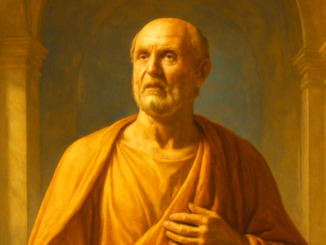

Ancient Roman scroll symbolizing Seneca's Stoic letters on mutual duties
Lucius Annaeus Seneca – Letters to Lucilius

Seneca on Mutual Duties: Philosophical Roots and Influence

In the year 64 AD, Lucius Annaeus Seneca wrote a letter to his friend Lucilius that would strike at the very heart of human connection. Letter XLVIII, on mutual duties, stands among the most practical texts in the Stoic tradition. Beneath its seemingly simple reflections on friendship and obligation lies a rich philosophical heritage stretching back to the earliest Greek thinkers. These intellectual roots illuminate why Seneca’s insights still resonate today — not least within the fraternal tradition of Freemasonry. The Stoic Foundations of Mutual Obligation Seneca did not write in an intellectual vacuum. His thinking on mutual duties is deeply rooted in the Stoic school founded in Athens three centuries earlier by Zeno of Citium. The early Stoics developed the concept of oikeiosis — a term describing humanity’s natural tendency to form ever-expanding circles of connection. What begins as self-preservation grows into care for family, friends, fellow citizens, and ultimately all of humanity. Chrysippus, the third head of the Stoic school, systematized this line of thought and argued that human beings are social creatures by nature. Duties toward others are therefore not externally imposed rules but natural extensions of our rational nature. Seneca inherited this foundation and gave it […]

A symbolic table set for a shared meal representing Masonic and spiritual brotherhood
Islam

The Table as Spiritual Symbol: Surah Al-Ma’ida & Brotherhood

There is a curious paradox at the heart of human spirituality: the deepest truths are often expressed through the most ordinary images. A table set for a meal. Bread being broken. Guests gathering around a shared dish. In the fifth surah of the Quran — known as Al-Ma’ida, or The Table — we encounter just such a deceptively simple image, one that reveals extraordinary layers of meaning upon closer examination. For Freemasons, who are intimately familiar with ritual meals and the symbolism of fraternal communion, this ancient text opens a fascinating dialogue about what it truly means to sit together at one table. The Heavenly Table: More Than a Miracle Story Surah Al-Ma’ida takes its name from a remarkable narrative in which the followers of Jesus — known as Isa in the Islamic tradition — ask for a table to descend from heaven as a sign of divine grace. At first glance, the request seems strange. Why would people who had already witnessed miracles need yet another sign? The text itself suggests that the table is not so much intended as proof, but as confirmation of a covenant. The heavenly feast becomes a space where the earthly and the transcendent […]