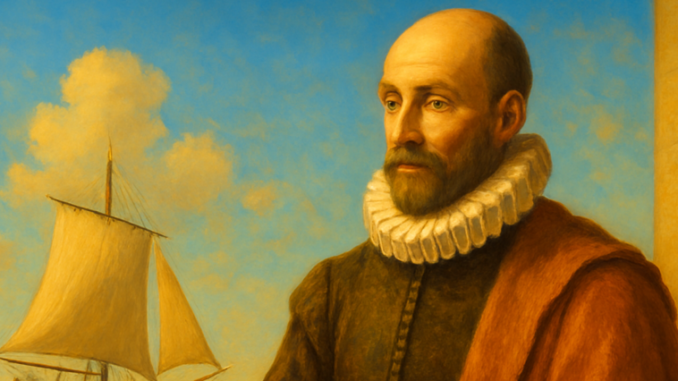
You have almost certainly experienced it: someone treats another person with unnecessary harshness, and somewhere deep inside you sense that something is fundamentally wrong. Michel de Montaigne, the sixteenth-century French thinker, wrestled with exactly this question. In his essay on cruelty, he digs into the philosophical roots of human violence and compassion. Which thinkers shaped his views? And more importantly — what can those insights still offer us today, particularly as Freemasons committed to the moral improvement of ourselves and society?
The Stoic Legacy: Seneca as Teacher
When Montaigne writes about cruelty, the voice of Seneca resonates throughout. The Roman philosopher, who lived from 4 BC to 65 AD, regarded cruelty as the very opposite of humanity. For Seneca, brutality was not merely a moral misstep — it was a fundamental assault on human dignity. He championed clementia, a form of mercy that springs from inner strength rather than weakness.
Montaigne adopted this idea and applied it to his own turbulent era. Where Seneca wrote amidst the spectacle of Roman gladiatorial games, Montaigne observed the Wars of Religion tearing France apart. Both men witnessed how violence became entertainment, how crowds took pleasure in the suffering of others. The Stoic lesson was clear: whoever permits cruelty within himself gradually loses the capacity for rational thought. For Freemasons, this resonates deeply — the pursuit of self-knowledge and moral refinement demands that we confront the darker impulses within ourselves before we can hope to build a better world.
Plutarch and the Power of Moral Examples
Alongside Seneca, Montaigne drew extensively from the work of Plutarch. The Greek writer, active around 100 AD, was renowned for his Parallel Lives and his Moralia. Plutarch believed that moral formation happens through examples. We learn not merely through abstract principles, but by observing how others act in difficult circumstances.
For Montaigne, this was a practical handbook. In his essay on cruelty, he refers not only to philosophical propositions but to concrete stories of people who chose compassion — or chose brutality. Plutarch taught him that character reveals itself in small moments: how you treat a prisoner, an animal, a child. This attention to everyday conduct made Montaigne’s work remarkably accessible to ordinary readers, and it carries a message that resonates in Masonic practice, where character is measured not by grand gestures but by consistent, quiet virtue.
Renaissance Humanism: Humanity as the Measure
Montaigne wrote during a period of profound intellectual upheaval. Renaissance humanism had rediscovered the classical texts and placed the individual human being at the center of philosophical inquiry. Figures like Erasmus and Thomas More had paved the way for a critical examination of societal cruelties. Erasmus attacked war and violence in In Praise of Folly, while More imagined a society free of cruel punishments in Utopia.
Montaigne went a step further. He asked not only what cruelty is, but why we are susceptible to it. His humanism was no naive optimism about human nature. He acknowledged our dark tendencies — the inclination toward violence, the pleasure some find in the pain of others. It was precisely this honesty that gave his plea for mercy such force. Cruelty, he suggested, is not merely an act but an attitude toward life itself. And whoever recognizes it within himself is the only one who can truly overcome it.
Skepticism: The Humility of Not Knowing
Another crucial influence on Montaigne was philosophical Skepticism. The ancient Greek skeptics, and later Sextus Empiricus, taught that certainty is an illusion. Montaigne embraced this insight with his famous question: “Que sais-je?” — “What do I know?” This intellectual humility had direct consequences for his view of cruelty.
After all, if we cannot be certain of our own rightness, by what authority do we condemn others to violent punishment? Montaigne witnessed in his own time how heretics were burned alive and dissenters tortured — all in the name of a truth their executioners claimed to possess absolutely. Skepticism offered an antidote: those who doubt their own certainty will be far less likely to reach for violence to enforce it. This principle sits at the heart of Masonic tolerance — the recognition that our understanding is always partial, and that humility before the unknown is a virtue, not a weakness.
From Theory to Practice: What Can You Do With This?
The question naturally arises: how do you translate this philosophical heritage into your own life? Montaigne’s sources offer several concrete starting points.
First, recognize your own tendencies. Seneca understood that cruelty begins with small harshnesses we justify to ourselves. Pay attention to moments when you react with unnecessary sharpness, and ask yourself where that impulse comes from. Self-examination — a cornerstone of both Montaigne’s philosophy and Masonic practice — is the first defense against moral deterioration.
Second, seek out examples. Plutarch taught that character is shaped through stories. Read about people who chose mercy in difficult circumstances. This is not naivety — it is training your moral imagination. You can only act differently once you have seen that it is possible.
Third, cultivate doubt — not as paralyzing uncertainty, but as healthy humility. When you feel absolutely sure you are right, ask yourself: “What if I am wrong?” This simple question can prevent the hardening that so often precedes cruelty.
The Historical Context: Writing in a Time of Violence
Montaigne composed his essay during the French Wars of Religion, a period of extreme brutality. The St. Bartholomew’s Day Massacre of 1572, in which thousands of Huguenots were slaughtered, was still fresh in living memory. In this context, his argument against cruelty was no abstract philosophical exercise — it was an urgent call for reflection and restraint.
His essay was also an act of intellectual courage. By condemning cruelty, Montaigne distanced himself from the prevailing practices of his age. He risked the displeasure of those in power who justified violence as a necessary evil. Yet he chose to write, convinced that words, in the long run, are more powerful than swords. It is a conviction that builders of a more just and compassionate world — whether in the sixteenth century or the twenty-first — have always shared.
The philosophical sources that nourished Montaigne — from Seneca to Plutarch, from Renaissance humanism to Skepticism — continue to offer practical wisdom today. Cruelty is not destiny; it is a choice we can unlearn. By recognizing our own impulses, seeking moral examples, and cultivating the humility of genuine doubt, we equip ourselves to resist the hardening that leads to inhumanity. For Freemasons especially, Montaigne’s message is both a mirror and a challenge: the work of building a more compassionate world begins not with grand declarations, but with the quiet, daily labor of refining the self.
Copyright text & image: devrijmetselaar.nl
Texts are based on the ideas and content of the author of devrijmetselaar.nl, reviewed, corrected, and supplemented with the assistance of OpenAI. Images are created based on the ideas of the author of devrijmetselaar.nl using OpenAI/DALL-E.
Frequently Asked Questions
What is Montaigne's main argument about cruelty and human nature?
Montaigne argues that cruelty is fundamentally opposed to our humanity and rational thought, drawing on Stoic philosophy. He contends that permitting cruelty within ourselves gradually erodes our capacity for reason and moral virtue. This insight aligns with Freemasonry's core commitment to self-knowledge and moral refinement as the foundation for building a better society.
How did Seneca's philosophy influence Montaigne's views on cruelty?
Montaigne adopted Seneca's concept of clementia—mercy arising from inner strength rather than weakness—and applied it to his own era of religious conflict. Both philosophers recognized how violence becomes entertainment and corrupts those who witness or participate in it. For Freemasons, this Stoic lesson emphasizes confronting our darker impulses as essential to moral improvement.
Why does Montaigne reference Plutarch's moral examples rather than just philosophical principles?
Montaigne understood that character formation happens through observing concrete human choices in difficult circumstances, not abstract theory alone. Plutarch's approach—examining how people treat prisoners, animals, and children—reveals that virtue manifests in everyday moments. This practical wisdom directly supports Masonic values, where character is measured by consistent, quiet virtue rather than grand gestures.
How does Renaissance humanism connect to Montaigne's understanding of cruelty?
Renaissance humanism placed the individual human being at the center of philosophical inquiry and enabled critical examination of societal cruelties. Thinkers like Erasmus and More questioned violence and brutal punishments, paving the way for Montaigne's deeper exploration. This humanistic tradition strengthens the Masonic mission to advance human dignity and work toward a more compassionate society.


Be the first to comment