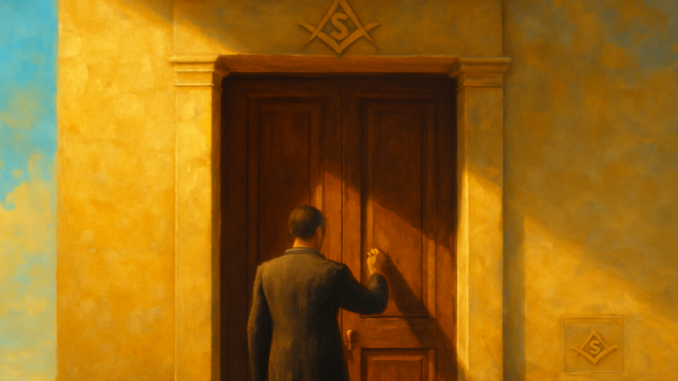
Freemasonry has long been surrounded by an air of mystery — but the truth is, joining this centuries-old brotherhood is open to anyone with a sincere interest and genuine motivation. The process of becoming a Freemason is thoughtful, personal, and deliberate. Not because the organization is closed off, but because it values authentic intent and mutual compatibility. In this guide, we’ll walk you through the steps involved, the history behind membership, the core values at the heart of the Craft, and what you can expect once you join.
A Brief History of Freemasonry
To understand how membership in Freemasonry works, it helps to know where the organization comes from. Modern Freemasonry as we recognize it today was officially established in 1717 in London, when four lodges united to form the first Grand Lodge of England. However, the roots of the brotherhood reach much further back — to the medieval guilds of stonemasons and master builders, the so-called “operative masons,” who constructed cathedrals and castles while carefully guarding their knowledge and techniques.
During the seventeenth and eighteenth centuries, Freemasonry underwent a remarkable transformation from a practical trade guild into a speculative brotherhood. The tools of the builder’s craft — the compass, the square, and the plumb line — became metaphors for moral and philosophical principles. Enlightenment thinkers, scientists, artists, and statesmen began joining the Craft. Historical figures such as Wolfgang Amadeus Mozart, Benjamin Franklin, George Washington, and Frederick the Great were all Freemasons and contributed immensely to the intellectual and cultural prestige of the movement.
Freemasonry has a rich and unbroken tradition across many countries. In the Netherlands, for instance, the Order of Freemasons under the Grand East of the Netherlands was officially founded in 1756. In England, Scotland, Ireland, and the United States, the tradition runs even deeper. Today, there are thousands of active lodges around the world, each with its own unique character and community — all united by shared values and ritual traditions.
What Freemasonry Is — And What It Is Not
Before you consider becoming a Freemason, it’s important to have a clear understanding of what the organization actually is. Freemasonry is not a religion, not a political party, and not a secret society in the conspiratorial sense of the term. It is a fraternity of individuals who commit themselves to shared values: truth, brotherhood, and moral virtue.
The rituals and symbolism used within Freemasonry are not occult practices but pedagogical tools. They are designed to stimulate reflection, encourage self-examination, and strengthen the bond between members. The so-called “secrets” of Freemasonry are, in practice, the ritual forms of recognition between members — not hidden power structures or plans for world domination, as conspiracy theories sometimes suggest.
Freemasonry asks its members to believe in a higher power — commonly referred to as the “Grand Architect of the Universe” — but it does not prescribe which religion or worldview that belief should correspond to. Christians, Muslims, Jews, Buddhists, and those with a more philosophical or spiritual outlook are all welcome, as long as they share that fundamental conviction. This makes Freemasonry a uniquely inclusive space for men of different backgrounds to meet on common ground.
Requirements for Membership
Personal Requirements
Anyone who wishes to become a Freemason must meet a number of basic requirements. The most fundamental of these is that you must express the desire to join voluntarily and of your own free will. No one may be persuaded, recruited, or pressured into joining. This principle — that the decision to become a member must come entirely from within — is deeply embedded in the philosophy of the brotherhood.
Beyond this core principle, the following general requirements typically apply:
Age: In most jurisdictions, you must be at least 21 years old to apply as a candidate. Some Grand Lodges accept candidates from the age of 18, but this varies depending on local regulations.
Belief in a higher power: As mentioned above, a belief in a Grand Architect of the Universe is a requirement in regular Freemasonry. Strict atheists — those who categorically reject any form of transcendence or higher power — cannot become members under most regular Grand Lodge jurisdictions. This is not an attempt at exclusion, but rather a core principle that supports the ritual and symbolic foundation of the Craft.
Good moral character: Candidates must demonstrate sound moral character and be capable of embodying Freemasonry’s values — honesty, integrity, and charity — in their daily lives.
Freedom of action: You must not be acting under coercion from others, burdened by debts that compromise your independence, or subject to other circumstances that would impede your free choice.
No Requirements Based on Background
Freemasonry makes no distinctions based on profession, education, social class, or nationality. Builders, lawyers, teachers, entrepreneurs, civil servants — all are equal within the lodge. This principle of equality is one of the most distinctive and admirable aspects of the brotherhood. When you enter the lodge room, worldly titles and status are left at the door. What matters is your character and your willingness to grow.
How the Process of Becoming a Freemason Works
Step 1: Research and First Contact
The first step toward becoming a Freemason usually begins with gathering information. Many people who are interested already have a Freemason in their circle — a family member, friend, or acquaintance — through whom they first encounter the brotherhood. But this is certainly not a requirement. Most Grand Lodges maintain websites where you can easily find and contact a lodge near you. In the United States, for example, each state has its own Grand Lodge website with information for prospective members.
During this initial phase, it’s wise to read widely and listen carefully. Attend an open evening or an introductory event if one is available. Ask questions. Freemasonry welcomes genuine curiosity and encourages potential candidates to be well-informed before they submit an application.
Step 2: Submitting Your Application
Once you’ve decided that Freemasonry aligns with your values and aspirations, the next step is to formally submit an application — often called a petition — to the lodge you wish to join. In many traditions, you’ll need to be recommended or sponsored by one or two current members of the lodge. If you don’t know any Freemasons personally, don’t worry: the lodge you’ve contacted during your research phase can help facilitate introductions.
Your petition will typically include basic personal information, your reasons for wanting to join, and references. It signals to the lodge that you are serious, committed, and approaching the process with genuine intent.
Step 3: The Interview Process
After your application has been received, the lodge will arrange for a small committee — often two or three experienced members — to visit you for a personal conversation. This is not an interrogation or an exam. It’s a candid, friendly discussion designed to help both you and the lodge determine whether there is a good mutual fit. The committee will want to understand your motivations, your expectations, and your understanding of what Freemasonry entails. You, in turn, can ask any remaining questions you may have.
This interview process is one of the most important steps. It ensures that new members join for the right reasons and that the lodge community remains a place of trust, respect, and shared purpose.
Step 4: The Ballot and Acceptance
Following the interview, the committee reports back to the lodge, and the existing members vote on your candidacy. This ballot is traditionally conducted anonymously. The lodge seeks consensus — a demonstration that the brotherhood genuinely agrees that you would be a welcome addition. If accepted, you will be invited to prepare for your initiation.
Step 5: Initiation — Entering the Craft
The initiation ceremony is a profound and memorable experience. It marks your formal entry into Freemasonry as an Entered Apprentice — the first of three degrees in Craft Masonry. The ceremony is rich in symbolism and tradition, drawing on the legacy of the ancient stonemasons. While the specific details of the ritual are kept private — not out of secrecy for its own sake, but to preserve the impact of the experience for each new candidate — it is designed to be meaningful, reflective, and deeply personal.
Many Freemasons describe their initiation as a turning point: a moment that marks the beginning of a lifelong journey of self-improvement, fellowship, and service to others.
What to Expect as a Freemason
Once you’ve been initiated, your Masonic journey truly begins. As an Entered Apprentice, you’ll start learning about the symbols, traditions, and moral teachings of the Craft. Over time, you’ll progress through the Fellow Craft degree and ultimately the Master Mason degree — each one building upon the last and offering deeper layers of insight and reflection.
Regular lodge meetings — typically held once or twice a month — form the backbone of your Masonic life. These evenings include ritual work, educational presentations, discussions on philosophical or moral topics, and time for fellowship. The bonds you form with your fellow lodge members often become some of the most meaningful relationships in your life.
Beyond the lodge room, Freemasonry offers opportunities for charitable work, community engagement, and personal development. Many lodges are actively involved in supporting local causes, funding scholarships, and contributing to the well-being of their communities. Being a Freemason is not just about what happens within the walls of the lodge — it’s about carrying the values of the Craft into your everyday life.
Common Misconceptions About Joining Freemasonry
There are many myths and misunderstandings about what it means to become a Freemason. Some people believe you need to be wealthy, well-connected, or from a particular social background. This is simply not true. Freemasonry is open to men from all walks of life, and financial status has no bearing on your eligibility or standing within the lodge.
Others worry that Freemasonry will conflict with their religious beliefs. In practice, Freemasonry complements rather than competes with personal faith. It does not offer its own theology or doctrine — it simply asks that you believe in something greater than yourself and that you strive to live a moral and ethical life.
Finally, some fear that joining means surrendering personal freedom or being bound to secrecy. In reality, Freemasons are free to acknowledge their membership, discuss the general principles of the Craft, and leave the organization at any time. The only things kept private are the specific details of the rituals — and this is done to preserve their symbolic power, not to hide anything sinister.
Becoming a Freemason is a deeply personal decision — one that opens the door to a centuries-old tradition of self-improvement, brotherhood, and service. The process is intentionally thoughtful and deliberate, designed to ensure that both you and the lodge are confident in the mutual fit. If you feel drawn to the values of truth, integrity, and fellowship, and if you’re willing to embark on a lifelong journey of growth and reflection, Freemasonry may be exactly what you’re looking for. The first step is simple: reach out, ask questions, and let your curiosity guide you.
Copyright text & image: devrijmetselaar.nl
Texts are based on the ideas and content of the author of devrijmetselaar.nl, reviewed, corrected, and supplemented with the assistance of OpenAI. Images are created based on the ideas of the author of devrijmetselaar.nl using OpenAI/DALL-E.
Frequently Asked Questions
Is Freemasonry a religion, and do I have to follow a specific faith to join?
No, Freemasonry is not a religion. It is a fraternity built on shared values of truth, brotherhood, and moral virtue that welcomes men of all faiths and backgrounds. Members are asked to believe in a higher power, but the organization respects each individual's personal spiritual beliefs and does not promote any particular religious doctrine.
What are the 'secrets' of Freemasonry that people talk about?
The secrets of Freemasonry are primarily the ritual forms of recognition between members, not hidden power structures or conspiracies. The rituals and symbolism are pedagogical tools designed to encourage self-examination, reflection, and strengthen bonds between members — they are not occult practices or sources of hidden power.
How long has Freemasonry been around, and is it still active today?
Modern Freemasonry was officially established in 1717 in London, though its roots trace back to medieval stonemason guilds. Today, thousands of active lodges exist around the world, each with its own unique character and community, all united by shared values and ritual traditions that have remained unbroken for centuries.
Who can become a Freemason, and what do I need to do to join?
Freemasonry is open to anyone with sincere interest and genuine motivation. The organization values authentic intent and mutual compatibility, making the membership process thoughtful, personal, and deliberate to ensure that new members are genuinely committed to the fraternity's core principles.

Be the first to comment