A single candle flame on a Masonic working table symbolizing light and consciousness
Symbolism & Rituals

Noetic Science and Freemasonry: Fiction or Reality?

A thought that alters matter. A human mind that exerts measurable influence on physical reality. It sounds like alchemy, like magic — like something that belongs in the cellar of a medieval laboratory. Yet in his thriller The Lost Symbol, Dan Brown presents exactly this idea as a scientific breakthrough, intimately woven into the rituals and secrets of Freemasonry. But what is noetic science, really? And does Brown’s portrayal of the role Freemasons supposedly play in it hold up to scrutiny? The Candle on the Working Table Imagine a candle. Not the kind on a birthday cake, but a single flame on a working table in a quiet room. You look at it and see light, warmth, wax slowly melting. A chemist sees a combustion reaction. A poet sees impermanence. And a Freemason? A Freemason sees in that same flame an ancient, multilayered symbol: the light of knowledge dispelling the darkness of ignorance. The same candle, but a world of difference in meaning — depending on the consciousness with which you observe it. It is precisely this interplay between observer and reality that lies at the foundation of what is sometimes called “noetic science.” The word derives from the Greek […]
Symbolic illustration of noetic science and Freemasonry consciousness
Symbolism & Rituals

Noetic Science: Fact or Fiction in The Lost Symbol?

In The Lost Symbol, Dan Brown plunges readers into a world where the human mind supposedly exerts measurable effects on physical reality. At the heart of the story lies noetic science — a discipline that, according to the novel, proves that thoughts and intentions can influence matter itself. But how much of this is grounded in real science, how much is exaggeration, and how much is pure fiction? In this fact-check, we place the world of the novel alongside the world of established science to find out. What Is Noetic Science According to Dan Brown? In The Lost Symbol, Dan Brown portrays noetic science as a revolutionary field of research demonstrating that human consciousness can directly influence matter. The novel suggests that scientists in secret laboratories conduct experiments in which focused intentions produce measurable physical effects. This premise draws on a long tradition of esoteric ideas about the power of the mind — ideas that also circulate within Freemasonry as metaphors for inner transformation. Brown references the Institute of Noetic Sciences (IONS), an organization that actually exists in Petaluma, California. It was founded in 1973 by astronaut Edgar Mitchell following his Apollo 14 mission. During his return to Earth, Mitchell […]

Symbolic representation of noetic science and Freemasonry's pursuit of knowledge
Symbolism & Rituals

Noetic Science: What Does The Secret of Secrets Claim?

Can the human mind alter physical reality? This question, as old as philosophy itself, takes on a new form in Dan Brown’s The Secret of Secrets. The novel introduces readers to a fascinating yet controversial field: noetic science — a discipline that claims human thoughts and intentions can produce measurable effects on matter. But what does this claim actually amount to, and where does it intersect with the age-old quest for hidden knowledge that lies at the heart of Freemasonry? The Premise: Consciousness as a Force In The Secret of Secrets, Dan Brown presents noetic science as a legitimate field of research in which scientists experiment with the measurable influence of human intention on the physical world. According to the novel’s storyline, focused thoughts and collective meditation can actually alter the molecular structure of water, disrupt random number generators, and even accelerate healing processes. The book suggests that these insights have long been suppressed by powerful institutions but are now finally receiving scientific validation. Brown does not present these ideas in isolation. He connects them to a rich tradition of esoteric wisdom — Hermetic philosophy, the Kabbalistic Tree of Life, and the mystical traditions preserved within Freemasonry. The implication is […]

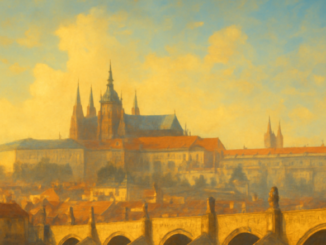
Historic Prague cityscape with Gothic and Baroque architecture at twilight
Symbolism & Rituals

Prague as a Mystic City: Freemasonry and the Facts Behind Fiction

When Dan Brown leads readers through the winding streets of Prague in The Secret of Secrets, he conjures images of alchemists, secret societies, and hidden knowledge. The Czech capital does indeed possess a rich mystical past stretching back to the sixteenth century. But how does Brown’s fiction compare to the actual history of Freemasonry in this city? And which misconceptions deserve to be corrected? A journey through time reveals some surprising insights. The Prague of Rudolf II: A Historical Epicenter To understand Prague’s mystical reputation, we need to travel back to the late sixteenth century. Emperor Rudolf II, who reigned from 1576 to 1612, transformed Prague into the intellectual heart of the Holy Roman Empire. He invited astronomers, alchemists, and scholars from across Europe to his court. Tycho Brahe and Johannes Kepler both conducted their groundbreaking astronomical research in Prague. The famous English occultist John Dee visited the city alongside Edward Kelley, seeking alchemical knowledge. This historical reality laid the groundwork for later mystification. The Golden Lane on Prague Castle’s grounds — where, according to legend, alchemists once labored — still draws visitors today. However, it is essential to recognize that these early esoteric activities predate organized Freemasonry as we […]

Vrijmetselarij - Praag als mystieke stad: feit of fictie in The Secret of Secrets
Symbolism & Rituals

Prague as a Mystical City: Fact or Fiction in Secret of Secrets

In his thriller The Secret of Secrets, Dan Brown takes readers to Prague — a city he portrays as the beating heart of European esotericism. But how much of this mystical reputation is rooted in historical fact, and where does the novelist begin weaving his own narrative? This deep dive places the book’s claims alongside the real history of the Czech capital, exploring what holds up to scrutiny and what belongs firmly in the realm of fiction. The Novelist’s Perspective Dan Brown has built a career on a distinctive method: he interweaves historical facts with speculation and outright invention to create irresistible page-turners. In The Secret of Secrets, Prague takes center stage as a gathering place for alchemists, Hermeticists, and secret societies. The city appears as a kind of permanent treasure vault of hidden knowledge, where initiates guarded their mysteries for centuries. It’s a compelling image — but one that deserves careful examination against what historians can actually substantiate. From the perspective of a thriller writer, this kind of embellishment makes perfect sense. A novelist seeks drama and mystery, not academic nuance. Brown cherry-picks the most colorful episodes from the city’s history and connects them into a cohesive narrative of […]

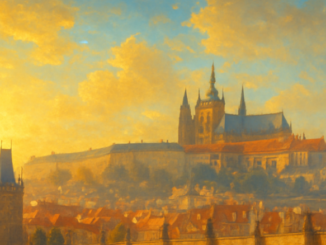
Mystical view of Prague with Charles Bridge and Prague Castle at dusk
Symbolism & Rituals

Prague as a Mystical City in The Secret of Secrets

Why did Dan Brown choose Prague as the setting for The Secret of Secrets? And what mystical claims does he make about a city that for centuries attracted alchemists, astronomers, and seekers of hidden truth? The novel paints the Bohemian capital as far more than a picturesque backdrop — it becomes a character in its own right, steeped in secrets. Let’s explore what the book suggests about Prague, and why those claims both fascinate and demand closer scrutiny. What Makes Prague So Special in the Story? In The Secret of Secrets, Dan Brown presents Prague not merely as scenery but as an active participant in the mystery. The novel positions the city as a kind of spiritual nexus where different esoteric traditions converge. Prague is portrayed as a place where the boundary between the visible and the hidden is thinner than anywhere else — a city built on secrets. Is there historical truth behind this? To some extent, yes. Under Emperor Rudolf II, who reigned from 1576 to 1612, Prague genuinely became a magnet for mystics, alchemists, and scholars. Johannes Kepler worked there on his astronomical calculations, while figures like John Dee and Edward Kelley sought the emperor’s favor with […]