
Ancient scroll and Masonic coffin symbol representing Seneca and Freemasonry
Lucius Annaeus Seneca – Letters to Lucilius

Seneca’s Letter LXX: Philosophical Roots of Death as Choice

When Lucius Annaeus Seneca writes about death and its timing in his seventieth letter to Lucilius, he draws upon a rich philosophical tradition stretching back centuries before his own era. His words are not isolated musings — they are part of an ongoing dialogue with Greek sages, Roman predecessors, and the fundamental questions that occupy every thinking person. How do his views relate to the major philosophical currents of his time? And what parallels can we draw with the way Freemasons contemplate the finitude of human life? The Stoic Lens: Freedom in the Face of the Inevitable Seneca’s thinking on death is deeply rooted in Stoic philosophy, a school founded by Zeno of Citium around 300 BCE. For the Stoics, death was never an enemy to be feared but a natural component of the cosmic order. The universe is governed by the Logos — a rational principle that permeates all things. The human soul is a spark of this greater fire, and its return to the source is nothing to mourn. What Seneca adds in Letter LXX, however, is a radical emphasis on human autonomy. Where early Stoics like Chrysippus stressed acceptance of fate, Seneca highlights the possibility of choosing […]
Open book with Montaigne's essays surrounded by Masonic symbols and candlelight
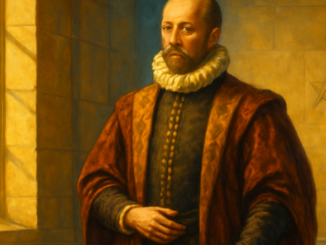
Michel de Montaigne – Philosophical Background

Montaigne and Death: Philosophical Sources of a Timeless Essay

Imagine living in the sixteenth century, surrounded by plague epidemics, religious wars, and a life expectancy that barely reached forty. How would you relate to death? Michel de Montaigne chose not to avoid this question but to confront it head-on. In his celebrated essay “That to Philosophize Is to Learn to Die,” he drew upon a rich tradition of ancient wisdom. But which thinkers and philosophical currents whispered in his ear as he wrote? Let us descend together into the philosophical sources that shaped this masterwork — and discover why they still resonate deeply within Freemasonry today. The Stoic Legacy: Seneca as Guiding Light If there is one philosopher whose presence shimmers through every page of Montaigne’s essay, it is Seneca. The Roman statesman and philosopher wrote extensively about the art of dying in his Letters to Lucilius. For Seneca, death was not an enemy to be feared but a natural boundary that gives our lives meaning. He taught that we should live each day as though it could be our last — not out of gloom, but in order to be truly present. Montaigne absorbed this Stoic insight and made it deeply personal. Where Seneca sometimes remained abstract, Montaigne […]