Open book showing Voltaire's Candide with Masonic square and compasses
Symbolism & Rituals

Voltaire’s Candide and Freemasonry: Building a Better World

When Voltaire published his famous satirical novel Candide in 1759, he took aim at one of the most influential philosophical propositions of his era: Gottfried Wilhelm Leibniz’s optimism — the claim that we live in “the best of all possible worlds.” Voltaire dismantled this idea with relentless wit. But what drove him to this attack? And how does his critical thinking relate to the symbolism and values cherished by Freemasonry? This article places Candide in its intellectual context and compares two fundamentally different ways of looking at the world. Leibniz’s Optimism: A World of Divine Perfection To understand Voltaire’s satire, we first need to know its target. Gottfried Wilhelm Leibniz (1646–1716), the German philosopher and mathematician, developed a theodicy designed to explain the existence of evil in a world created by God. His answer was elegant but controversial: God, being omniscient and wholly good, had necessarily created the best of all possible worlds. Every evil we perceive, Leibniz argued, serves a higher purpose within the cosmic whole. This philosophy resonated widely in eighteenth-century Europe. It offered comfort to those struggling with suffering and injustice. In Candide, the tutor Pangloss embodies this optimism in its most caricatured form. He insists that […]
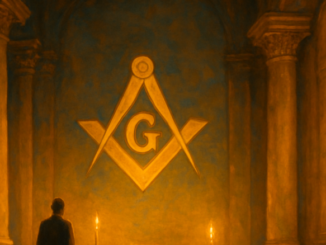
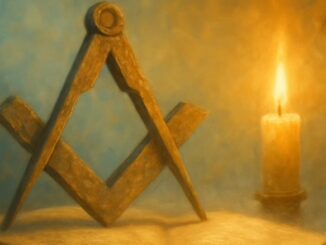
Masonic square and compasses symbol representing the fraternity of Freemasonry
Freemasonry & Society

What Is Freemasonry? Origins, Values, and Philosophy

Freemasonry is one of the oldest and most influential fraternal organizations in the world, with roots stretching back to the early eighteenth century. It’s a question many people ask — what is Freemasonry, really? — and the answer is far richer and more nuanced than most expect. Freemasonry is not a religion, not a political movement, and not a secret society in the sensationalized way popular culture might suggest. It is an ethical and philosophical brotherhood that brings men — and in some lodges, women — together around shared values such as fraternity, truth, charity, and moral self-improvement. Through symbolism, ritual, and philosophical reflection, Freemasonry invites its members on a lifelong journey of personal growth and service to society. The Historical Background of Freemasonry From Stonemasons to Philosophers: The Medieval Guilds The history of Freemasonry begins with the medieval craft guilds of masons and stonemasons. During the Middle Ages, the skilled craftsmen who built Europe’s great cathedrals, churches, and castles were organized into guilds that carefully guarded their trade knowledge, techniques, and tools. These guilds had their own rules, initiation ceremonies, and signs of recognition that allowed members to identify one another and distinguish themselves from outsiders. The so-called “operative […]

Symbolic representation of agnosticism and Freemasonry paths converging
Freemasonry & Society

Agnosticism and Freemasonry: Two Paths Toward the Unknowable

Agnosticism is often understood as a position of not-knowing — a philosophical stance that acknowledges certain questions about existence may be unanswerable. Freemasonry, on the other hand, is sometimes perceived as a fraternity defined by its rituals and symbols. But what happens when we place these two worlds side by side? Both share a fundamental recognition: that the human mind cannot fathom everything, and that within that very recognition lies a particular kind of wisdom. In this article, we explore how the agnostic outlook and Masonic philosophy mirror and enrich each other. The Agnostic Perspective: Living With Uncertainty The agnostic does not claim to know whether a higher power exists. This is not a weakness or a lack of conviction — it is a deliberate intellectual position. The term was coined in the nineteenth century by the British biologist Thomas Henry Huxley, who wanted to express that certain metaphysical questions lie beyond the reach of human knowledge. The agnostic stance demands humility: the ability to say “I don’t know” without abandoning the search for meaning. In modern society, agnosticism is frequently confused with indifference or atheism. Nothing could be further from the truth. Where the atheist asserts that no god […]