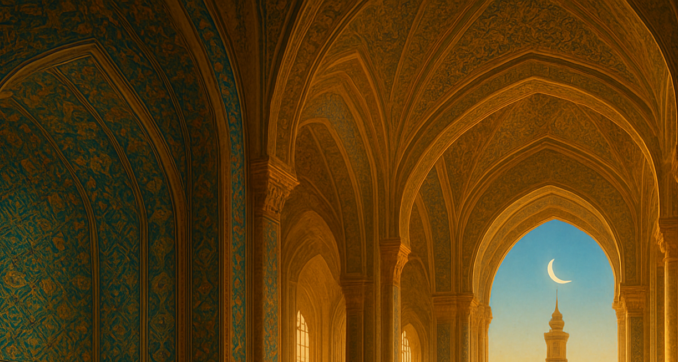
In the year 624 CE, a decisive battle took place in the desert near Badr. A small band of followers of the Prophet Muhammad faced a far superior force from Mecca. The unexpected victory that followed — and especially the division of the spoils — gave rise to fundamental questions about possession, community, and surrender. The eighth chapter of the Quran, known as Al-Anfal or The Spoils of War, addresses this event. But beneath the historical narrative lies a deeper layer: a spiritual teaching about releasing the ego and placing trust in a higher order. For Freemasons, who likewise pursue moral growth and fraternal unity, this ancient text offers remarkably familiar ground.
The Historical Context of Badr
The Battle of Badr was far more than a military confrontation. It was a turning point in early Islamic history — a moment when a persecuted community stood its ground against its oppressors for the first time. The young Muslim community in Medina numbered only around three hundred men, while the Meccan army fielded nearly a thousand soldiers. The victory was experienced by the faithful as divine assistance, as proof that devotion to a higher ideal is stronger than numerical superiority.
After the battle, however, discord arose over the division of the war spoils. Who was entitled to what? The fighters who had been in the vanguard? The guards who had protected the camp? Those who had shielded the Prophet himself? These questions of justice and ownership were the direct occasion for the revelation of the Surah of The Spoils of War. The answer that came was unexpected: the spoils belong to God and His Messenger. In other words, individual claims must yield to the collective good and the divine order.
Surrender as a Spiritual Principle
At the heart of The Spoils of War lies the Arabic concept of tawakkul — a term that can be translated as surrender to, or trust in, divine providence. This principle transcends the military framework of the text and touches on a universal spiritual truth: real strength does not come from what we possess or conquer, but from what we dare to let go. The warriors at Badr learned that their victory was not their own achievement, but a gift that obliged them to gratitude and fair distribution.
True spiritual growth begins where the desire for personal possession ends and the willingness to share begins.
This idea finds echoes across many traditions. Spinoza wrote about overcoming the passions through reason and insight. Marcus Aurelius emphasized in his Meditations that we have power only over our own attitude, never over the outcomes of fortune. In the Islamic context, this wisdom is anchored in the understanding that all possessions ultimately belong to the divine, and that human beings are merely stewards.
The Freemason’s Perspective
For those outside the Islamic tradition, The Spoils of War might seem like an unfamiliar text at first glance. The emphasis on battle and plunder conjures images of conflict and conquest. But the Freemason, trained in reading symbols and searching for inner meanings, recognizes a familiar theme here: the struggle against the lower self.
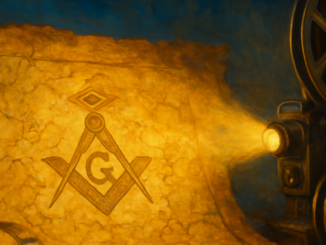
In Freemasonry, the rough ashlar is hewn into a perfect cube. This process demands the release of roughness, of ego, of the grasp for personal gain. The spoils the Freemason seeks are not material but spiritual: wisdom, brotherhood, inner light. The teaching of The Spoils of War aligns with this perfectly. What you win in the battle against your own limitations does not belong to you alone — it belongs to the community that supports you and to the higher ideal you serve.
Brotherhood Under Pressure
A striking theme in The Spoils of War is its emphasis on unity within the community. The Surah repeatedly warns against internal division. Precisely in times of crisis, when the temptation to prioritize self-interest is greatest, the faithful are called to solidarity. The Arabic term ummah — the community of believers — takes on concrete meaning here: a brotherhood that is stronger than tribal bonds or personal ambitions.
Freemasonry upholds a comparable ideal. The lodge is a brotherhood in which social differences are temporarily set aside. Whether one is a banker or a carpenter, all stand as brothers within the temple. This requires the same discipline that The Spoils of War advocates: the ability to subordinate personal privileges to the common purpose. The spoils — whether knowledge, influence, or material wealth — are shared in service of all.
From Past to Present
What does The Spoils of War teach us fourteen centuries later? In a world often dominated by competition and individual success, this text offers a countervoice. The question of who is entitled to the spoils remains as relevant as ever, though it takes different forms today. Who benefits from economic growth? How do we distribute the fruits of technological progress? What are we willing to share with those who have less?
The themes that emerge are timeless and universal:
- Surrender to a higher ideal as a source of inner strength
- Brotherhood that holds firm under external pressure
- Fair distribution as an ethical duty
- Releasing the ego as a prerequisite for spiritual growth
The Freemason who recognizes these themes finds in The Spoils of War not a call to outward conflict, but an invitation to inner struggle. It is the struggle to become a better person — not for personal glory, but in service of humanity. That is the true spoil worth fighting for.
The Spoils of War invites reflection that reaches far beyond the historical battlefield. Whether one is a Muslim, a Freemason, or simply a seeker of meaning without a specific tradition, its core message speaks universally. True wealth does not lie in what we accumulate, but in what we dare to give. The battle that truly matters is not the one waged against others — it is the one we wage within ourselves, striving toward light, justice, and the betterment of all.
Copyright text & image: devrijmetselaar.nl
Texts are based on the ideas and content of the author of devrijmetselaar.nl, reviewed, corrected, and supplemented with the assistance of OpenAI. Images are created based on the ideas of the author of devrijmetselaar.nl using OpenAI/DALL-E.
Frequently Asked Questions
What is the connection between the Battle of Badr and Freemasonry?
While the Battle of Badr is a historical Islamic event from 624 CE, the article draws parallels between the spiritual teachings in the Quranic chapter Al-Anfal and Masonic principles. Both traditions emphasize moral growth, fraternal unity, and the surrender of ego in service to a higher order. The dispute over war spoils in Badr led to spiritual teachings about releasing personal claims for the collective good, which resonates with Masonic values of brotherhood and shared purpose.
What does 'tawakkul' mean and why is it important to understanding The Spoils of War?
Tawakkul is an Arabic concept meaning surrender to or trust in divine providence. It represents a fundamental spiritual principle that true strength comes not from what we possess or conquer, but from what we release and let go of. In the context of Badr, this principle taught the Muslim warriors that their victory was a divine gift rather than their own achievement, obligating them to gratitude and fair distribution of the spoils rather than personal claim.
Why did the division of spoils after the Battle of Badr become significant?
After their unexpected victory, the Muslim fighters disagreed over who deserved what share of the war spoils—those in the vanguard, camp guards, or the Prophet's protectors. These disputes about justice and ownership prompted the revelation of the Surah of The Spoils of War, which answered that the spoils belong to God and His Messenger. This established the principle that individual claims must yield to the collective good and divine order, making it a watershed moment in Islamic spiritual teaching.

Be the first to comment