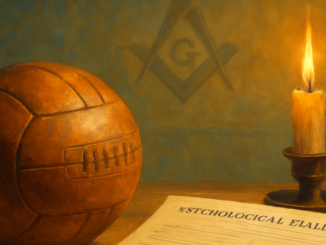
Freemasons in lodge discussing different perspectives in brotherhood
Personal Development & Leadership

Two Opinions, One Goal: Psychology and Brotherhood

In 1958, a sports psychologist advised the Brazilian national football coach to leave two young players at home before the World Cup. Those players would go on to become legends. The advice was ignored, Brazil won the tournament, and the psychologist faded into the shadows of history. Yet hidden within this story lies a deeper truth about brotherhood, trust, and the courage to offer a dissenting opinion — even when the world seems to prove you wrong. The Outsider’s Perspective Imagine you are a scientist — a pioneer in the field of sports psychology at a time when the discipline is barely taken seriously. You are tasked with evaluating the mental readiness of a group of footballers. After careful analysis, you arrive at a conclusion that runs directly counter to what everyone wants to hear. Two young players, however talented, show signs of emotional instability that, according to your tests, make them unfit for the pressure of a World Cup. You know your recommendation will be unpopular. You know your reputation is on the line. And yet you speak what you believe to be true. This is the outsider’s perspective: someone who is not part of the group, who has […]
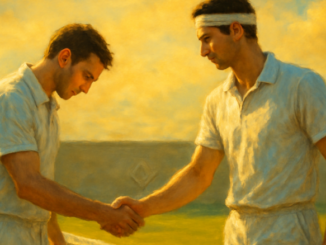
Two rivals shaking hands symbolizing Masonic brotherhood and mutual respect
Personal Development & Leadership

Fear of the Rival: What Opponents Teach Us About Brotherhood

A national team coach openly admits he hopes his greatest rival catches a cold before a crucial match. It sounds like a moment of weakness, but in truth it reveals something far deeper: the recognition of greatness in another person. This candid sporting confession raises an ancient question that has occupied humanity for centuries. How do we relate to those who surpass us? And what does history teach us about the art of acknowledging excellence without diminishing ourselves? Chivalric Recognition in the Middle Ages In the twelfth century, a remarkable tradition emerged at the courts of Europe. Knights who were about to face each other in tournaments would often speak words of praise about their opponent before the fight began. This was no empty courtesy — it was an essential part of the code of chivalry. The belief was simple yet profound: only a worthy enemy could make a worthy victory possible. A knight who belittled his opponent also diminished the value of his own potential triumph. This attitude appears throughout medieval chronicles. Opponents were described with respect, their skills celebrated, their courage acknowledged. It was an era in which honor mattered more than merely winning. The paradox was clear: […]

Firefighter helmet and Masonic square and compasses symbolizing brotherhood
Personal Development & Leadership

Arsonist in Uniform: When Brotherhood Fails

The siren wails through the night. A firefighter pulls on his jacket, jumps on the engine, and races toward a blaze he himself has set. Six arrests later — including one of their own — France is left in shock. This isn’t just a story about fire. It’s a story about trust going up in smoke, and about the urgent question of how we protect brotherhood when someone undermines it from within. The Shock of Betrayal From Within When we learn that someone who swore an oath to protect has become the very source of destruction, it shakes our faith in institutions to the core. For most people, the fire service is a symbol of unconditional service. These are the men and women who run into burning buildings while everyone else runs out. They form a tightly knit community — a brotherhood in every sense of the word. And yet, one of them betrayed the trust of colleagues and citizens in the most fundamental way imaginable. Events like these don’t just affect the people directly involved. They sow doubt in every community built on mutual loyalty. How can any group function when the bonds of trust can no longer be […]

Masonic lodge interior symbolizing tension and brotherhood among brothers
Personal Development & Leadership

Division in the Lodge: A Philosophy of Brotherhood

What if brotherhood is not a state of harmony but a state of sustained discomfort? What if the true test of connection lies not in the moments when everything runs smoothly, but precisely in the moments when tension becomes so palpable that walking away seems more attractive than staying? If that is the case, then everything we think we know about standing together in a lodge changes. The lodge is no longer a sanctuary — it becomes a crucible. And the division a brother feels with his lodge is not proof of failure, but perhaps the very beginning of genuine insight. The Paradox of Commitment There is a peculiar law that governs human communities: the more someone cares about a group, the more keenly they experience its shortcomings. Indifference, after all, knows no disappointment. Those who expect nothing are never hurt. But those who make themselves vulnerable, who invest time and energy in a collective ideal — they feel it when that ideal crumbles under the weight of habit, complacency, or misunderstanding. This is not weakness. It is the inevitable byproduct of sincere commitment. In Freemasonry, this paradox takes on a distinctive form. The lodge presents itself as a workshop […]

Rough ashlar stone symbolising character building in Freemasonry
Personal Development & Leadership

Trust and Character: What a Lawsuit Teaches Us

You may have seen it in the news: a major technology company is taking former employees to court for allegedly stealing trade secrets and handing them to a competitor. On the surface, it sounds like a corporate dispute with little relevance to everyday life. But look a little closer, and this story touches on something universal — the question of who you are when no one is watching, the weight of your word, and the building blocks of your character. When Trust Is Broken Imagine spending years working on complex projects, gaining access to your employer’s most sensitive information, and then one day deciding to move on. What do you take with you? Your experience, your skills, your memories — certainly. But where is the line between what belongs to you and what was entrusted to you? That question now sits at the heart of a lawsuit captivating the technology world. The case is not merely about the legal definitions of intellectual property. It is about the invisible agreements we make when someone places their trust in us. It is about whether our word still means something after we close a door behind us. The Rough Ashlar as a Mirror […]

Tennis players shaking hands at the net symbolising Masonic brotherhood
Personal Development & Leadership

Winning and Losing at Wimbledon: Lessons in Brotherhood

Picture the scene: two men stand facing each other on the sacred grass of one of the world’s most famous tennis tournaments. One celebrates; the other bows his head. But what happens in that quiet moment at the net, when they shake hands? Is it mere formality, or does something deeper reside in that gesture? It’s worth asking what these sporting moments can teach us about a concept Freemasons have cherished for centuries: brotherhood. Why Does That Moment at the Net Move Us So Deeply? There is something extraordinary about the instant two opponents look each other in the eye after everything has been said and done. One has won. The other has lost. And yet they reach out and shake hands. Why does this touch so many viewers? Perhaps because we recognise something in it that goes beyond competition. We see two people who, despite their battle, acknowledge each other as equals. That is precisely what brotherhood means: the recognition that you stand before a fellow human being, not merely a rival. In Freemasonry, we often speak of meeting our Brethren “on the level.” Regardless of rank, background, or achievement, we stand as equals before one another. The tennis […]

A rough ashlar stone beside Masonic square and compasses symbolizing humility
Personal Development & Leadership

Humility as Strength: What Freemasons Know About Success

In the eighteenth century, when the first Grand Lodges in Europe opened their doors, an unwritten rule applied that remains relevant to this day: whoever enters leaves their social rank at the door. Whether you were a baker or a banker, your standing in the lodge was determined by your inner growth — not by your external achievements. This principle sheds a surprising light on a notion that still circulates in our culture: the belief that everything one touches turns to gold. The Alchemical Myth Debunked The expression “everything I touch turns to gold” traces back to King Midas from Greek mythology. His story ends tragically: he nearly starves to death because even his food transforms into gold. From the earliest philosophical traditions, thinkers understood the Midas myth as a warning against hubris — the dangerous overconfidence that arises when success goes to one’s head. Freemasonry, with its roots in the medieval stonemason guilds, understood this lesson centuries ago. The craftsmen who built the great cathedrals of Europe knew that every masterpiece was the result of countless failed attempts, broken stones, and endless patience. Their wisdom: true craftsmanship reveals itself not in perfection, but in the ability to learn from […]

Rough ashlar stone beside a calm candle symbolizing Masonic inner strength
Personal Development & Leadership

Artificial Energy vs Inner Strength: A Masonic Perspective

As more people report heart palpitations, insomnia, and anxiety from stimulant supplements, a fundamental question emerges: where do we truly draw our energy from? The modern individual reaches for pills and powders to get through the day. The Freemason seeks something different — a force that doesn’t come from a bottle, but from within. Two paths, two views of human nature, yet both share the same search for vitality and meaning. The Modern Quest for Energy In a world that never stops, many feel the pressure to be perpetually switched on. Employers demand alertness, social media calls for constant engagement, and the body is simply expected to keep up. Stimulant supplements in powder or capsule form promise an easy fix: focus without effort, energy without rest. But reality tells a different story. Users increasingly report nervousness, a racing heart, or a restless mind. The promise of artificial energy carries a shadow side that no label warns you about. These complaints are not merely physical. They touch on something deeper: the feeling of losing control over one’s own body. When someone becomes dependent on external substances to function, they gradually lose contact with their natural rhythms. The question then shifts from […]

Symbolic depiction of Gnostic and Masonic paths to brotherhood in the Netherlands
Personal Development & Leadership

Inner Knowing in the Netherlands: Two Paths to Brotherhood

For centuries, the Netherlands has been captivated by the idea of inner knowing — the pursuit of hidden wisdom that cannot be handed down through books or authorities but must be discovered through personal experience. The tradition of gnosis in the Netherlands has a rich history, stretching from medieval mystical movements to contemporary spiritual communities. At the same time, Freemasonry offers a different yet closely related path toward brotherhood and self-knowledge. How do these two worlds relate to each other? And what can they learn from one another about forming meaningful connections between people? The Gnostic Path: Inner Knowing as Foundation The Gnostic tradition, which has blossomed again and again in the Netherlands across the centuries, starts from a powerful premise: truth is not something imposed from the outside but something that already slumbers within the human soul. The word gnosis comes from the Greek and literally means knowledge — but knowledge of a very particular kind. It is not about factual data or scientific understanding. It is about a direct, inner experience of the divine or the absolute. In the Dutch context, this tradition has always occupied a special place. As early as the late Middle Ages, the Low […]

Misty mountain landscape symbolizing reflection and character building
Personal Development & Leadership

Cool Holiday Destinations and the Shaping of Your Character

It’s July, and temperatures across many popular holiday destinations are climbing toward unbearable levels. While millions instinctively head for the Mediterranean sun, a growing number of travelers are deliberately choosing cooler destinations. What seems like a purely practical decision actually touches on something much deeper: the choices you make reveal who you are. In Freemasonry, the development of character stands at the very heart of the Craft. So how can something as simple as picking a holiday destination contribute to genuine self-knowledge? The Deliberate Choice as a Character Exercise When you opt for Scotland, Norway, or the Baltic coast instead of the usual sun-drenched beaches, you’re making a statement. You’re showing that you don’t automatically follow the crowd. In Freemasonry, we call this working on the ‘rough ashlar’ — shaping your character through conscious decisions. Every choice you make, no matter how small, contributes to the person you’re becoming. This doesn’t mean cooler destinations are inherently superior. What matters is the awareness behind your choice. Ask yourself: am I choosing this because everyone else does, or because it genuinely suits me? This kind of reflection is a practice you can apply year-round — not just when you’re booking a trip. […]

Rough ashlar stone being shaped symbolizing Masonic character building
Personal Development & Leadership

Personality and Choices: What a Verdict Teaches About Character

Sometimes you come across a news story that stays with you all day — not because of the shocking details, but because of the questions it raises. A court hands down a nine-year prison sentence, and you find yourself wondering: how does a person end up there? What happens within someone’s personality that leads them down a path ending in a courtroom? These questions go far beyond the legal realm. They touch on something fundamental about who we are and who we have the potential to become. The Rough Stone Within Each of Us In Freemasonry, we work with the symbol of the rough ashlar — the unfinished stone. This is no arbitrary metaphor. The rough stone represents the human being as they enter the world: full of potential, but also full of imperfections, sharp edges, and hidden cracks. The Freemason’s task is to work that stone — to chisel, smooth, and polish it. Not to achieve perfection, because that is an illusion, but to become more conscious of your own shape and the choices you make. When you read about a tragic event where lives have been permanently altered by violence, an uncomfortable question surfaces: what happened to the […]

A gavel resting on a rough ashlar stone symbolizing Masonic decision-making
Personal Development & Leadership

What Eurovision Teaches Us About Character and Decision-Making

A national broadcaster faces a momentous choice: whether or not to participate in an international music competition that has stirred public debate for years. It’s a question that goes far beyond programming schedules or budgets. What does the act of deciding actually reveal about who we are? And how do such pivotal moments shape our character — as individuals or as organizations? Let’s examine this through the lens of an ancient tradition that has reflected on character formation for centuries. Why Is Decision-Making So Difficult? Ask yourself: when was the last time you postponed a decision — not out of laziness, but because the choice itself stirred something deep within you? The Dutch public broadcaster deliberating over its participation in the Eurovision Song Contest is a compelling illustration. It’s not merely a question of logistics or funding. It’s about values, identity, and the fundamental question: who do we want to be on the world stage? In Freemasonry, this moment of deliberate, weighed choosing is recognized as a fundamental element of personal growth. The rough ashlar — that symbol of the unpolished self — is not shaped into a perfect cube with a single blow. It requires reflection, careful consideration, and […]

Famous Freemasons gathered in a lodge symbolizing brotherhood and unity
Personal Development & Leadership

Famous Freemasons: What Their Brotherhood Can Teach You

When you read about famous Freemasons throughout history, one thing immediately stands out: they came from vastly different backgrounds, professions, and belief systems. Yet they found common ground in the lodge. Composers sat alongside generals, writers beside statesmen. What united them? And more importantly, what can you take from their example and apply to your own life? This article isn’t about name-dropping — it’s about the practical power of brotherhood these men shared. What Truly Connected Famous Freemasons Think about the eighteenth and nineteenth centuries — an era of revolutions, radical new ideas, and deep social tensions. Yet during this very period, composers, scientists, politicians, and artists gathered together in lodges. Not to advance each other’s careers or build networks in the modern sense of the word. They came together because they believed in something greater: the possibility of growing as human beings, alongside others walking the same path. Historical records show that musicians like Mozart and Haydn were active members of Viennese lodges. Enlightenment thinkers such as Voltaire were initiated shortly before their deaths. And across the Atlantic, Freemasons played a significant role in shaping a young republic. What made this remarkable? Within the lodge, social distinctions fell away. […]

Rough ashlar stone and chisel symbolizing Masonic character building
Personal Development & Leadership

Violence in Public Spaces: How to Build Character in Chaos

A pleasant evening out can turn into a nightmare in an instant. Recent reports of violent assaults at public venues remind us that danger can strike anywhere — even in places where we feel completely safe. These events shake us to the core and raise uncomfortable questions: How do you respond when life suddenly turns violent? What does that moment reveal about who you truly are? In Freemasonry, the shaping of character plays a central role — especially for those moments when everything falls apart. This article offers practical tools to strengthen your inner compass. The Unexpected Moment as a Mirror Nobody plans to become a witness or victim of violence. Yet it happens — on the street, in a bar, in places where we feel secure. It is precisely in these unexpected moments that our true character surfaces. Not the person we like to think we are, but the person we actually become when there is no time to think. In Freemasonry, this principle is expressed through the symbol of the “rough ashlar.” Every person begins as an unworked block of stone — full of potential, but also full of imperfections. Life itself, with all its shocks and challenges, […]

A rough ashlar stone symbolizing personal growth through crisis in Freemasonry
Personal Development & Leadership

What Our Crises Reveal About Who We Truly Are

Sometimes a person disappears — not just physically, but inwardly. A young athlete withdraws from the world, overwhelmed by pressure and expectations. When he returns, he speaks openly about regret and self-awareness. This kind of story raises questions that reach far deeper than the headline itself. What does a moment of crisis actually reveal about who we truly are? And how does a Freemason view such turning points in a human life? Why Do People Sometimes Vanish From the Stage? The outside world tends to see a disappearance as either a mystery or a scandal. A news article presents the facts, quotes bystanders, and searches for explanations. But anyone who looks at the story from the inside recognizes something different: a human being who could no longer function under the weight of the expectations placed upon him. Pressure, perfectionism, fear of failure — these are universal themes that can touch any one of us. For the outsider, such a disappearance is a news item. For the Freemason, it is a mirror. In the lodge, we learn that a person is never a finished work, and that every crisis contains the possibility of growth. Disappearing is not an ending — sometimes […]

Cracked mirror reflecting a rough ashlar stone symbolizing Masonic character work
Personal Development & Leadership

The Cracked Mirror: Character as Unfinished Architecture

A mirror that cracks no longer shows a true reflection. The glass is still there, the frame intact, but the image looking back at you is splintered, distorted, unreliable. This is how we might view those moments when someone’s actions stand in stark contradiction to the role they occupy. When the news confronts us with people who were given trust and then betrayed it, we are forced to sit with an uncomfortable question: what is personality, really? And can we ever fully know it — in others or in ourselves? The Mask and What Lies Behind It The word “personality” derives from the Latin persona, which originally referred to a theatrical mask. Actors in classical theater wore masks to define their roles. The mask was not meant to deceive — it was meant to clarify. It told the audience who this figure was and what to expect from him. And yet, buried in this etymology lies an unsettling truth: if personality is a mask, what lies behind it? In Freemasonry, this question occupies a central place, even if it is rarely stated so directly. The rough ashlar — the symbol of man at the beginning of his inner journey — […]

Cup of coffee on a quiet harbor dock at sunrise with sailboats in the background
Personal Development & Leadership

Morning Coffee in the Harbor: Stillness as a Mirror for the Soul

Steam curls upward from the cup cradled between my hands. In the harbor, the boats lie still — finally still. After days of relentless wind, the morning has turned so soft that you can hear the water lapping gently against the hulls. As I take my first sip, engines begin to rumble all around me. One by one, sailboats leave the shelter of the harbor, heading home. And I remain seated, watching the departure of others, wondering: what does this moment actually reveal about who I am? The Boat or the Man It is a question seafarers often ask when the weather turns: can the boat handle this? But anyone who is honest knows that the real question is a different one entirely. It is rarely about the strength of the vessel. It is about the person at the helm. Can you withstand the wind, the uncertainty, the unknown waiting beyond the horizon? For the past few days, everyone stayed in port because conditions were too fierce. Not for the boats — for the souls steering them. This distinction touches something essential. In Freemasonry, we speak of working the rough ashlar, of shaping character and personality through labor upon oneself. […]

An open empty wallet reflecting light as a symbol of Masonic self-reflection
Personal Development & Leadership

The Empty Wallet as Mirror: Wealth Beyond Numbers

A wallet. Leather, stitching, a slot for coins. We open it dozens of times a week, check its contents, calculate what’s possible. Reports keep telling us that a growing number of people struggle to make ends meet — even as wages rise. The numbers don’t match the feeling. And perhaps that disconnect is precisely the invitation to look deeper, beyond the figures, toward what wealth truly means for who we are. The Mystery of the Growing Gap Imagine a bucket. You fill it with more water than last year. Yet the bottom stays dry. Somewhere there’s a hole that grows along with the filling. This is the paradox many households experience: wages go up, but the sense of abundance never arrives. Economists point to inflation, rising fixed costs, and shifting consumption patterns. These explanations make perfect sense on paper. But there’s something no spreadsheet can capture. The wallet is more than an object. It’s a mirror. What we put into it — and how quickly it disappears — reveals something about our relationship with needs, desires, and the question of who we want to be. Financial pressure doesn’t just affect the bank account. It touches our personality, the way we […]

Rough ashlar stone symbolizing personal growth and resilience in Freemasonry
Personal Development & Leadership

Chance and Vulnerability: Two Perspectives on Fate

A man falls asleep in his tent on a beach in the Netherlands. Morning approaches, the sea murmurs, and life seems peaceful. Then the unthinkable happens: a maintenance tractor drives over his tent. The news is shocking — not just for its tragedy, but for what it reveals about the fragility of human existence. How do we process such random events? And does it matter whether we have spent time consciously examining our own character? Two worldviews, two perspectives on the same brutal reality. The Outsider: Chance as Chaos For many people, an accident like this simply confirms the randomness of life. The world is unpredictable, even dangerous, and we are at the mercy of forces beyond our control. This response is deeply human and entirely understandable. We look for someone to blame, for explanations, for ways to reassure ourselves that something like this could never happen to us. The outsider — here meaning someone unaccustomed to systematic self-reflection — tends to experience fate as something purely external. It is something that happens to you, something you react to, but over which you have little influence. Personality is seen as more or less fixed: you are who you are, and […]

Symbolic river scene representing Masonic brotherhood and self-sacrifice
Personal Development & Leadership

Self-Sacrifice and the Deepest Meaning of Brotherhood

Sometimes a story stops you in your tracks. A mother pulls her children to safety from a river’s current, only to be swept away herself. In that split second, she made a choice that touches the very essence of what it means to live for another. As Freemasons, we recognize in such moments something that reaches beyond words — something that strikes at the heart of brotherhood. The Choice No One Wants to Face You may have asked yourself what you would do in a life-or-death situation. Not as a theoretical exercise, but when the water is literally rising around you. Most of us, thankfully, know such moments only from stories or films. Yet it happens every day, somewhere in the world: someone faces a choice where their own life hangs in the balance in order to save another. What this mother did on the banks of the Waal River in the Netherlands was not a calculated decision. It was a response that rose from the deepest layer of her being — a place where love and responsibility merge into something greater than the individual. In Freemasonry, we call this the bond that reaches beyond words or rituals: the brotherhood […]