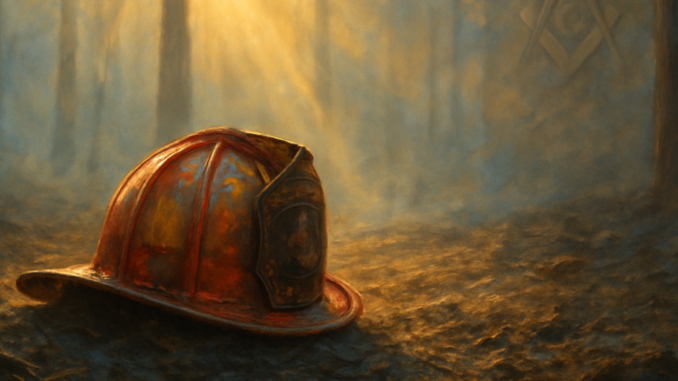
The siren wails through the night. A firefighter pulls on his jacket, jumps on the engine, and races toward a blaze he himself has set. Six arrests later — including one of their own — France is left in shock. This isn’t just a story about fire. It’s a story about trust going up in smoke, and about the urgent question of how we protect brotherhood when someone undermines it from within.
The Shock of Betrayal From Within
When we learn that someone who swore an oath to protect has become the very source of destruction, it shakes our faith in institutions to the core. For most people, the fire service is a symbol of unconditional service. These are the men and women who run into burning buildings while everyone else runs out. They form a tightly knit community — a brotherhood in every sense of the word. And yet, one of them betrayed the trust of colleagues and citizens in the most fundamental way imaginable.
Events like these don’t just affect the people directly involved. They sow doubt in every community built on mutual loyalty. How can any group function when the bonds of trust can no longer be taken for granted? It’s a question that has stood at the heart of Freemasonry for centuries, though usually under less dramatic circumstances.
Brotherhood as a Living Organism
In Freemasonry, brotherhood is never a passive concept. It’s an active choice that must be renewed again and again. At their initiation, Brethren take an obligation in which they promise to support one another, to offer correction when needed, and to place the welfare of the community above personal gain. But an obligation is merely words until it is embodied through action.
What makes Masonic brotherhood distinctive is that it is not built on blind loyalty. Quite the opposite — true brotherhood demands critical awareness. A Brother who sees another Brother straying from the path has a duty to raise the matter. Not to condemn, but to seek the right course together. Freemasons sometimes call this “working the rough ashlar” — the ongoing process of mutual refinement through which we each become better versions of ourselves.
The Paradox of Trust
Trust is both fragile and indispensable. No community can function without a basic level of trust among its members. Yet history teaches us repeatedly that trust can be exploited. The sixteenth-century French philosopher who wrote so penetratingly about human nature understood that our capacity for goodness and our capacity for cruelty often lie far closer together than we’d like to admit.
Those who trust blindly make themselves vulnerable. Those who trust no one make community impossible. Wisdom lies in the middle: trust, but cultivate vigilance alongside it.
This is precisely the tension that Freemasons seek to navigate. In the Lodge, Brethren learn to offer trust as a gift rather than treat it as an automatic entitlement. At the same time, they develop the discernment to recognize behavior that departs from shared values. It’s a delicate dance between openness and caution — one that is never fully mastered, only continually practiced.
What Comes After Betrayal
The question being asked across France right now is the same question every community must face after a breach of trust: how do we move forward? The temptation is strong to close ranks and impose ever-stricter criteria on who gets to belong. But that path often leads to a suffocating culture where no one dares speak openly about doubts or mistakes.
Freemasonry offers an alternative path. It acknowledges that human flaws are inevitable, but holds that the structure of the community itself can help prevent the worst excesses. This happens through regular meetings where open and honest dialogue is encouraged. Through rituals that serve as constant reminders of shared values. Through a culture where correction is not punishment, but an act of care.
Regular reflection on shared values strengthens the bonds between members. Open conversation about doubts and concerns prevents problems from escalating in silence. Rituals create intentional moments of connection and renewal. And fraternal correction, offered in the right spirit, becomes an expression of brotherhood rather than its opposite.
The Building Block of Community
Ultimately, brotherhood is not a destination but an ongoing construction project. Every day, we lay new stones in the edifice of our relationships. Sometimes a stone turns out to be porous. Sometimes a foundation needs repair. The wildfires near Paris and the shocking arrests that followed are a stark reminder of how quickly fire can consume what took years to build.
But even after the greatest conflagration, rebuilding is possible. That may be the core message shared by both the fire service and Freemasonry: where there has been destruction, something new can rise — stronger and wiser than before. Not by pretending the betrayal never happened, but by drawing lessons from it and tending the bonds of brotherhood with even greater care.
The arrest of a firefighter for arson confronts us with an uncomfortable truth: no community is immune to betrayal from within. Yet this need not lead to cynicism. Freemasonry teaches that true brotherhood is not blind — it is both vigilant and loving. It demands courage: the courage to trust despite the risks, and the courage to correct when correction is needed. And so we keep building, stone by stone, even after the fire has been extinguished.
Copyright text & image: devrijmetselaar.nl
Texts are based on the ideas and content of the author of devrijmetselaar.nl, reviewed, corrected, and supplemented with the assistance of OpenAI. Images are created based on the ideas of the author of devrijmetselaar.nl using OpenAI/DALL-E.
Frequently Asked Questions
How does Freemasonry handle members who betray the trust of the organization?
Freemasonry takes the integrity of its members seriously and expects Brethren to hold each other accountable through a process of mutual correction and refinement. When a member strays from shared values, other members have a duty to address the matter constructively, seeking to guide them back to the right path rather than simply condemning them. This commitment to both accountability and support distinguishes Masonic brotherhood from blind loyalty.
What is the difference between blind loyalty and true Masonic brotherhood?
True Masonic brotherhood is built on critical awareness and active choice, not blind loyalty. Freemasons are encouraged to develop discernment and raise concerns when they see a Brother departing from shared values, fostering a culture of mutual refinement. This approach creates a stronger, more resilient community because it balances trust with vigilance.
How do Freemasons balance trust with the need for vigilance?
Masonic teachings emphasize that wisdom lies between blind trust and complete distrust—members learn to offer trust as a gift while simultaneously cultivating discernment to recognize behavior that departs from shared values. Through the concept of 'working the rough ashlar,' Brethren engage in ongoing mutual refinement that strengthens both individual character and community bonds. This balanced approach helps prevent breaches of trust while preserving the authentic brotherhood that makes the organization meaningful.
What obligation do Freemasons take regarding the welfare of their community?
At initiation, Freemasons take an obligation to support one another, offer correction when needed, and place the welfare of the community above personal gain. This oath transforms abstract ideals into lived practice, requiring each member to actively contribute to maintaining the integrity and strength of the brotherhood. The obligation ensures that Masonic bonds are grounded in mutual responsibility and shared purpose.


Be the first to comment