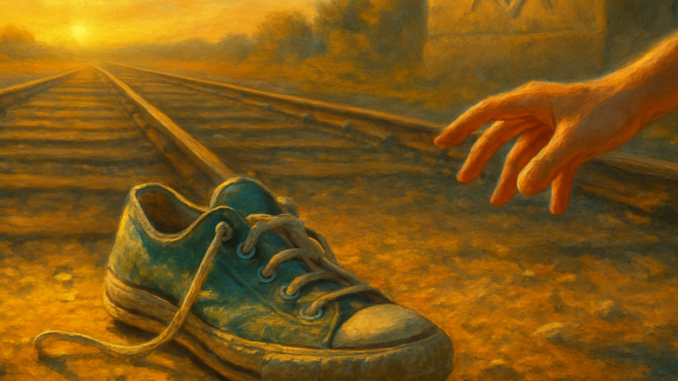
When the news confronts us with a teenager critically injured after falling from a moving train, we inevitably ask ourselves difficult questions. How could this happen? Where were the adults? And perhaps the most unsettling question of all: do we, as a society, bear collective responsibility for our young people? These questions touch on something fundamental within Freemasonry — the concept of brotherhood and the moral duty that flows from it.
What Do We Really Mean by Brotherhood?
Let’s start at the beginning. Brotherhood may sound like an old-fashioned word — perhaps even dusty. But what does it truly mean? In Freemasonry, brotherhood is not an abstract ideal or a pleasant phrase printed on a banner. It is a living practice, a daily exercise in recognizing our interconnectedness. Johann Wolfgang von Goethe, himself a Freemason, wrote about the necessity of seeing a brother in every fellow human being — not because we share the same parents, but because we share the same human vulnerability.
So when a young man falls from a moving train and is critically injured, it doesn’t only affect his immediate family. It affects all of us — or at least it should. The question Freemasons ask themselves is not “Who is responsible?” The question is: “What could I have done?”
Is Risky Behavior a Sign of Our Times?
A contemporary sociologist might point to the influence of social media, the craving for spectacular images, or peer pressure among teenagers. And yes, these factors undoubtedly play a role. But is this phenomenon truly new? Aristotle wrote about the recklessness of youth — their tendency toward overconfidence and their lack of experience with the consequences of their actions. The Greek philosopher did not view this as a moral failing but as a natural phase of human development.
What has changed, however, is the context in which young people grow up. The world has simultaneously grown larger and smaller — larger in its possibilities, smaller in the close-knit communities that once served as safety nets. And this is where brotherhood becomes relevant again. Who catches the young person about to fall, literally or figuratively, when the community itself has become fragmented?
What Can We Learn From the Lodge Tradition?
Within the Masonic lodge, there exists a centuries-old practice that is deeply relevant to this conversation. When a new member is initiated, he doesn’t simply receive knowledge. He is welcomed into a circle of brethren who commit to looking after him. This is not a one-sided relationship. The newcomer learns, but the experienced brothers learn as well. They are reminded of their own early days, their own mistakes, and the moments when they themselves needed support.
True brotherhood does not mean preventing mistakes. It means being present when the consequences of those mistakes reveal themselves.
James Anderson, the compiler of the first Constitutions of Freemasonry in 1723, emphasized that brethren must assist one another in times of need. This principle extends far beyond the walls of the lodge. It is a call for civic engagement — for creating communities where no one slips through the cracks unnoticed.
How Do We Translate This Into Practice?
This is perhaps the most difficult question. It is easy to philosophize about brotherhood, but what does it look like in concrete terms? Researchers in the field of youth behavior point to the importance of mentorship — adults who invest time in young people without expecting anything in return. This is precisely what Freemasonry has practiced for centuries, albeit within its own structures.
The challenge lies in extending this practice to the broader community. How do we create spaces where young people feel seen? Where they can experiment without mortal risk? Where adults are available without being patronizing? These are not simple questions, and there are no simple answers.
What Does This Incident Say About Us?
Perhaps the most important lesson from a tragic event like this is not what it says about the young person involved, or about teenagers in general. Perhaps the real lesson is what it says about us — the adults, the community, society at large. Have we created structures in which brotherly care is possible? Or have we retreated into our own worlds, consumed by our own concerns and preoccupations?
Marcus Aurelius, the Roman emperor and Stoic philosopher, wrote in his Meditations that we are all parts of one body. When one part suffers, the whole suffers. This insight is not exclusive to Freemasonry, but it is actively practiced there. The ritual constantly reminds the brother that he does not stand alone — and that he bears responsibility for others.
Where Does Change Begin?
Change begins, as Freemasons have emphasized for centuries, with the self. Not self-improvement as a narcissistic enterprise, but the cultivation of genuine attention for others. It begins with asking: Do I know the young people in my life? Do I know what occupies their minds, what drives them, what frightens them? And am I available when they need me?
These are not questions only Freemasons should ask themselves. They are questions for everyone who is part of a community, a family, a society. Tragic incidents involving young people are stark reminders of our vulnerability and the vulnerability of the youth around us. Let them also serve as a call for renewed brotherhood — for rebuilding communities where no one falls alone.
The young person injured in such an incident is not a statistic, nor a news item to be forgotten by tomorrow. He is a reminder of what is at stake when brotherhood becomes an empty word. Freemasonry teaches us that every individual matters, that care for one another is not optional but essential, and that the strength of a community is measured by how it treats its most vulnerable members. If we take that lesson seriously — not just within the lodge but in every street, school, and neighborhood — we begin to build the kind of world that brotherhood was always meant to create.
Copyright text & image: devrijmetselaar.nl
Texts are based on the ideas and content of the author of devrijmetselaar.nl, reviewed, corrected, and supplemented with the assistance of OpenAI. Images are created based on the ideas of the author of devrijmetselaar.nl using OpenAI/DALL-E.
Frequently Asked Questions
What does Freemasonry mean by 'brotherhood' and how does it relate to youth safety?
In Freemasonry, brotherhood is not just an abstract ideal but a living practice of recognizing our interconnectedness as human beings. It means seeing a brother in every fellow human, not because of shared parentage, but because of shared human vulnerability. When a young person is at risk, Freemasons don't ask 'Who is responsible?' but rather 'What could I have done?' This reflects a collective moral duty to support and protect young people in our society.
Is risky behavior among teenagers a new phenomenon?
No, risky behavior among youth is not new. Aristotle wrote about the recklessness of youth, describing their tendency toward overconfidence and lack of experience with consequences as a natural phase of human development rather than a moral failing. However, what has changed is the context in which young people grow up today—the world offers larger possibilities while communities have become more fragmented, removing the traditional safety nets that once protected young people.
How can the Masonic lodge tradition help address youth risk and safety?
The Masonic lodge has centuries-old practices that are relevant to protecting young people. When members are initiated, they are not only given knowledge but welcomed into a circle of brethren who commit to supporting one another. This tradition of community accountability and mutual care offers a model for how modern society can catch young people who are about to fall—literally or figuratively—by rebuilding the close-knit communities and support systems that have become fragmented in contemporary society.

Be the first to comment