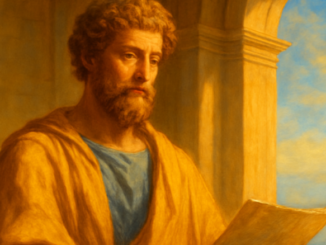
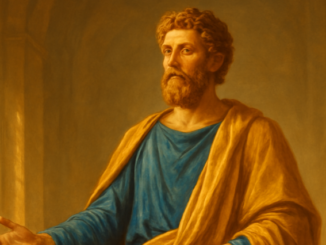
Ancient Roman bust of Marcus Aurelius with Masonic square and compass symbolism
Marcus Aurelius – Freemasonry & Connection

Marcus Aurelius on Reason: A Stoic Mirror for Freemasonry

Picture a Roman emperor sitting alone by candlelight after a grueling day of affairs of state and military decisions. He reaches not for a sword, but for a stylus. In the stillness of the night, he writes words meant for no one else — only for himself. Words about reason, about the inner life, about what it truly means to be human. Nearly two thousand years later, Freemasons gather in their lodges to wrestle with the very same questions, searching for the same light that Marcus Aurelius sought in the quiet hours before dawn. Reason as an Inner Compass In the third book of his Meditations, Marcus Aurelius turns his attention to the essence of human existence: the ruling faculty, or hegemonikon. This inner capacity is what sets human beings apart from all other creatures. It enables us to distinguish truth from illusion, substance from noise. The emperor writes not to impress or instruct others, but to remind himself of what genuinely matters. That personal quest for inner truth runs remarkably parallel to the Masonic journey. For the Freemason, every journey begins in darkness. The candidate is symbolically blindfolded before receiving the light — a light that is not physical, […]
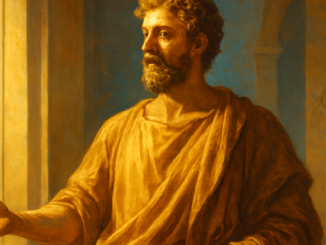
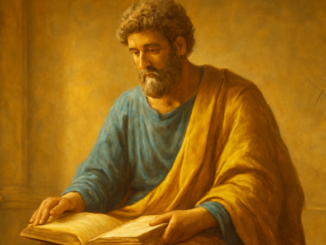
Marcus Aurelius statue symbolizing Masonic presence and self-reflection
Marcus Aurelius – Freemasonry & Connection

Marcus Aurelius on the Here and Now: Freemasonry & Connection

You probably know the feeling: you’re sitting in a conversation, but your mind has already drifted to tomorrow. You’re walking through the city, but you’re mentally somewhere else entirely. The present moment sometimes feels like the hardest place to truly inhabit. Marcus Aurelius, the Roman emperor-philosopher, wrestled with exactly the same challenge more than eighteen centuries ago. In the second book of his Meditations, he wrote some of his most penetrating thoughts on presence and connection. For Freemasons, his words touch on something essential — the question of how to be truly present, both for yourself and for your Brothers. The Burden of Past and Future Marcus Aurelius never wrote his Meditations for publication. They were private notes — a conversation with himself. That’s precisely why they feel so raw and honest. In Book II, he confronts himself with the waste that occurs when the mind constantly slips away to what has been or what is yet to come. He reminds himself that the present is the only thing anyone truly possesses. The past is gone, the future uncertain. Only this moment offers space for action, for growth, for genuine connection. This wasn’t idle philosophizing. For Marcus Aurelius, it was […]

Ancient Roman bust of Marcus Aurelius symbolizing Stoic wisdom and Freemasonry
Marcus Aurelius – Freemasonry & Connection

Marcus Aurelius and Impermanence: What Truly Connects Us?

Why would a Roman emperor from the second century still have something meaningful to say about human connection? And what does his reflection on the brevity of life have to do with the brotherhood that Freemasons strive for? In the second book of his Meditations, Marcus Aurelius confronts himself with an uncomfortable truth: everything passes, including ourselves. Yet within that very acknowledgment lies a surprising lesson about what truly binds us together as human beings. What Does Marcus Aurelius Actually Mean by Impermanence? Let us first consider what the emperor actually writes. In Book II of the Meditations, Marcus Aurelius describes how everything we know passes like waves on a river. Our bodies decay, our names are forgotten, and even the memory of our deeds eventually fades. This may sound bleak, but for the Stoic, it is no cause for despair. It is an invitation to clarity. The impermanence Marcus Aurelius describes is not nihilism. It is a call to distinguish between what is truly valuable and what is merely appearance. Fame, possessions, power — these are fleeting things. But virtue, character, and the way we treat others carry a different quality. Not because they last forever, but because they […]

Marcus Aurelius bust symbolizing Stoic gratitude and Masonic wisdom
Marcus Aurelius – Freemasonry & Connection

Marcus Aurelius on Gratitude: Lessons for Freemasons

Picture a Roman emperor who, in the midst of wars and the weight of governing an empire, sits down to write about what he learned from his grandfather, his mother, his teachers — even people he only met in passing. Marcus Aurelius does not open his Meditations with pride in his own accomplishments. He opens with gratitude. That first book is a practical lesson that remains strikingly relevant today, especially for anyone seeking connection and personal growth. For Freemasons, it offers a familiar mirror: who have your teachers been, and how do you carry their wisdom forward? The Power of Recognition In Book I of his Meditations, Marcus Aurelius names a series of people individually. His great-grandfather taught him the value of a good education. From his mother, he received simplicity and a distaste for extravagance. His philosophy tutor Rusticus introduced him to Stoicism. Each person transmitted a specific virtue. This is not vague sentimentality — it is a concrete inventory of what he received from others. This practice of deliberate recognition is something anyone can apply immediately. Take a moment and ask yourself: who shaped you? Perhaps a grandfather who modeled patience, a colleague who lived with integrity, or […]