Skull and candle symbolizing Stoic and Masonic reflections on mortality
Lucius Annaeus Seneca – Freemasonry & Connection

Seneca on Death and Mortality: Stoic Wisdom Meets Freemasonry

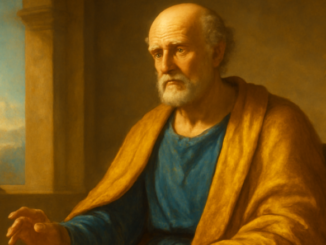
When the Roman philosopher Seneca sat down to write his fifty-fourth letter to Lucilius, he was gasping for breath in the grip of a severe asthma attack. At the very edge of death, he found not despair but clarity. For anyone familiar with Freemasonry, his words carry a strikingly familiar resonance — the conviction that mortality is not a dead end, but a teacher. How do the insights of a first-century Stoic thinker connect to the fraternal bonds and ritual wisdom that Freemasons hold dear? Seneca’s Voice: Illness as a Philosophical Teacher In Letter LIV, Seneca describes how a sudden asthma attack brought him to the brink of death. He refers to the condition by its Greek name and characterizes the experience as a rehearsal for dying. Where most people would succumb to panic, Seneca saw an opportunity for reflection. His illness forced him to examine what truly matters — not wealth, not fame, but the inner freedom of a mind unchained by fear. Seneca did not treat death as an enemy but as a companion. He wrote that he had lived for years as though every day might be his last. This mindset liberated him from needless worry and […]

An empty chair in a Masonic lodge symbolizing remembrance and legacy
History

When Statesmen Pass: History and the Empty Chair

Imagine opening the news tomorrow morning to learn that a prominent statesman has died unexpectedly. That empty seat in a chamber, that sudden void in public discourse. If you’ve ever felt that strange mixture of disbelief and reflection upon hearing such news, you’ve touched something deeply human — the question of what a person leaves behind when life ends abruptly. In the history of Freemasonry, this question has always occupied a central place. The Sudden Absence When a prominent figure is suddenly gone, a peculiar emptiness takes hold. It reaches beyond the political arena or the public sphere — it settles into our collective consciousness. Someone who was fully present yesterday is simply no longer among us today. That confrontation with finality touches something universal. It doesn’t matter whether you admired or criticized the person in question: death observes no party lines. In Masonic lodges around the world, this reality has been confronted for centuries. Not as morbid fascination, but as a fundamental part of life’s journey. The central question is never how long someone lived, but what they left behind for the world. Historical Echoes of Impermanence The history of Freemasonry is threaded with moments when influential members departed […]