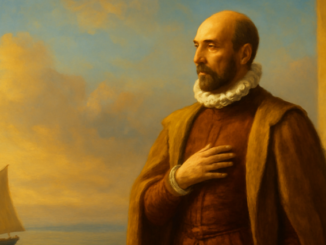
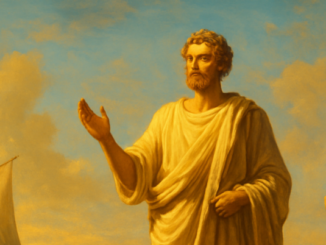
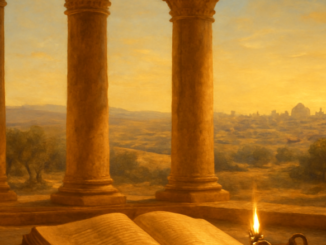
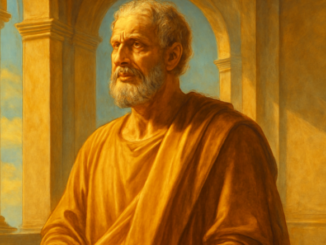
Open copy of Voltaire's Candide with Masonic square and compasses symbol
Symbolism & Rituals

Voltaire’s Candide: The Struggle for Good in Masonic Light

A candle flickers in the study as a young Freemason opens a yellowed copy of Candide. Voltaire’s razor-sharp wit, first published in 1759, still sparks after nearly three centuries. What drove this towering Enlightenment thinker to tear so relentlessly into the optimism of his era? And what can we — as modern seekers of wisdom — learn from this satirical journey through human suffering and the stubborn struggle for good? The Central Idea: Optimism Under Fire Voltaire wrote Candide as a devastating attack on the philosophical optimism of Gottfried Wilhelm Leibniz. The German philosopher argued that we live in “the best of all possible worlds” — a thesis that absolves God of evil by insisting that every instance of suffering is necessary for some greater good. Voltaire found this reasoning intolerable, particularly after the catastrophic Lisbon earthquake of 1755, which killed tens of thousands of people in a matter of minutes. The title character, Candide, grows up in the castle of Baron Thunder-ten-Tronckh in Westphalia, where his tutor Pangloss instructs him in “metaphysico-theologo-cosmo-nigology.” This absurd academic discipline teaches only one lesson: everything is for the best. When Candide is thrown out of the castle for kissing the baron’s daughter, Cunégonde, […]
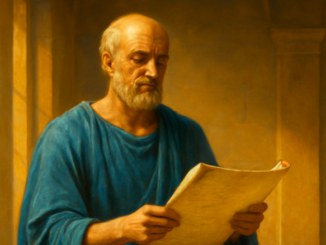
Open book with candle symbolizing Seneca's wisdom and Masonic reflection
Lucius Annaeus Seneca – Content & Summary

Seneca’s Second Letter: On Reading and Inner Peace

A candle flickers as a Freemason closes his book and stares out the window. How many texts has he skimmed this week? How many pearls of wisdom has he brushed against without truly absorbing them? In his mind, the voice of a Roman philosopher echoes — one who recognized this very same restlessness nearly two thousand years ago. Lucius Annaeus Seneca wrote his friend Lucilius a letter that remains as relevant today as it was then: a meditation on the art of truly reading and the path toward inner peace. The Heart of Seneca’s Message In his second letter to Lucilius, Seneca addresses a problem that feels strikingly modern: the tendency to jump from one book to the next without ever putting down deep roots in any of them. He compares this behavior to someone who constantly moves from place to place and, as a result, never forms real friendships. To be everywhere is to be nowhere. This idea forms the backbone of the letter and touches on a fundamental human longing — the desire to find stillness in a world overflowing with stimulation. The Stoic philosopher does not argue for narrow-mindedness or intellectual stagnation. On the contrary, he acknowledges […]

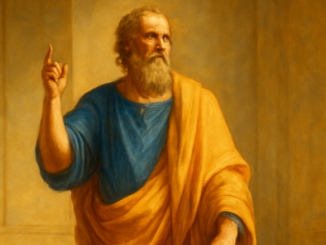
Ancient Greek prison scene representing Plato's Crito dialogue and Freemasonry
Plato – Content & Summary

Plato’s Crito: A Dialogue on Duty and Obedience

It is early morning. Through the narrow slit of a prison window, the first light falls on the sleeping figure of Socrates. His old friend Crito has been sitting beside him for hours, waiting for the right moment to wake him with an urgent proposal: escape, while you still can. What follows is one of the most powerful conversations in Western philosophy — a dialogue that continues to stir Freemasons and seekers of truth in their deepest convictions about duty, honor, and right action. A Friend With an Escape Plan The dialogue of the Crito takes place in the prison of Athens, where Socrates awaits his death sentence. Crito, a wealthy and devoted friend, has arranged everything for an escape. He has bribed the guards, prepared escape routes, and organized safe haven abroad. His arguments are deeply human and sympathetic: Socrates still has a family, his death would be a loss for philosophy, and besides, the verdict is unjust. Why would a wise man submit to a judgment based on false accusations? Socrates listens patiently. He acknowledges his friend’s good intentions but refuses to make decisions driven by emotion or public opinion. Instead, he proposes they examine the matter the […]

Open book of Montaigne's Essays symbolising courage and moral reflection
Michel de Montaigne – Content & Summary

Montaigne on Cowardice: Courage as a Practical Virtue

Imagine walking away at the very moment your presence matters most. Not because you are weak, but because fear has overpowered your will. In his fifteenth essay, Michel de Montaigne posed an uncomfortable question: does flight deserve punishment, or is cowardice already its own punishment? Written in the sixteenth century, this brief but penetrating essay remains strikingly relevant for anyone who reflects on courage, character, and the choices we make under pressure. The Heart of the Essay In ‘On the Punishment of Cowardice,’ Montaigne examines a practical moral question: how should society deal with soldiers who flee out of fear? He describes how, in his own time, cowardice on the battlefield was often punished by death. Yet he wonders whether such punishment is truly just. Can a person be punished for something that seems to lie beyond his control? Montaigne draws a crucial distinction. There is a difference between someone who deliberately abandons his post and someone who is overwhelmed by blind panic. The first acts out of free will; the second is a victim of his own nature. This distinction has direct consequences for how we think about responsibility and character — not only in warfare, but in every […]

Torch being passed between hands symbolizing Masonic mentorship
Christianity

2 Timothy and Freemasonry: Passing the Torch

Imagine you have reached the end of a long journey. Everything you have learned, everything you have built, is at risk of being lost — unless you pass it on to someone else. This was precisely the situation the Apostle Paul found himself in when he wrote his second letter to Timothy. For Freemasons, this scenario resonates deeply. The question of how we transmit our insights and virtues to the next generation lies at the heart of both this New Testament epistle and Masonic ritual. The Heart of Paul’s Second Letter to Timothy The second letter to Timothy is often regarded as Paul’s spiritual last will and testament. Written from a Roman prison, Paul knew his time was short. Yet the letter contains no self-pity or fear. Instead, he focuses entirely on preparing his student Timothy to carry the work forward. The epistle offers concrete guidance on steadfastness, preserving sound doctrine, and enduring hardship like a good soldier. What makes this letter remarkable is its deeply personal tone. Paul mentions specific people by name, shares memories, and speaks candidly about his own struggles. He compares the spiritual life to an athletic contest and to a farmer patiently waiting for the […]

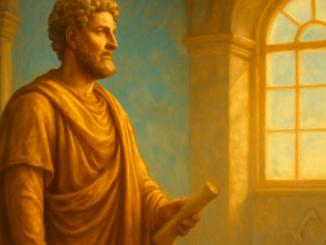
Marcus Aurelius bust symbolizing Stoic gratitude and Masonic wisdom
Marcus Aurelius – Freemasonry & Connection

Marcus Aurelius on Gratitude: Lessons for Freemasons

Picture a Roman emperor who, in the midst of wars and the weight of governing an empire, sits down to write about what he learned from his grandfather, his mother, his teachers — even people he only met in passing. Marcus Aurelius does not open his Meditations with pride in his own accomplishments. He opens with gratitude. That first book is a practical lesson that remains strikingly relevant today, especially for anyone seeking connection and personal growth. For Freemasons, it offers a familiar mirror: who have your teachers been, and how do you carry their wisdom forward? The Power of Recognition In Book I of his Meditations, Marcus Aurelius names a series of people individually. His great-grandfather taught him the value of a good education. From his mother, he received simplicity and a distaste for extravagance. His philosophy tutor Rusticus introduced him to Stoicism. Each person transmitted a specific virtue. This is not vague sentimentality — it is a concrete inventory of what he received from others. This practice of deliberate recognition is something anyone can apply immediately. Take a moment and ask yourself: who shaped you? Perhaps a grandfather who modeled patience, a colleague who lived with integrity, or […]

Open book with garden imagery symbolizing Voltaire's Candide and Freemasonry
Symbolism & Rituals

Voltaire’s Candide and Freemasonry: Finding Connection in Chaos

You probably know the feeling. Someone tells you that everything happens for a reason, that life has meaning, that we live in the best of all possible worlds. And something doesn’t sit right. Because you’ve also seen the suffering, the randomness, the misfortune that strikes people without cause. This exact tension lies at the heart of Voltaire’s masterpiece Candide. And hidden within that tension is a surprising connection to the values of Freemasonry. The Illusion of the Best Possible World Voltaire wrote Candide in 1759 as a satirical attack on the philosophical optimism of Gottfried Wilhelm Leibniz. The story’s hero, Candide, grows up under the tutelage of Professor Pangloss, who insists that we live in the best of all possible worlds. Every misfortune, every disaster serves a purpose. Everything is ultimately good. But Voltaire then drags Candide through an unrelenting chain of catastrophes — earthquakes, war, slavery, betrayal. The naïve hero gradually loses faith in Pangloss’s doctrine. Not through philosophical arguments, but through raw, concrete experience. By witnessing what human beings are capable of doing to one another. What Seekers of Truth Can Learn from Candide The first lesson from Candide is confrontingly simple: do not blindly trust systems. This […]

Ancient Greek temple columns symbolizing Socratic philosophy and Freemasonry
Plato – Freemasonry & Connection

Socrates’ Apology and Freemasonry: Two Paths to Truth

When a philosopher stood before his judges in 399 BC and chose death over abandoning his pursuit of truth, he touched something universal. Plato’s account of Socrates’ Apology is far more than the record of a trial. It is a manifesto on the value of self-examination, the courage to swim against the current, and an unwavering commitment to inner truth. For anyone familiar with the Masonic tradition, these themes strike a remarkably familiar chord. Both paths — that of Socrates and that of Freemasonry — lead toward the same destination: a person who knows themselves and lives accordingly. The Philosopher Before His Accusers In the Apology, Socrates defends himself against charges of impiety and corrupting the youth of Athens. His defense is no plea for mercy — it is a powerful articulation of his life’s mission. He explains that the Oracle at Delphi declared him the wisest of all people, not because he knew everything, but because he alone recognized the extent of his own ignorance. This paradox lies at the very heart of his philosophy: true wisdom begins with the awareness of how little one actually knows. To an outsider, this may seem bewildering. Why would anyone dedicate their […]

Open Bible beside Masonic square and compasses symbolizing leadership
Christianity

1 Timothy and Freemasonry: Two Views on True Leadership

When the Apostle Paul wrote his first letter to the young Timothy around 65 AD, he did something that Freemasons centuries later would instantly recognize: he laid down guidelines for shaping worthy leaders within a community. These two worlds, separated by nearly two millennia, share a remarkably similar outlook on character, responsibility, and the art of serving others. In this article, we place the New Testament epistle alongside the Masonic tradition and explore what both perspectives can teach us about the true nature of leadership. The Letter to Timothy: A Handbook for Community Leaders The First Letter to Timothy belongs to what biblical scholars call the Pastoral Epistles. Paul writes to his pupil Timothy, who has been entrusted with leading the young Christian congregation in Ephesus. The letter contains practical instructions on how a community should be organized and — perhaps more importantly — what qualities its leaders must possess. For the Christian tradition, this is a foundational document on spiritual leadership. At the heart of the letter is a call to blameless conduct. Paul describes how overseers and deacons must be temperate, hospitable, skilled in teaching, and free from the love of money. The point is never about status […]

Open book of Montaigne's Essays beside Masonic square and compasses
Michel de Montaigne – Freemasonry & Connection

Montaigne on Good and Evil: A Masonic Perspective

Two people witness the same event. One sees a disaster; the other sees an opportunity. Michel de Montaigne wrote about this very phenomenon in the sixteenth century, arguing that our perception of good and evil depends not on the facts themselves but on the opinions we hold about them. This idea touches on a fundamental question that also lies at the heart of Freemasonry: how do we arrive at moral judgment? And what connects the reflections of this French essayist to the search for light that Brethren have pursued for centuries? The World Through Montaigne’s Eyes Michel de Montaigne, the sixteenth-century French philosopher and writer, opens his essay with a simple but profound thesis: nothing is inherently good or evil. It is our mind that assigns value to the things around us. Banishment, which one person experiences as punishment, is embraced by another as liberation. Poverty drives some to despair, while others find genuine freedom in a life without possessions. Montaigne drew heavily on the Stoic tradition, particularly the works of Epictetus and Seneca. But he went further than his predecessors by weaving this philosophy into personal experience and concrete examples from his own time. His approach was never abstract […]

Ancient Stoic philosophy scroll beside Masonic square and compasses symbols
Marcus Aurelius – Meditations

Marcus Aurelius and His Teachers: Philosophical Roots

In the first book of his Meditations, Marcus Aurelius compiles a remarkable list of people to whom he owes a debt of gratitude. Far from being a mere personal tribute, this catalogue reveals the foundations of a philosophical tradition that elevates learning from others to the status of a core virtue. For the Freemason, this resonates deeply: the relationship between master and apprentice lies at the very heart of the lodge, embodied in rituals and symbols that transcend generations. How do these two worlds relate to each other, and what can we learn from their shared emphasis on intellectual and moral formation? The Stoic Tradition of Grateful Reflection Marcus Aurelius never wrote his Meditations for publication. They were personal exercises in self-reflection. Yet the first book is strikingly public in nature: it reads as a catalogue of virtues he learned from specific people in his life. This practice is rooted in Stoic philosophy, particularly in the teachings of Epictetus, whose Discourses Marcus studied as a young man. Epictetus taught that wisdom does not come from books alone but from the living examples around us. A philosopher who forgets his teachers forgets himself. The Stoics distinguished themselves from other Greek schools […]

Open book showing Voltaire's Candide with Masonic square and compasses
Symbolism & Rituals

Voltaire’s Candide and Freemasonry: Building a Better World

When Voltaire published his famous satirical novel Candide in 1759, he took aim at one of the most influential philosophical propositions of his era: Gottfried Wilhelm Leibniz’s optimism — the claim that we live in “the best of all possible worlds.” Voltaire dismantled this idea with relentless wit. But what drove him to this attack? And how does his critical thinking relate to the symbolism and values cherished by Freemasonry? This article places Candide in its intellectual context and compares two fundamentally different ways of looking at the world. Leibniz’s Optimism: A World of Divine Perfection To understand Voltaire’s satire, we first need to know its target. Gottfried Wilhelm Leibniz (1646–1716), the German philosopher and mathematician, developed a theodicy designed to explain the existence of evil in a world created by God. His answer was elegant but controversial: God, being omniscient and wholly good, had necessarily created the best of all possible worlds. Every evil we perceive, Leibniz argued, serves a higher purpose within the cosmic whole. This philosophy resonated widely in eighteenth-century Europe. It offered comfort to those struggling with suffering and injustice. In Candide, the tutor Pangloss embodies this optimism in its most caricatured form. He insists that […]

Hourglass in a Masonic lodge symbolizing Seneca's philosophy of time
Lucius Annaeus Seneca – Letters to Lucilius

Seneca’s First Letter: The Philosophy of Time in Freemasonry

A candle flickers in the early morning as a Freemason opens his journal. Before him lies a translation of Seneca’s letters, turned to the very first one. He reads words written nearly two thousand years ago and feels an uncanny recognition: time slipping away unnoticed, the urgent need to claim every moment. In the stillness of the lodge, where the hourglass stands prominently displayed, these ancient words take on an unexpected immediacy. The Stoic Roots of Time Awareness Lucius Annaeus Seneca wrote his first letter to Lucilius around 63 AD, during a period when he was withdrawing from political life at the court of Emperor Nero. That this letter on the use of time opens his entire correspondence is no accident. Seneca immediately lays the foundation of Stoic philosophy as a way of life: the realization that time is our only true possession, and simultaneously our most vulnerable one. The Stoic school, founded by Zeno of Citium around 300 BC, regarded time as an ethical category. Where other philosophical traditions focused on knowledge or happiness as the highest good, the Stoics saw virtuous action in the here and now as the essence of a life well lived. Seneca inherits this […]

Open Bible at 2 Thessalonians with Masonic square and compasses in soft light
Christianity

2 Thessalonians and the Masonic Light of Perseverance

What does it mean to stand firm when everything around you seems to shift and tremble? The Second Epistle to the Thessalonians — a brief but powerful text from the New Testament — poses this question with striking urgency. Written to a young Christian community grappling with confusion and doubt, the letter offers a timeless meditation on perseverance, labor, and the strength found in brotherly bonds. For the Freemason, accustomed to symbolic language and moral reflection, this ancient text opens surprisingly resonant perspectives. A Letter Born from Uncertainty The paradox at the heart of 2 Thessalonians lies in its origin: a community so fervently convinced of imminent salvation that it was in danger of neglecting the present. Some had abandoned their work, certain that the end of days was upon them. Others had been thrown into confusion by false messages and counterfeit letters. The epistle, traditionally attributed to the Apostle Paul, calls for reflection — not by denying the vision of hope, but by reminding its readers of their duty to the here and now. This tension between future expectation and daily responsibility touches on a universal human theme. How often do we lose ourselves in dreams of what is […]

Ancient Greek temple columns symbolizing Plato's philosophy and Masonic self-knowledge
Plato – Philosophical Background

Plato’s Apology: The Philosophical Roots of Self-Knowledge

There is a paradox at the very heart of Western philosophy: the wisest man in Athens claimed to know nothing. When Socrates stood before the court, he was not so much defending his life as defending a way of life. The Apology that Plato recorded is far more than a legal document — it is a philosophical manifesto whose influence has echoed through the centuries, from the Stoics to Freemasonry. The question it raises still lingers: what does it truly mean to know yourself? The Legacy of Delphi Above the entrance to the Temple of Apollo at Delphi stood the famous inscription: “Know Thyself.” This oracle would become the starting point for Socrates’ entire philosophical quest. When his friend Chaerephon asked the oracle whether anyone was wiser than Socrates, the priestess answered that no one was. This response presented Socrates with a riddle that would define the rest of his life. How could he be the wisest man when he was so acutely aware of his own ignorance? The Apology shows how Socrates resolved this apparent contradiction. By questioning politicians, poets, and craftsmen, he discovered that they believed they knew things they did not actually know. His own wisdom, he […]

Open book with Montaigne essays beside Masonic rough ashlar and square symbol
Michel de Montaigne – Philosophical Background

Montaigne on Good and Evil: Philosophical Roots of Essay 14

Imagine waking up tomorrow under exactly the same circumstances as yesterday, yet suddenly feeling happier. Nothing in the outside world has changed — only the way you look at it. This simple thought experiment strikes at the heart of what Michel de Montaigne explores in his fourteenth essay. But where did this sixteenth-century thinker draw his ideas from? The philosophical sources he tapped into turn out to be remarkably relevant today, shedding light on how Freemasons, too, think about moral truth and personal perception. The Stoic Legacy in Montaigne’s Thought When you read Montaigne’s essay, you immediately taste the influence of Stoic philosophy. Thinkers like Seneca, Epictetus, and Marcus Aurelius shared a central conviction: it is not events themselves that determine our well-being, but our judgments about those events. Montaigne, who frequently quoted and admired Seneca, adopted this starting point and gave it his own distinctive twist. He observed how people experienced the same adversity in completely different ways, depending on their inner disposition. The Stoics drew a clear line between what lies within our control and what does not. You cannot command the weather, but you can choose how you respond to it. Montaigne applied this principle to the […]

Ancient Roman bust of Marcus Aurelius symbolizing Stoic wisdom and gratitude
Marcus Aurelius – Content & Summary

Marcus Aurelius Book I: Gratitude to Teachers and Mentors

Why would a Roman emperor — the most powerful man in the known world — begin his private journal with a long list of everything he owes to other people? Book I of the Meditations of Marcus Aurelius reads as an extended letter of gratitude to family, teachers, and friends. This is not false modesty or diplomatic courtesy. It is a deliberate philosophical choice. And in that choice, an ancient vision of personal growth unfolds that remains remarkably relevant today: we are shaped by those who came before us. What Makes Book I So Remarkable? Unlike the remaining eleven books of the Meditations, which are filled with self-reflection and philosophical reasoning, Book I consists almost entirely of acknowledgments. Marcus Aurelius names seventeen individuals — from his grandfather to his philosophy tutors — and describes precisely which virtue or life lesson he learned from each one. This is no superficial politeness. It is a systematic accounting of moral debts. Why would a powerful ruler do this? The answer lies in the Stoic philosophy Marcus practiced. For the Stoics, wisdom is never a solo achievement. It is the result of a chain of transmission. Every master stands on the shoulders of those […]

Masonic lodge illuminated by candlelight symbolizing watchfulness and light
Christianity

1 Thessalonians: Watching in the Light as a Fraternal Duty

There is a remarkable tension at the heart of Paul’s First Letter to the Thessalonians: he calls for vigilance as though the end is near, yet simultaneously urges the patient building of a loving community. How can urgency and patience coexist? This paradox lies at the core of a text that proves surprisingly relevant for anyone reflecting on moral growth and brotherhood — including those who walk the Masonic path. The Paradox of the Watchful Builder Paul wrote this letter around 50 AD to a young community in Thessalonica, a port city in northern Greece. It is the oldest known text in the New Testament — older even than the Gospels. What stands out immediately is the dual message: on the one hand, Paul expects the end of days to arrive soon; on the other, he offers detailed instructions for daily life. Work with your hands. Encourage the fainthearted. Be patient with everyone. At first glance, this seems contradictory. Why invest in relationships and craftsmanship if everything is about to end? And yet, there is a deeper truth hidden in this tension. The attitude of watchfulness does not replace the work of community building — it intensifies it. Those who […]

Open book showing Voltaire's Candide with garden and Enlightenment imagery
Symbolism & Rituals

Voltaire’s Candide: The Best of All Worlds as a Mirror

Can a world filled with earthquakes, wars, and relentless human suffering truly be the best that God could have created? Voltaire posed this question with biting wit in his masterwork Candide, a satirical novella that has confronted readers since 1759 with the dangerous limits of naive optimism. This analysis explores the core ideas behind the story and why this eighteenth-century work continues to resonate with anyone searching for genuine meaning without self-deception. The Paradox of Optimism Voltaire wrote Candide as a direct attack on the philosophical optimism of Gottfried Wilhelm Leibniz, who argued that our world — despite all its misery — is the best of all possible worlds. On the surface, this sounds comforting. But Voltaire saw something dangerous lurking beneath: a complacency that kills initiative. If everything is already perfectly arranged by divine providence, why would anyone bother striving for improvement? The paradox Voltaire exposes is deeply unsettling: a philosophy designed to offer hope can easily become an excuse for passivity and moral blindness. In the story, the character Pangloss embodies this optimism in its most absurd form. As tutor to the naive young hero Candide, Pangloss insists that every misfortune ultimately serves the greater good — even […]

Ancient scroll symbolizing Seneca's letters on the value of time
Lucius Annaeus Seneca – Content & Summary

Seneca’s First Letter: On the Use of Time – A Summary

What does it truly mean to possess time? Lucius Annaeus Seneca opens his famous correspondence with Lucilius with a paradox that still strikes an uncomfortable chord today: we are exceedingly careful with our money and possessions, yet we squander our time as though it were infinite. This first letter, written in the first century AD, confronts the reader with a sobering truth about how we live — and how we might choose to live instead. Time as Our Only True Possession In this opening letter, Seneca poses a simple but deeply unsettling question: if time is the only thing we truly possess, why do we treat it as though it were the least valuable? The philosopher observes how people carefully guard their money, protect their property, and defend their reputations — yet freely give away their hours and days to distraction, procrastination, and meaningless activity. The central theme revolves around what Seneca calls “reclaiming” ourselves. He urges Lucilius to treat each day as a complete life in itself. Not in the sense of rushing to accomplish everything, but with the awareness that every moment that passes unused is gone forever. This is not a call to obsess over productivity — […]