Masonic gavel on a workbench symbolizing the cycle of growth and renewal
Christianity

Judges and the Cycle of Falling and Rising: Symbols of Growth

A hammer rests on the workbench. It is motionless, yet it carries within it the potential for both creation and destruction. In much the same way, the Book of Judges lies before us — a collection of stories about leaders who rise and vanish, about a people who fail and recover, fail and recover again. What does this ancient text tell us about the human soul? And how does the symbolism of this seventh book of the Old Testament mirror the path that every Freemason walks? The Cycle as an Archetypal Pattern The Book of Judges does not describe a linear history — it traces a spiral. The people turn away from their path, fall into oppression, cry out for help, and a leader emerges to deliver them. After a period of peace, the cycle begins anew. This pattern repeats itself twelve times, like a mantra carved into the very fabric of the text. For the Freemason, this cycle is deeply familiar. The rough ashlar is not shaped into a perfect cube in a single stroke. It is a process of failure and correction, of straying and returning to center. The cycle in Judges is not a sign of weakness […]
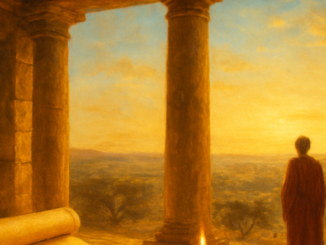
Symbolic river crossing representing Masonic thresholds and spiritual growth
Christianity

The Book of Joshua: Crossing Thresholds as a Symbol of Growth

There are moments in life when you stand before a boundary you have never crossed. It might be a river, a doorway, or simply a decision that will change everything. The Book of Joshua in the Old Testament describes exactly such a moment: the people of Israel stand on the banks of the Jordan, ready to enter the Promised Land. But beneath this narrative of conquest and settlement lies a deeper layer of symbolism that still resonates more than three thousand years later. For Freemasons, this sixth book of the Hebrew Bible contains strikingly familiar themes about thresholds, courage, and the ongoing journey toward inner growth. The River as a Symbol of Transition The Jordan is no ordinary river in the story of Joshua. It serves as the dividing line between wilderness and fertile land, between wandering and arrival. Crossing it marks an irreversible change — there is no going back. The image of a river as a threshold appears across countless spiritual traditions. Water represents purification, but also the unknown — something fluid that has not yet taken solid form. In Freemasonry, the threshold plays an equally significant role. Entering the lodge is not merely stepping through a doorway. […]

Symbolic light illuminating Masonic and Gnostic spiritual traditions
Spiritual Traditions

What Connects Freemasonry and Gnosis? Exploring Inner Knowledge

When we explore the connection between Freemasonry and Gnostic traditions, we step into territory where ancient questions come alive once more. What does it truly mean to know? And how does knowing differ from believing? These are questions that searching minds have been asking since the early centuries of the Common Era — and they still echo through the lodges of today. The relationship between these two traditions runs deeper than most people realize, and it has something genuinely valuable to offer us in the present moment. Why Do People Compare Freemasonry with Gnostic Thought? It’s a fair question to start with, and the comparison doesn’t arise by accident. Both traditions emphasize that outward forms are merely carriers of deeper meaning. A Gnostic from antiquity would say that the material world is a veil behind which a higher reality is hidden. A Freemason speaks of symbols that only reveal their secrets when the gaze turns inward. In both cases, the personal inner journey stands at the center — not the blind acceptance of dogma. Yet the resemblance is subtler than it first appears. Gnosis, the Greek word for “knowledge,” refers to a direct, experiential form of knowing. It isn’t about […]

Vrijmetselarij - Freemasonry and Religion – A Bridge, Not a Wall
Spiritual Traditions

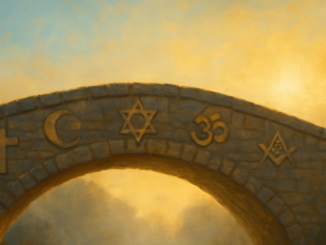
Freemasonry and Religion – A Bridge, Not a Wall

In a world where religion often draws dividing lines, Freemasonry offers something rare: a space where differences are not obstacles but invitations to dialogue. Freemasonry is not a religion. Nor is it a counter-movement. It is a centuries-old brotherhood where people — believers and non-believers alike — come together to work on themselves, their values, and their contribution to the world. This naturally raises questions. If Freemasonry isn’t a religion, why does spiritual symbolism play such a central role? And how can a community that prescribes no particular belief still be so profoundly meaningful and morally grounded? Let’s take a closer look at the unique relationship between Freemasonry and religion — and what it means for your personal development and ethical growth. No Dogma, But Genuine Depth Freemasonry makes no demands on your faith. Whether you are Christian, Muslim, Jewish, Hindu, humanist, or agnostic — as long as you believe in something greater than yourself, you are welcome. That “higher power” doesn’t need a name. What matters is that you recognize that humanity is not the center of everything, but part of a larger whole. There is no theological debate, no creed to recite, no prescribed path. Instead, Freemasonry offers […]

Buddhist meditation and Masonic symbols representing spiritual harmony
Religion

Buddhism and Freemasonry: A Shared Path to Inner Peace

Buddhism, with its emphasis on meditation and enlightenment, has steadily grown in popularity across the Western world. At the same time, Freemasonry continues to offer a unique framework for spiritual growth and self-discovery. While these two traditions differ significantly in origin, they share a remarkable devotion to introspection, ethical living, and personal development. For those drawn to both paths, the intersections between Buddhism and Freemasonry reveal a rich landscape of shared wisdom. Buddhism: The Way of Meditation and Wisdom Buddhism is more than a religion — it is a philosophy and way of life that encourages individuals to understand and transcend suffering. At its core lie foundational teachings such as the Eightfold Path, the Four Noble Truths, and the disciplined practice of meditation. These principles guide practitioners toward clarity, compassion, and ultimately, enlightenment. Buddhist temples and meditation centers around the world serve as sanctuaries for reflection and spiritual growth. The serene images of the Buddha, the fragrance of incense, and the resonant tones of singing bowls create environments that foster harmony and inner balance. For many seekers, Buddhism offers a practical, experience-based approach to understanding the mind and finding peace. Freemasonry: A Universal Spiritual Journey Freemasonry offers a symbolic path […]

Islamic geometric patterns alongside Masonic symbols representing shared spirituality
Religion

Islam and Freemasonry in the Netherlands: Ritual & Spirit

The Netherlands is a mosaic of cultures and religions, and Islam plays a prominent role in this diverse landscape. With over one million Muslims, the faith is deeply woven into Dutch society. At the same time, Freemasonry offers a non-dogmatic space for spiritual growth and moral reflection. How do these two traditions complement each other, and what can they learn from one another? Islam: A Way of Life Rich in Ritual Islam is far more than a religion — it is a complete way of life. Built on the Five Pillars — the declaration of faith, prayer, charity, fasting, and pilgrimage — Islam provides its followers with structure, purpose, and direction. The daily prayers (salat) and the annual observance of Ramadan instill discipline and deep devotion to God. Mosques serve as centers of both community and worship, spaces where spirituality and human connection come together. They are often adorned with intricate geometric patterns and calligraphy that are not merely beautiful but carry profound symbolic meaning — pointing toward the infinite nature of the divine. Freemasonry: A Space for Universal Truths While Freemasonry is not a religion, it shares notable parallels with spiritual traditions like Islam. Freemasons use rituals and symbolism […]