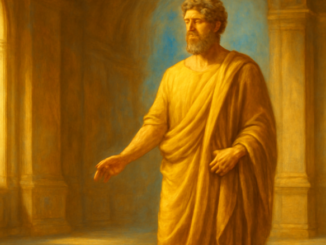
Marcus Aurelius on Death and Immortality: Philosophical Roots
Perhaps you’ve found yourself lying awake at night, trying to make peace with the fact that everything is temporary. Not as some abstract philosophical puzzle, but as something deeply personal — something that unsettles you. In Book IX of his Meditations, Marcus Aurelius wrestles with exactly these questions. As a Roman emperor who faced war, plague, and loss on a daily basis, he turned to ancient philosophical traditions for solace. What he found still resonates today, and touches on something that Freemasons will recognize in their own rituals around mortality and what lies beyond. The Stoic Legacy: Death as a Natural Process To understand what Marcus Aurelius writes about death and immortality, you first need to understand the tradition he inherited. Stoic philosophy, founded by Zeno of Citium around 300 BCE, formed the bedrock of his thinking. For the Stoics, death was not an enemy to be feared but a natural part of the cosmic order. Everything that comes into being eventually passes away — not as punishment, but as part of a greater whole they called the logos: the rational structure that pervades the entire universe. Marcus Aurelius drew directly from the teachings of Epictetus, the freed slave whose […]