Vrijmetselarij - Vrijmetselarij en filosofie: ontdek hoe denken en handelen samenkomen
Philosophy & Ethics

Freemasonry and Philosophy: Where Thought Meets Action

Philosophy might conjure images of dusty lecture halls, dense textbooks, or endless debates about the nature of existence. But within Freemasonry, philosophy takes on an entirely different character. It’s not abstract theorizing — it’s a living, practical way of engaging with the world. Freemasonry and philosophy walk hand in hand, forming a powerful path toward personal growth and deeper meaning. What Role Does Philosophy Play in Freemasonry? Philosophy in Freemasonry isn’t a standalone academic exercise. It’s woven into the very fabric of the craft’s ritual and symbolic system. Every degree, every ceremony, and every symbol is steeped in philosophical insight. The goal isn’t to promote a single school of thought, but to cultivate a way of life rooted in reflection, openness, and ethical awareness. Freemasonry invites you to live philosophically — to search for meaning, to embrace doubt, and to ask questions that go beyond the surface. Most importantly, it challenges you not only to think about your answers but to embody them in the way you act and treat others. Inspired by Great Thinkers Throughout the centuries, Freemasonry has drawn inspiration from some of history’s most influential philosophical traditions. Here are a few that have left a lasting mark […]

Vrijmetselarij - Vrijmetselarij en Zelfontwikkeling – Groeien naar de Beste Versie van Jezelf
Personal Development & Leadership

Freemasonry and Self-Development: Becoming Your Best Self

Freemasonry carries an air of mystery for many people. Some imagine secret rituals behind closed doors; others picture an exclusive, impenetrable society. But anyone who looks beneath the surface discovers something quite different: a practical, time-tested path for personal growth. Freemasonry and self-development are, in fact, inseparable — not as theory or dogma, but as a living practice of self-knowledge, reflection, and purposeful action. So what makes Freemasonry such a unique wellspring of self-development? In this in-depth guide, you’ll discover how this centuries-old tradition helps you bring out the best in yourself — and why that may matter more today than ever before. Self-Development: The Backbone of Freemasonry Self-development isn’t a luxury — it’s a necessity. In a world saturated with distraction, superficiality, and relentless pace, Freemasonry offers a powerful alternative. It’s a space where you’re encouraged to pause, reflect on your life, examine your behavior honestly, and take deliberate steps toward inner growth. In Freemasonry, everything revolves around who you truly are — not what you own or what title you hold. Whether you’re a CEO or a carpenter, an academic or an artist, only one question really matters: are you willing to work on yourself? Working the Rough […]

Skull and hourglass as Masonic memento mori symbols on a dark background
Content & Summary

Montaigne on Feelings That Reach Beyond Ourselves

In the sixteenth century, a French nobleman wrote an essay that still challenges the way we think about death, fame, and the memory we leave behind. Michel de Montaigne explored, in the third essay of his first book, how human emotions stretch toward times and places we will never experience. Centuries later, his questions still resonate — perhaps nowhere more deeply than in the symbolic world of Freemasonry, where mortality and eternity stand as central themes of reflection and ritual. The Core Idea of the Essay Montaigne opens with a deceptively simple observation: we concern ourselves with matters that lie far beyond our own existence. We worry about our reputation after death, about what will happen to our bodies, about the memory we leave behind. But can we truly feel anything about events that take place when we no longer exist? This is the central paradox Montaigne investigates. He argues that our emotions extend into domains our consciousness can never reach — and he wonders whether this makes any sense at all. Historical Examples as Mirrors As is typical of his essays, Montaigne draws liberally from classical antiquity. He cites Roman generals and Greek philosophers who were intensely preoccupied with […]

A single tear drop symbolizing grief, vulnerability, and Masonic brotherhood
Freemasonry & Connection

The Tear as Symbol: Montaigne, Grief, and Brotherhood

A tear falls. A single droplet of moisture sliding down a cheek. In everyday life, we might look past it quickly, or avert our gaze out of respect for someone else’s sorrow. But what if we truly considered this tear? What if we paused, as sixteenth-century philosopher Michel de Montaigne did in his essay “Of Sadness,” to reflect on what this small gesture reveals about our humanity and our connection to others? The Tear as a Language Beyond Words In his essay, Montaigne describes how the most intense emotions are sometimes too vast for words. The deepest grief, he observes, exceeds our ability to express it. When sorrow overwhelms us, the body takes over: we weep, we fall silent, we tremble. The tear then becomes more than a physical reaction — it becomes a symbol of everything that language cannot contain. Freemasonry holds a deep understanding of this language beyond words. Rituals, symbols, and gestures carry meanings that the intellect alone cannot fully grasp. Just as the tear speaks where the voice fails, so too do the working tools of the Freemason speak of truths that resist neat definitions. The square does not merely measure angles; it also measures the […]

Ancient temple illuminated by light symbolizing Isaiah and Freemasonry
Christianity

Isaiah and Freemasonry: Prophetic Images of Light and Building

Somewhere around 740 BCE, in the kingdom of Judah, a voice rose — not from a man who had chosen the role of prophet, but from one who had been called to it. In a vision filled with smoke and seraphim, he glimpsed something his contemporaries could not yet grasp: a future in which light would drive out darkness and a broken people would rise again as builders of a new age. The images woven through the Book of Isaiah continue to resonate millennia later, and their echoes are remarkably vivid in the symbolic language of Freemasonry. A Calling in the Temple The sixth chapter of Isaiah contains one of the most striking calling visions in all of biblical literature. The prophet finds himself in the temple when he sees a throne surrounded by six-winged beings. One of the seraphim touches a burning coal to his lips, purifying him of unrighteousness. This moment of transformation — from the impure to the pure — lies at the heart of everything Isaiah will go on to proclaim. For Freemasons, this theme feels deeply familiar. The candidate who enters the lodge undergoes a symbolic purification of his own. He leaves the profane world […]

Open book with Montaigne's Essays beside Masonic square and compasses in soft light
Michel de Montaigne – The Essays

Montaigne on Grief: Philosophical Roots and Masonic Symbolism

There comes a moment when words fail. A moment when the soul is so overwhelmed by sorrow that it freezes, falls silent, or erupts in a flood no one anticipated. Michel de Montaigne wrote about precisely this in his second essay — a brief but deeply penetrating exploration of the limits of human emotion. Beneath its seemingly simple subject lies a rich philosophical inheritance stretching from the Greek Stoics to Renaissance humanism. And for those accustomed to thinking in symbols, it opens a world of meaning that reaches far beyond the surface of everyday experience. The Silent Voice of the Stoics Montaigne‘s reflections on grief are unthinkable without Stoic philosophy. This school of thought, born in third-century Athens, taught that emotions are the result of the judgments we make about reality. Sorrow does not arise from what happens to us, but from how we interpret it. Seneca, the Roman philosopher whom Montaigne so frequently quotes, wrote extensively about the art of dealing with loss and adversity. He insisted that the wise person does not suppress emotions but learns to understand them. In his essay on sadness, however, Montaigne takes a more nuanced position. He observes that extreme emotions sometimes paralyze […]

Vrijmetselarij - Freemasonry and Ethics – Building Your Best Self
Philosophy & Ethics

Freemasonry and Ethics – Building Your Best Self

In a world increasingly driven by superficiality and snap judgments, many of us long for something deeper. For integrity. For authenticity. For a way to grow — not just in knowledge, but in character. This is where Freemasonry enters the picture: an ancient system that doesn’t just offer philosophical insights, but actively invites you to put them into practice. And nowhere is that invitation more powerful than in the realm of ethics. What Does Ethics Mean in Freemasonry? Ethics in Freemasonry is not a rigid set of rules or dogmas. It functions as a living compass — an inner guide that is continually sharpened through self-reflection, ritual, and fraternal interaction. You don’t learn a standard answer to what is “good.” Instead, you learn to ask yourself the right questions: What are my true intentions? What is my responsibility? How can I contribute to the greater good — in my community, my work, my relationships? Freemasonry invites you to see ethics not as abstract theory, but as something you experience, apply, and develop in your daily life. Ethics Begins with Yourself Freemasons work with a powerful symbol: the rough ashlar. This unworked stone represents your unrefined self — full of potential, […]

A veiled figure in silent grief, symbolizing Montaigne's essay on sadness
Content & Summary

Montaigne on Grief: When Words Fall Short

There comes a moment when grief cuts so deep that it turns to silence. Tears refuse to fall, words catch in the throat, and what remains is a stillness that weighs more than any gesture. Michel de Montaigne explored this phenomenon in his brief but penetrating essay ‘On Sadness,’ the second chapter of his monumental Essays. He poses a question that resonates as powerfully today as it did in the sixteenth century: what happens when emotion exceeds the limits of expression? The Core Idea: Emotion Beyond Expression Montaigne opens his essay with a striking claim: he professes to be hardly susceptible to sadness himself. This is not an attempt at Stoic indifference but rather a runway toward his real subject. What fascinates him are those moments when grief becomes so overwhelming that the body simply cannot express it. Instead of releasing us, the sheer intensity of the emotion paralyzes us. This central insight illuminates a paradox most of us recognize: the most intense feelings sometimes manifest as total silence. A mother who loses her child may appear calm while others weep around her. Only later, when the initial shock begins to subside, do the tears come. Montaigne sees in this […]

Vrijmetselarij - What Is Freemasonry? Core Principles, Symbolism and Purpose
Personal Development & Leadership

What Is Freemasonry? Core Principles, Symbolism and Purpose

Freemasonry is one of the oldest fraternal organizations in the world, yet it remains widely misunderstood. It is not a religion, not a political movement, and certainly not a secret society — but rather a society with secrets. At its heart, Freemasonry brings people together around a shared purpose: personal and moral development. Through symbols, rituals, and allegory, members are given the tools to better understand themselves and find deeper meaning in life. Why Do People Join Freemasonry? In a world saturated with distractions, superficiality, and relentless pressure to perform, more and more people are searching for something deeper — genuine connection and purposeful reflection. Freemasonry offers a space where you can pause, reflect, and learn alongside others who walk the same path. It is not about receiving ready-made answers. Instead, it is about learning to ask better questions — about yourself, your values, and your place in the world. The Three Pillars of Freemasonry Freemasonry rests on three fundamental pillars that guide every member’s journey. These principles shape the experience within the lodge and extend far beyond its walls into everyday life. Brotherly Love Within a lodge, members form a close-knit community built on mutual support, encouragement, and inspiration. […]

A symbolic mirror reflecting multiple faces representing Masonic self-knowledge
Freemasonry & Connection

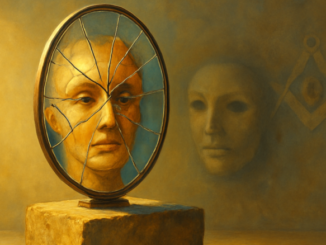
The Mirror with Many Faces: Montaigne and Freemasonry

Imagine a mirror that doesn’t show one reflection, but a hundred. Every time you look, you see a different face — not because the mirror is broken, but because you yourself are constantly changing. This image captures the essence of what sixteenth-century philosopher Michel de Montaigne described in his reflections on the inconsistency of human action. And it is precisely this insight that reveals a striking kinship with the symbolic journey Freemasons undertake in their quest for self-knowledge. The Unstable Ground Beneath Our Feet Montaigne observed something we all recognize but rarely dare to admit: we are not the consistent beings we believe ourselves to be. Yesterday’s hero is today’s coward. The generous hand closes into a fist by morning. This is not a moral failing — it is a fundamental feature of human existence. We do not move in a straight line from birth to death, but in circles, spirals, and sometimes seemingly random patterns. Freemasonry begins from a remarkably similar starting point. The rough ashlar with which every Freemason symbolically begins their journey is not rough because it is flawed. It is rough because it has not yet been worked — because it has not yet become conscious […]

Vrijmetselarij - New Year's Day: The Masonic Symbolism of a Fresh Beginning
Symbolism & Rituals

New Year’s Day: The Masonic Symbolism of a Fresh Beginning

New Year’s Day represents a clean slate — a chance to start over with renewed purpose and hope. It is a day steeped in reflection, aspiration, and deep symbolism. For Freemasons, this annual turning point carries special significance, offering a meaningful opportunity to reflect on the ongoing construction of one’s personal temple: the lifelong pursuit of self-improvement and harmony with the world around us. The Symbolism of Renewal Renewal lies at the very heart of Freemasonry. New Year’s Day symbolizes the great cycle of life — the ever-present opportunity to begin again with fresh eyes and a clear mind. The turning of the calendar invites deep introspection: How have we built upon ourselves over the past year? Which rough edges have we smoothed, and which building blocks do we wish to add in the year ahead? Just as the sun rises after every night, New Year’s Day reminds us that light follows even the darkest challenges. It is a day of hope and a powerful reminder of the eternal cycle of growth and improvement — a cycle that every Mason recognizes in the work of the lodge and in the journey of the soul. Traditions and the Bond of Brotherhood […]

A lit candle symbolizing light, reflection, and Masonic tradition
Symbolism & Rituals

The Candle – Light as a Symbol of Reflection and Connection

There is something timeless and deeply enchanting about a candle. The gentle flicker of its flame draws the eye, quiets the mind, and stirs feelings of peace and introspection. Yet a candle is far more than a simple source of light — it is a profound symbol that has carried meaning across centuries, woven into religion, ritual, and the fabric of everyday life. A Small Flame, A Powerful Symbol The candle represents illumination in every sense of the word. It brightens dark rooms, yes — but it also illuminates the depths of the human soul. Small though it may be, a single candle flame is a powerful beacon, reminding us of the enduring value of simplicity, stillness, and reflection. Throughout history, civilizations have recognized this duality, using the candle as both a practical tool and a vessel of spiritual meaning. The Candle in Ritual and Ceremony Candles play a prominent role in rituals and ceremonies across the world. In religious traditions, they often serve as representations of divine light guiding the faithful along their path. Think of the candles burning steadily in churches, temples, and memorial services — each flame a quiet testament to something greater than ourselves. Within Freemasonry, […]

New Year fireworks symbolizing Masonic reflection and renewal at midnight
Spiritual Traditions

Old & New Year: A Time for Reflection and Renewal

The turning of the year is one of those rare moments that invites us to pause — to look back at the road we’ve traveled and to gaze ahead at the path yet to unfold. New Year’s Eve is more than just the final page of a calendar. It is a deeply personal threshold, a symbolic crossing from what was into what could be. It is a time for honest reflection, for releasing what no longer serves us, and for setting intentions that align with who we truly wish to become. The Deeper Meaning Behind Our Traditions Fireworks lighting up the midnight sky, champagne glasses raised in celebration, the joyful company of loved ones — these familiar rituals give the night its festive character. But beneath the surface of these traditions lies a deeper message. Fireworks remind us that even in the darkest of times, light and energy can break through. Gathering with those we love symbolizes our deep need for connection and our shared wish for happiness. And the countdown itself serves as a powerful reminder that every single second holds within it the potential for a new beginning. Reflection: Shining a Light on the Past Year The end […]

Desert wilderness path symbolizing the spiritual journey in Freemasonry
Religion

Numbers: The Spiritual Journey Through the Wilderness

The Book of Numbers from the Old Testament tells the story of the Israelites’ journey through the wilderness on their way to the Promised Land. Rich in symbolism, this ancient text offers profound lessons on leadership, trust, and perseverance. For Freemasons, Numbers serves as a powerful metaphor for the spiritual journey we all undertake — from darkness and ignorance toward light and enlightenment. In this article, we explore how this biblical book can inspire us on our own Masonic path. What Is the Book of Numbers? Numbers is the fourth book of the Bible and chronicles the forty-year journey of the Israelites through the desert wilderness. It documents the challenges, conflicts, and miracles that occurred along the way. The book’s English name derives from the two censuses — or “numberings” — of the people that it records. However, the central theme runs far deeper than mere counting: it is a story of growth through trial, of a people being shaped and refined by their experiences in an unforgiving landscape. The Wilderness as a Test of Faith The wilderness journey symbolizes a period of profound transformation and self-discovery. In Masonic thought, the desert represents the inner quest for truth — that […]

Open Bible showing the Book of Leviticus with Masonic symbolism
Spiritual Traditions

Leviticus: A Moral Guide for Spiritual Purification

The Book of Leviticus, the third book of the Old Testament, stands as one of the most complex and symbolically rich texts in the Bible. Focused on rituals, laws, and offerings designed to promote a holy way of life, Leviticus holds a particular fascination for Freemasons. Its themes of discipline, dedication, and purification resonate deeply with the Masonic journey toward spiritual enlightenment. In this article, we explore how Leviticus can inspire personal and moral growth — not just as a religious text, but as a timeless guide for those walking the path of self-improvement. What Is the Book of Leviticus? Leviticus is the third book of the Bible and contains the rules and ordinances that Moses conveyed to the Israelites. At first glance, many of these laws appear strictly ritualistic or culturally specific to the ancient world. Yet beneath the surface, they carry universal lessons about purity, devotion, and justice — themes that transcend time and culture. For the thoughtful reader, and especially for Freemasons, Leviticus offers far more than a historical code of conduct; it provides a framework for understanding the relationship between outward discipline and inward transformation. Holiness and Purification One of the central themes running through Leviticus […]

Open Volume of the Sacred Law displaying Genesis in a Masonic lodge setting
Religion

Genesis and Freemasonry: The Deep Symbolism of the Beginning

A candle flickers. A man sits alone in a dimly lit room, a heavy book open on his lap. His eyes trace the very first lines of the Old Testament — words he has read dozens of times before. Yet tonight, they feel as though they are speaking to him for the first time. Not as an ancient story about the origin of the world, but as a mirror posing a single, penetrating question: where does your creation begin? It is a question that has echoed through Masonic lodges for centuries — not as a theological puzzle, but as an invitation to self-examination. The Book of Genesis is one of the most widely read texts in human history, revered across diverse faith traditions. But what makes this creation narrative so particularly meaningful to the Freemason? The answer lies in its imagery. Genesis speaks in symbols that resonate directly with Masonic philosophy: the passage from darkness to light, from chaos to order, from unconscious existence to a life lived with awareness and intention. Becoming: Every Beginning as a Threshold Experience The word Genesis derives from the Greek for “becoming” or “origin.” That alone is telling. In Freemasonry, the concept of a […]

Ancient open book with symbolic garden imagery representing Masonic wisdom
Christianity

Song of Solomon & Symbolism: Love, Wisdom, and Freemasonry

Why would a Freemason spend time studying an ancient love poem from the Bible? The Song of Solomon contains no moral law, no historical narrative, no prophecy. It is pure poetry — brimming with longing, beauty, and mysterious imagery. And yet, hidden within that imagery are symbols that touch the very heart of Freemasonry. Let’s explore this remarkable book and the surprising connections it holds for the Craft. What Is the Song of Solomon? The Song of Solomon — sometimes called the Song of Songs or Canticles — is the twenty-second book of the Old Testament. It consists of lyrical dialogues between a bridegroom and a bride, interspersed with choruses and interludes. On the surface, it reads as a collection of love poems filled with sensory descriptions: the fragrance of myrrh, the taste of wine, the sight of blossoming vineyards. But is that really all there is? For centuries, scholars and theologians have searched for deeper layers beneath the poetic language. In the Jewish tradition, it was read as an allegory for the relationship between the Eternal and His people. In Christian circles, the bride was seen as the Church, the soul, or humanity itself seeking union with the Divine. […]

Open book of Ecclesiastes with Masonic symbols representing wisdom and light
Christianity

Ecclesiastes and Freemasonry: Wisdom in the Face of Impermanence

You probably know the feeling. You work hard toward a goal, finally reach it, and then find yourself wondering: was that really it? That quiet doubt, that subtle emptiness after an achievement — it has been described for thousands of years. The Book of Ecclesiastes confronts you with exactly this experience. And surprisingly, this ancient wisdom text touches on something that has occupied Freemasons for centuries: the question of what truly matters in a life defined by impermanence. An Ancient Voice That Still Resonates Ecclesiastes stands apart within the Old Testament. Where other books offer direction and certainty, Ecclesiastes asks questions. The author, who presents himself as a wise teacher, examines what life really means. He tries everything — wealth, pleasure, labor, knowledge. And each time, he arrives at the same conclusion: all is vanity, or as the Hebrew puts it, hevel. The word literally means vapor, breath — something that vanishes the moment you try to grasp it. Consider how radical that message was in an era when success and prosperity were seen as signs of divine favor. The Preacher dares to say aloud that the wise man dies just like the fool. That your efforts may disappear without […]

Symbols of Freemasonry and New Age spirituality representing universal connection
Religion

New Spirituality and Freemasonry: A Path to Universal Connection

Individual spirituality is gaining momentum across the modern world. New spiritual movements — often grouped under the umbrella of New Age — offer flexible and deeply personal approaches to finding meaning and purpose. But how do these contemporary spiritual currents relate to Freemasonry, a tradition that similarly emphasizes freedom, growth, and self-discovery? New Spiritual Movements: The Quest for Personal Meaning New spiritual movements are inherently eclectic. They blend elements from Eastern philosophies, Western psychology, and traditional religions into personalized frameworks for understanding the self and the world. Meditation, yoga, crystal healing, astrology, and energy work are just a few of the practices that have gained widespread popularity within these movements. A defining characteristic of these spiritual currents is their emphasis on personal development. Rather than following prescribed dogmas, practitioners forge their own path toward enlightenment and self-knowledge. This freedom of choice resonates with a growing number of seekers who feel confined by more rigid religious structures. Freemasonry: A Traditional Yet Flexible Approach Freemasonry shares with new spiritual movements a deep commitment to personal growth and introspection. While the Craft works with centuries-old rituals and rich symbolism, it also allows ample room for individual interpretation. Much like New Age practices, the […]

Buddhist meditation and Masonic symbols representing spiritual harmony
Religion

Buddhism and Freemasonry: A Shared Path to Inner Peace

Buddhism, with its emphasis on meditation and enlightenment, has steadily grown in popularity across the Western world. At the same time, Freemasonry continues to offer a unique framework for spiritual growth and self-discovery. While these two traditions differ significantly in origin, they share a remarkable devotion to introspection, ethical living, and personal development. For those drawn to both paths, the intersections between Buddhism and Freemasonry reveal a rich landscape of shared wisdom. Buddhism: The Way of Meditation and Wisdom Buddhism is more than a religion — it is a philosophy and way of life that encourages individuals to understand and transcend suffering. At its core lie foundational teachings such as the Eightfold Path, the Four Noble Truths, and the disciplined practice of meditation. These principles guide practitioners toward clarity, compassion, and ultimately, enlightenment. Buddhist temples and meditation centers around the world serve as sanctuaries for reflection and spiritual growth. The serene images of the Buddha, the fragrance of incense, and the resonant tones of singing bowls create environments that foster harmony and inner balance. For many seekers, Buddhism offers a practical, experience-based approach to understanding the mind and finding peace. Freemasonry: A Universal Spiritual Journey Freemasonry offers a symbolic path […]