Lottery balls symbolizing chance and fate in the context of Freemasonry
Spiritual Traditions

Cup Draws and Fate: On Chance and Spirituality in Freemasonry

When the lottery balls roll and cup draw matchups are revealed, an entire nation reacts. A giant is paired with an underdog. A modest amateur club earns the right to dream of hosting one of the biggest teams in the country. “Pure chance,” we say with a shrug. But is it really? Behind every drawn lot lies an ancient question that has occupied philosophers, mystics, and Freemasons for centuries: does chance truly exist, or is everything that happens to us part of a larger, invisible pattern? The Paradox of Fate Here is the central proposition worth exploring: human beings claim not to believe in fate, yet constantly behave as though fate governs their lives. A cup draw is an everyday but striking example. Supporters speak of luck or misfortune at the draw, as though some higher power determines who faces whom. At the same time, everyone knows it is a random mechanism — statistics without intention. That contradiction is fascinating. Somewhere, deep within the human mind, a conviction lingers that nothing is ever truly random. The Roman philosopher Seneca wrote extensively about fate. He warned that anyone who lets their happiness depend on external circumstances makes themselves a slave to […]
Symbolic image of Surah Qaf and Freemasonry exploring the inner voice
Islam

Surah Qaf: The Mountain and the Inner Voice in Two Traditions

There are moments when two entirely different traditions seem to whisper the same truth. The Muslim who recites Surah Qaf and the Freemason who silently reflects on his inner temple appear, at first glance, to inhabit separate worlds. Yet they touch upon the same fundamental questions: What shapes our conscience? What reminds us of our mortality? And what compels us toward a more authentic life? In this article, we explore these two perspectives side by side — not to equate them, but to discover what they share. Surah Qaf: A Brief Overview Surah Qaf is the fiftieth chapter of the Quran and takes its name from the mysterious letter Qaf with which it opens. This letter belongs to the so-called muqatta’at — disconnected letters whose meaning has never been fully deciphered. The surah addresses themes of resurrection, divine proximity, and human conscience. At its center lies a striking image: God is closer to each person than their own jugular vein. This is a powerful declaration — it suggests that the divine is not distant or abstract, but intimately present within every individual. The surah also speaks of two angels who record every deed a person commits, serving as a metaphor […]

Ancient prophets symbolizing the spiritual chain in Surah 21 and Freemasonry
Islam

The Prophets in the Quran: Surah 21 and Freemasonry

What do Abraham, Moses, David, and Solomon have in common? According to Surah 21 of the Quran — titled The Prophets — they all share the same spiritual core: a devotion to truth, justice, and reverence for the divine. For a Freemason, this connecting thread raises fascinating questions. How do the ancient prophetic traditions relate to the pursuit of light and inner growth that lies at the heart of the lodge? What Does Surah 21 Actually Tell Us? Surah 21, consisting of 112 verses, presents a remarkable panorama of prophetic figures. From Noah’s deliverance from the flood to Solomon’s wisdom, from Job’s patience to Jonah’s liberation from the darkness of the whale — the scope is vast. But what makes this chapter truly distinctive is that the Quran does not present these figures as isolated stories. They form a chain, an unbroken line of individuals who all carried the same message: live righteously, seek the truth, and recognize that something greater exists beyond the individual self. This idea of continuity is crucial. The prophets do not stand in opposition to one another — they stand side by side. They are like building blocks of the same spiritual edifice. Abraham is […]

Open Quran with Masonic square and compasses symbolizing spiritual unity
Islam

Women in the Quran: Spiritual Lessons for Freemasons

What if justice doesn’t begin with laws, but with the way we care for the most vulnerable in our communities? The fourth surah of the Quran, titled An-Nisa (The Women), opens with a call that cuts far deeper than legal prescriptions alone. It speaks to the very heart of what it means to be a responsible human being — a theme that echoes powerfully through the traditions of Freemasonry. A Paradox of Protection and Equality At first glance, Surah An-Nisa appears to be primarily concerned with practical matters — inheritance law, marriage, and family relations. Yet beneath these provisions lies a far deeper layer of meaning. The text opens by reminding us that all human beings originate from a single soul. This is no legal formality. It is a fundamental spiritual declaration: humanity is one family, and within that family, each person bears responsibility for the other. This creates a fascinating tension. On one hand, the surah provides specific rules designed to protect women and orphans during a time when they were particularly vulnerable. On the other hand, it points the reader toward a primordial unity that transcends all distinctions. This paradox invites deep reflection: how do concrete acts of […]

Firefighting helicopters over Athens illustrating Masonic themes of sacrifice and service
Spiritual Traditions

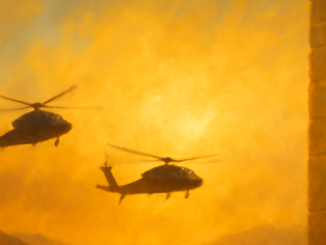
When Rescuers Fall: Spiritual Lessons from Athens

On a summer day above Athens, two firefighting helicopters collided while battling wildfires. A Danish and a Greek pilot lost their lives trying to save others. This tragic event touches something fundamental — the question of what it truly means to place yourself in service of a greater whole. For Freemasons, this moment of sacrifice raises spiritual questions deeply rooted in the tradition of the Craft. The Paradox of Sacrifice Firefighters, rescue workers, and pilots who battle wildfires live a daily reality most of us will never experience. They choose to run toward danger while everyone else runs away. That choice is not abstract. It is a concrete, physical act that demands courage, training, and something harder to name — an inner conviction that protecting others matters more than protecting yourself. In Freemasonry, we speak of shaping the rough ashlar. That shaping does not happen in isolation. It happens in relation to others, in the understanding that personal development gains meaning when it serves the community. The two pilots above Athens, each from a different country, worked together toward the same goal. Their nationality was irrelevant. What mattered was their shared commitment. What Service Really Means in Practice Spirituality in […]

Karel van Zweden Masonic lodge in Zutphen — a place of spiritual tradition
Spiritual Traditions

Karel van Zweden Zutphen: Spiritual Legacy of a Masonic Lodge

In the heart of the historic Hanseatic city of Zutphen lies a remarkable place where spirituality and tradition converge. The Karel van Zweden lodge bears the name of an eighteenth-century monarch renowned for his pursuit of inner wisdom. For over two centuries, this Masonic lodge has served as a meeting point for those who grapple with life’s greatest questions. What makes this place so special? And what spiritual lessons can we still draw from its enduring legacy today? The Spiritual Roots of Karel van Zweden Zutphen When we speak of the Karel van Zweden lodge in Zutphen, we enter a world where the outer and the inner merge. The lodge’s namesake, a Swedish prince of the eighteenth century, was known for his fascination with esoteric traditions and his pursuit of enlightenment in the philosophical sense of the word. He saw in Freemasonry a path to self-knowledge that reached far beyond social standing or worldly power. This spiritual foundation is still reflected in the work carried out within the lodge today. Freemasons in Zutphen come together not to receive answers, but to ask questions. They seek what connects them as human beings, beyond the superficial differences of background, profession, or worldview. […]