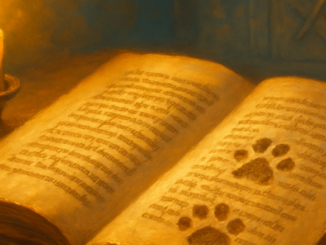
Paw Prints in Manuscripts: What Cats Teach Freemasons
Picture a monk hunched over a sheet of parchment in a European monastery, centuries ago. He sets down his quill, waiting for the ink to dry. Moments later, a cat strolls across his workspace and leaves indelible paw prints behind. What may have caused irritation at the time fascinates us today. These tiny traces connect us to people who lived and worked seven centuries ago — people who, it turns out, tolerated the same pets we do. For Freemasons, such discoveries provoke deeper questions: how do we pass on what is valuable? And what remains of our work once we are gone? The Cat as an Accidental Witness to History Libraries around the world preserve manuscripts bearing cat paw prints. From Dubrovnik to Deventer, from Italy to England — wherever monks wrote, cats roamed. Scholars have documented dozens of examples, some dating back to the thirteenth century. The prints are often clearly visible, pressed into still-wet ink or stamped right across carefully written text. These paw prints tell us more than just that cats are curious creatures. They reveal the human context behind the written word. Cats were apparently welcome in the scriptorium, most likely to chase away mice that […]