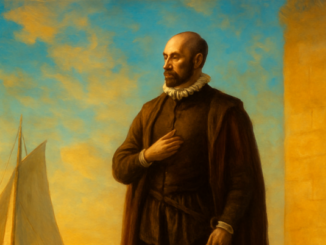
Symbolic chain of union representing Masonic brotherhood and shared honor
Michel de Montaigne – Freemasonry & Connection

Montaigne on Sharing Honor and Masonic Brotherhood

There is a feeling most of us recognize: you achieve something you are genuinely proud of, but the moment you share that pride, the shine seems to fade. Or perhaps you notice a reluctance to share credit with others, even when they contributed just as much. It is a deeply human tendency, and it is precisely this theme that Michel de Montaigne explores in his brief but penetrating essay “On Not Sharing One’s Honor.” What he wrote centuries ago speaks with surprising directness to the heart of what Freemasons strive for — honesty with oneself, humility in dealing with others, and the question of what honor truly means when it is shared. What Montaigne Really Meant In Essay 41 of the first book of his famous Essays, Michel de Montaigne poses a deceptively simple question: why are we so reluctant to share our honor? He observes that generals and leaders habitually claim personal glory for victories that are, in reality, the result of collective effort. The soldiers on the battlefield, the advisors behind the scenes, the fortunate circumstances that aligned — all of them fade into the background the moment the laurel wreath is handed out. Montaigne does not criticize […]

A person kneeling in humble reflection symbolizing humility in Freemasonry and Islam
Islam

Surah Al-Jathiyah: Humility in Islam and Freemasonry

There are moments when a person bends the knee — not in submission to any earthly power, but in recognition of something far greater than oneself. In the Islamic tradition, Surah Al-Jathiyah describes precisely such a moment of cosmic humility. For the Freemason, this image carries a familiar resonance: within the lodge, too, bowing is understood as the beginning of wisdom. Two worlds, two traditions, one universal experience. The Essence of Surah Al-Jathiyah Surah Al-Jathiyah is the forty-fifth chapter of the Quran. Its name, often translated as “The Kneeling” or “Crouching,” derives from verse 28, which depicts all communities kneeling on the Day of Judgment. Revealed in Makkah, this surah draws attention to the signs of God present throughout creation: the heavens, the earth, the animals, the alternation of day and night. Each of these is an invitation to reflection for those who truly wish to see. The message is clear: knowledge and gratitude are central. Those who recognize the signs embedded in nature are called to humility. At the same time, the surah warns against arrogance and indifference. Those who mock the divine message or allow themselves to be guided solely by their own whims become blind to the […]

Open Bible showing the Book of Obadiah with Masonic square and compasses
Christianity

Obadiah: The Shortest Book With the Greatest Lessons on Pride

At just twenty-one verses, Obadiah is the shortest book in the Old Testament. Yet within that brevity lies a powerful message that has resonated across centuries. Where the casual reader might see an ancient text about a forgotten conflict, the searching mind discovers timeless wisdom about pride, downfall, and the path toward inner improvement. In this article, we place two perspectives side by side: the historical context of Obadiah and the symbolic meaning that Freemasons can recognize within it. The Historical World of Obadiah Obadiah directed his prophecy against Edom, a brother nation of Israel descended from Esau, the twin brother of Jacob. The text condemns Edom for its arrogance and for standing idly by while Jerusalem was plundered. The Edomites dwelled in rocky heights and believed themselves untouchable because of their geographic position. Their arrogance sprang from a false sense of security. For its original audience, this was a text of comfort and justice. They saw a brother nation that had abandoned them when it mattered most. The prophecy promised that pride would ultimately lead to a fall — a theme that runs throughout all of biblical literature. The message was clear: whoever exalts himself above others will eventually […]