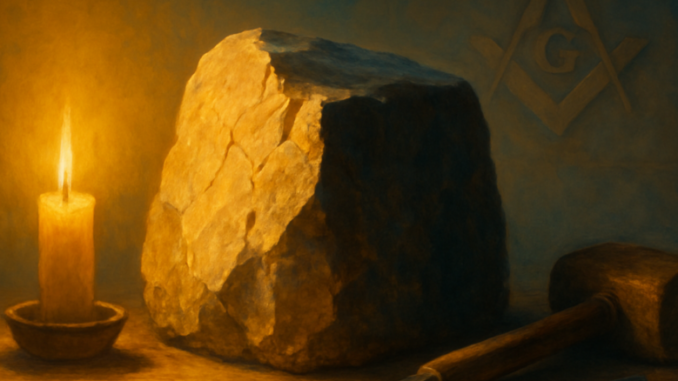
We love talking about the bright side of leadership — inspiring others, building connections, setting a vision. But what if the greatest challenge a leader faces isn’t out there in the world, but lurking in the darker corners of their own personality? Inside the lodge, Freemasons learn something deeply uncomfortable: before you can lead others, you must first confront your own shadow.
A Conversation Nobody Wants to Have
Picture this: a seasoned Freemason and a newly initiated Brother sit across from each other in a quiet room of the lodge building. Candlelight throws long shadows across the walls. The younger man asks, “How do I become a better leader?” The elder Brother smiles and responds with a question of his own: “Tell me first about your greatest failures. Not your successes — you already know those. Tell me where your ego got in the way.”
This isn’t a hypothetical scenario. Conversations like these have been taking place in lodges around the world for centuries. While the mainstream discussion around leadership tends to focus on skills, strategies, and charisma, Freemasonry poses a fundamentally different question: what kind of person are you really, and do you have the courage to face that truth?
The Rough Stone Has Jagged Edges
In Masonic symbolism, every Entered Apprentice begins as a rough ashlar — an unworked stone. This image is about more than polishing and refinement. It explicitly acknowledges that we all start with imperfections, sharp edges, and hidden cracks. The question is not whether you have a shadow side, but whether you’re willing to examine it.
“The most dangerous leader is the one who believes he fully knows himself. He has stopped searching, and in doing so, has stopped growing.”
This statement, attributed to a nineteenth-century Dutch Grand Master, cuts to the heart of what sets Freemasonry apart from many modern leadership programs. Where courses typically focus on amplifying strengths, the Masonic work pays equal — if not greater — attention to acknowledging shortcomings.
Three Shadows Every Leader Recognizes
From the long tradition of self-reflection within the lodge, certain patterns emerge that turn out to be remarkably universal. Freemasons working on their rough ashlar encounter the same recurring themes:
The temptation of recognition. The desire for appreciation can silently morph into a need for admiration. What begins as healthy ambition becomes an addiction to applause, distorting decisions and eroding authenticity.
The illusion of control. The conviction that tighter grip leads to better outcomes, when in reality it often suffocates the people around you. True leadership requires the paradoxical strength of letting go.
The fear of vulnerability. The mask of certainty we put on, even when doubt gnaws at us from the inside. This armor may protect us, but it also prevents genuine connection.
Sound familiar? It should. These shadow sides aren’t reserved for bad leaders. They lurk within all of us. The difference lies in awareness and the willingness to engage with them honestly.
The Mirror of Brotherhood
What makes Freemasonry unique in this inner quest is the structure of the Brotherhood itself. In the lodge, people meet as equals regardless of their social standing. The company director sits beside the carpenter. The professor next to the baker. In this context, the usual power dynamics fall away.
This creates a rare space — a place where honest feedback becomes possible. Where one Brother can say to another: “I notice you tend to dominate conversations. Are you aware of that?” Observations like these, spoken without judgment but with genuine concern, are worth their weight in gold for anyone committed to personal growth.
Ritual as Confrontation
The rituals within Freemasonry serve as more than tradition or ceremony. They function as a kind of psychological mirror. When a Freemason participates in a ritual, he is invited to observe himself. How do I react to symbols of death and rebirth? What does darkness stir within me? Where do I feel resistance?
These questions have no right or wrong answers. They are designed to awaken awareness. And awareness, as experience consistently teaches, is the first step toward transformation.
From Shadow to Strength
The purpose of this shadow work is not self-condemnation. Quite the opposite. Freemasonry teaches that within the acknowledgment of our darker aspects lies a hidden source of strength. The leader who recognizes his need for control can consciously choose to let go. The one who sees through his fear of vulnerability can forge authentic connections.
In the psychology of Carl Jung — who was himself deeply influenced by Masonic and Hermetic traditions — this process is called “shadow integration.” It’s not about eliminating unwanted traits, but about integrating them into a more complete self-image. Only then can a person, and therefore a leader, become whole.
An Invitation to Radical Honesty
Society’s call for better leadership is justified. But perhaps we’re asking the wrong questions. Instead of asking how leaders can become more effective, we might ask: how can leaders become more honest with themselves? Freemasonry offers no quick answers, no five-step plans. What it does offer is a tradition of unflinching self-examination, supported by a community of like-minded seekers.
True leaders are neither born nor manufactured by training programs alone. They are forged in the quiet hours of self-reflection, in the confrontation with their own shortcomings, and in the courage to acknowledge their shadow. Freemasonry invites us on precisely this journey — not because it is easy, but because it is necessary. For only those who truly know themselves can genuinely serve others.
Copyright text & image: devrijmetselaar.nl
Texts are based on the ideas and content of the author of devrijmetselaar.nl, reviewed, corrected, and supplemented with the assistance of OpenAI. Images are created based on the ideas of the author of devrijmetselaar.nl using OpenAI/DALL-E.
Frequently Asked Questions
What does Freemasonry teach about leadership that's different from other leadership programs?
While most leadership courses focus on amplifying strengths and skills, Freemasonry takes a unique approach by encouraging leaders to examine their shadow side—their weaknesses, ego, and personal shortcomings. This ancient practice recognizes that true leadership growth comes not just from building abilities, but from honest self-reflection and confronting uncomfortable truths about ourselves. By addressing both strengths and shadows, Masonic leaders develop greater authenticity and wisdom.
What is the 'rough ashlar' and why is it important in Masonic teaching?
The rough ashlar is a symbol used in Freemasonry to represent each initiate as an unworked stone with imperfections, sharp edges, and hidden cracks. This powerful image acknowledges that all people begin with flaws and areas for growth, rather than pretending we're already complete. The Masonic journey is about consciously refining ourselves by recognizing and working with these imperfections, transforming them into wisdom and character.
What are the three main 'shadows' that Freemasons work on overcoming?
Freemasonry identifies three universal shadow patterns in leaders: the temptation of recognition (where ambition becomes an addiction to applause), the illusion of control (believing a tight grip produces better results), and the fear of vulnerability (hiding doubt behind a mask of certainty). By recognizing these patterns within themselves, Masons develop greater self-awareness and become more authentic, connected leaders who can genuinely inspire others.
Is Freemasonry only for people who already consider themselves good leaders?
No—Freemasonry welcomes all sincere seekers, regardless of their current leadership experience. In fact, the Masonic approach emphasizes that every person, from beginners to experienced leaders, has a shadow side to explore and work on. The lodge provides a supportive environment where members at all levels can engage in honest self-reflection and growth, making it valuable for anyone interested in becoming more self-aware and authentic.
How does confronting your shadow side actually make you a better leader?
When leaders acknowledge their weaknesses, fears, and ego patterns, they become more humble, authentic, and connected to those they lead. This self-knowledge allows leaders to make decisions based on principle rather than ego, to listen more genuinely to others, and to build trust through vulnerability rather than false certainty. Masonic tradition teaches that the most dangerous leader is one who believes they fully know themselves; continuous self-examination keeps a leader growing, adapting, and becoming wiser.

Be the first to comment