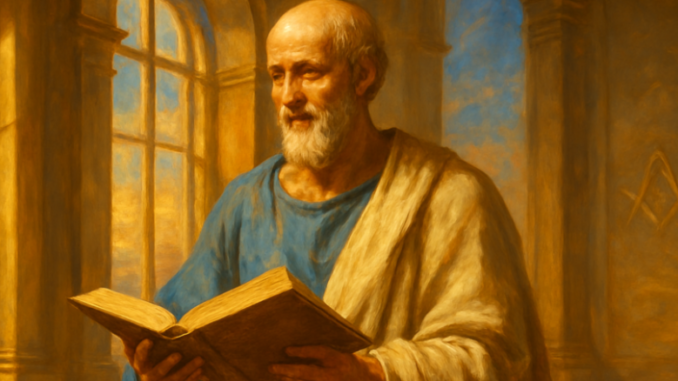
You wake up each morning, start your day, and rarely pause to consider that every day lived is one fewer remaining. Lucius Annaeus Seneca did exactly that. In his twenty-sixth letter to his friend Lucilius, he writes with striking candor about aging, mortality, and the question of how to truly live when the end draws near. Far from being a gloomy meditation, this letter offers a practical guide for anyone who wants to live more consciously. What can we still learn from this wisdom, written nearly two thousand years ago?
The Heart of Letter XXVI: Old Age as a Teacher
Seneca writes this letter as an elderly man. He describes how his body shows unmistakable signs of decline, how his physical strength is fading — yet how his mind seems to grow clearer with each passing year. The central idea is surprisingly optimistic: old age is not a punishment but a gift. It is the period in which you can finally test whether your philosophical convictions truly hold up under pressure.
Seneca compares life to a voyage at sea. As long as you are sailing, you can claim you are unafraid of the storm. But only when the harbor comes into view do you discover whether you have been genuinely courageous or merely nursing the illusion of courage. The approaching end is that harbor, and Seneca welcomes it as the ultimate test of his philosophy of life.
Seneca’s Message: Death Reveals Who You Truly Are
A crucial insight from this letter is that death is not something to fear, but something to use. Seneca argues that many people spend their entire lives occupied with activities that distract them from life’s real questions — accumulating wealth, chasing status, fighting petty conflicts. But when the body weakens, these distractions fall away. What remains is the naked question: have I lived well?
Death is not the end of life, but its touchstone. Those who live consciously need not fear it.
Seneca emphasizes that philosophy is not a theoretical exercise but a daily practice. You can talk about virtue and wisdom for years, but the moment of truth arrives when you are confronted with loss, pain, or your own mortality. That is when you discover whether your words were rooted in genuine conviction or were merely intellectual entertainment.
Practical Lessons from the Letter
What makes this letter so valuable for everyday life is that Seneca offers no abstract theories — only concrete, actionable guidance. He suggests that every day should be regarded as a complete life in itself. Do not wait until tomorrow to begin living well. Act today as though it were your last.
Start each morning by asking yourself: what would I do if this were my final day? At the end of the day, evaluate honestly: did I live in alignment with my values? Release material concerns that distract you from what truly matters. Cultivate inner peace by accepting what you cannot change.
This approach does not require a radical transformation. It asks only for a subtle shift in perspective. The point is awareness, not pessimism. Seneca was no prophet of doom. He enjoyed life deeply — but he refused to cling to things that are, by their very nature, temporary.
Death as a Symbol of Transformation
In many traditions, including Freemasonry, death plays a deeply symbolic role — not as a final destination, but as a passage. The confrontation with mortality is a powerful instrument for personal growth. Those who acknowledge the finite nature of life can, paradoxically, live more freely. The fear of loss loosens its grip when you accept that everything is transient.
Seneca’s letter resonates strongly with this insight. He describes how the thought of death does not paralyze him but liberates him. It enables him to see with greater clarity what truly matters: relationships, inner peace, a life lived in harmony with nature. These are the things that endure when everything else falls away.
In Masonic ritual, the candidate symbolically encounters death as a threshold — a moment of reckoning that strips away pretense and forces an honest confrontation with the self. Seneca’s letter reads almost as a philosophical companion to that experience. Both invite the seeker to look beyond surface-level existence and discover what lies beneath.
The Timeless Relevance of Seneca’s Wisdom
Although Seneca wrote these words nearly two millennia ago, they strike a universal chord. In our era of constant distraction, endless stimulation, and the illusion of infinite time, his message may be more relevant than ever. We live as though we have forever, while every day is a gift we can either use consciously or squander carelessly.
Letter XXVI invites us into a simple but powerful practice: reflect on your own finitude — not to mourn, but to awaken. Use the awareness of mortality as a compass for your daily choices. Ask yourself whether what you are doing today contributes to a life you can be proud of when evening falls.
Seneca’s twenty-sixth letter is not a somber treatise on death but an invitation to live. It is a practical reminder that awareness of our finite nature can be the key to a deeper, richer, and more authentic existence. Anyone who reads this letter with an open heart will find not fear but a compass — one that points toward what truly matters, today, tomorrow, and every day we are given.
Copyright text & image: devrijmetselaar.nl
Texts are based on the ideas and content of the author of devrijmetselaar.nl, reviewed, corrected, and supplemented with the assistance of OpenAI. Images are created based on the ideas of the author of devrijmetselaar.nl using OpenAI/DALL-E.



Be the first to comment